

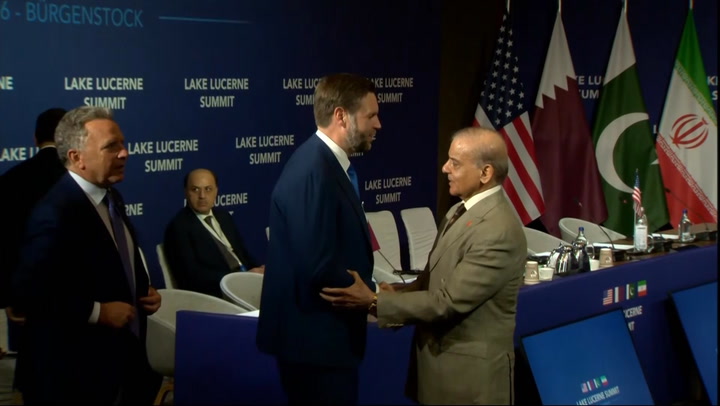
American and Iranian negotiators were expected to continue talks in Switzerland as they attempted to turn a fragile ceasefire framework into a permanent agreement ending the war.
The meeting marked the first direct negotiations between the two governments since they agreed to pursue a final settlement within 60 days. A senior U.S. diplomat said discussions were centred on “clarifying some of the confusing messaging from Iran” concerning the Strait of Hormuz, the ceasefire in southern Lebanon, and “elements” of a future nuclear accord.
The delegations were meeting near Lucerne, with the diplomat saying Sunday’s discussions would serve as “today’s work as a starting point for ongoing technical talks going forward.”
The preliminary agreement called for fighting to stop across the region and for Iran to reopen the Strait of Hormuz, a crucial shipping route carrying about a fifth of global oil and natural gas supplies. Tehran later claimed it had closed the waterway again, although maritime tracking information showed several vessels continuing to pass through.
Tensions have also risen in Lebanon, where Israeli strikes and renewed clashes with Hezbollah have threatened to weaken the wider truce. Lebanon’s health ministry said dozens of people, including women and children, had been killed, while Hezbollah attacks have caused Israeli military casualties.
U.S. President Donald Trump warned Iran that it “must immediately stop their highly paid PROXIES in Lebanon from causing trouble” and threatened to “hit Iran very hard again” unless Tehran intervened.
Iran’s lead negotiator, Mohammad Bagher Ghalibaf, rejected the warning. “Don’t they think that if their threats had any effect, they wouldn’t be in this desperate situation today?… No matter how much they talk, it is we who take action.”
Before the meeting, U.S. Vice-President JD Vance said Trump had instructed negotiators to “turn over a new leaf.” He said Washington could transform its relationship with Tehran if Iran stopped being a “driver of regional instability” and abandoned its “nuclear weapons ambitions for the longer term.”
Under those conditions, Vance said the U.S. is willing to fundamentally transform its relationship with Iran. Iran maintains that its nuclear programme is peaceful.
The provisional deal also includes sanctions relief, an end to the U.S. blockade of Iranian ports, and a $300 billion reconstruction package. However, Iran’s nuclear activities, Israel’s continuing presence in southern Lebanon, and uncertainty over Hormuz remain major obstacles to a lasting settlement.