

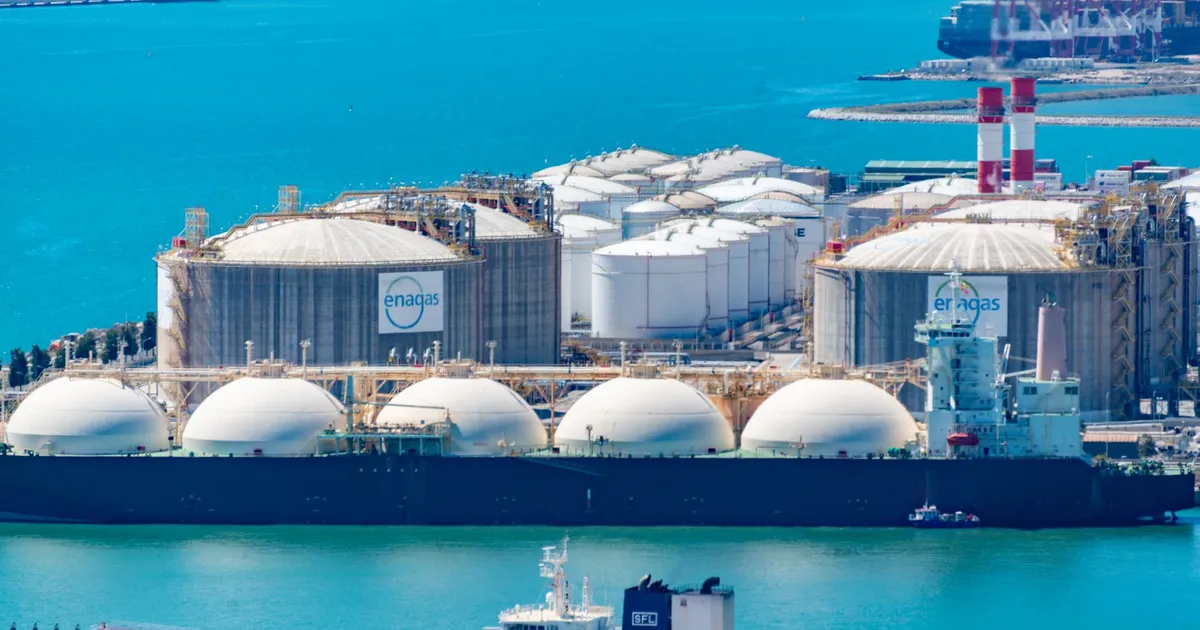
New Zealand committed to building an LNG import terminal at Port Taranaki in February 2026, with first shipments targeted for 2027-2028. The rationale is straightforward: domestic gas reserves are declining, hydro lakes sometimes run dry, and the 2024 winter price spike that sent wholesale electricity to $820/MWh left politicians with a problem they needed to be seen solving.
But the process that produced this billion-dollar-plus decision is starting to look less like energy policy and more like political crisis management. The government’s own infrastructure advisors, its fiscal watchdog, and its commissioned modelling all raised serious doubts. Those doubts were overridden, and in one case, redacted.
The advisors who were ignored
In December 2025, the Infrastructure Commission sent a memo to government warning it to take “the time needed to identify the right solution, not the most expedient one.” The commission’s position was that viable, less expensive alternatives had not been adequately explored. Infrastructure Commission chief executive Geoff Cooper described the advice as focused on sound business case analysis, the cost of alternatives, and the critical question of who benefits and who pays.
MBIE acknowledged in its own Cabinet briefing that more detailed analysis of non-LNG options had “not been possible in the time available.” That is an extraordinary admission for infrastructure of this scale.
Treasury was similarly sceptical, initially telling ministers there was “not a strong case for government intervention” and cautioning that the rushed timeline meant alternatives were not properly considered. Treasury later revised this advice after conferring with other departments, but the initial assessment from the government’s own fiscal guardian should not be waved away.
Modelling that was hidden until the Ombudsman intervened
The most damaging element is what MBIE tried to keep out of public view. Modelling commissioned by the ministry, released only after a complaint to the Ombudsman, stated plainly that “modelled need for LNG is low, even in scenarios with less other security resources.” In some scenarios, no LNG was needed at all.
Those sections had been redacted from the original release. Whatever the bureaucratic justification, redacting findings that undermine your preferred policy outcome is not a good look for a government spending public money.
The price spike nobody modelled
The government’s economic modelling for the terminal tested only two international LNG price scenarios: $20 and $25 per gigajoule. The documents explicitly noted that “modelling has not considered the potential impact of international fuel price volatility.”
This is not a footnote. It is a structural gap in the business case. Iran’s closure of the Strait of Hormuz has already driven international LNG prices higher. A Frontier Economics report found LNG-generated electricity costs around NZ$200-$250 per MWh, against roughly $125/MWh for domestic gas-fired power. If global prices stay elevated, businesses could pay the new levy and still face higher electricity costs.
The case for doing it anyway
The government’s numbers are not trivial. MBIE’s current analysis claims the terminal announcement has already lowered 2028/2029 forward electricity prices by $20/MWh, translating to $800 million per year in economy-wide savings. The underlying gas supply problem is real. The 2026 Gas Industry Company study shows proven and probable reserves were revised down from 1,300 PJ to 948 PJ in January 2025, a reduction of 352 PJ.
Energy Minister Simeon Brown has argued that “New Zealand needs the energy insurance that only LNG can provide before the next potential dry year in 2028.” The five largest industrial gas users, including Methanex, Ballance, and Fonterra, represent about 40% of total gas demand and need supply certainty.
But energy insurance priced without modelling the most obvious risk, geopolitical price volatility, is not insurance. It is a bet.
What businesses actually face
The University of Auckland’s February 2026 analysis raises a concern that should worry any business planning beyond the next election cycle. International LNG supply is typically secured through 25-30 year contracts. New Zealand would be competing in a market dominated by Japan and other large economies. The terminal’s ownership structure, whether it becomes a regulated monopoly or allows generator participation, remains unresolved.
The levy funding model has not been finalised. Which businesses pay, at what rate, and with what protections against international price movements are all open questions. MBIE says the details are still being developed.
The 2024 winter price spike was genuinely alarming and the gas supply decline is genuinely structural. Nobody disputes the problem. But when the Infrastructure Commission, Treasury, and your own commissioned modelling all tell you to slow down, and you push ahead with a billion-dollar commitment that was never stress-tested against the most predictable risk in global energy markets, you are not solving a crisis. You are creating a new one.
Sources
- Infrastructure Commission warned govt to slow down on LNG plans
- Officials redacted advice showing ‘low need’ for LNG imports
- Government’s plans for LNG terminal didn’t model international price spike
- Treasury revises advice after initial scepticism of $1 billion LNG terminal
- LNG terminal plan hailed as price cap step, critics call it ‘dirty T-shirt’ fix
- 2026 Gas Supply and Demand Study (2026)
- LNG plan needs a closer look – University of Auckland (2026-02-17)
- LNG vs pumped hydro: will NZ choose to import risk or build cleaner resilience?