

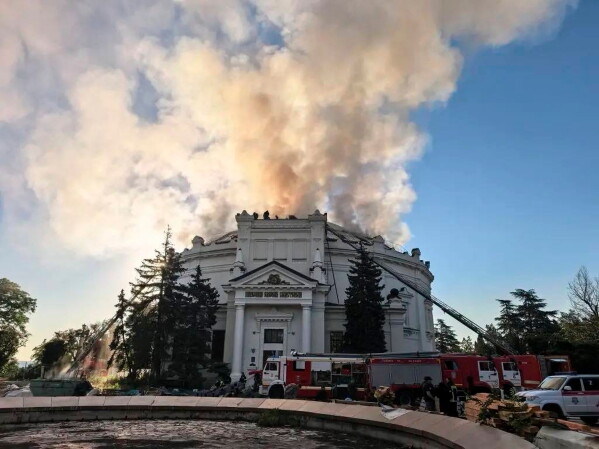
Russian-installed authorities in Crimea have stopped petrol sales to residents and private businesses after Ukrainian attacks damaged oil facilities and disrupted supply routes serving the occupied peninsula.
The remaining fuel will be reserved for government agencies, emergency services, and organisations regarded as essential to maintaining public services and security. The decision marks the most severe restriction introduced since shortages began forcing motorists to queue at filling stations and limiting the amount they could purchase.
Sergey Aksyonov, the Moscow-appointed head of Crimea, said officials would review available supplies before deciding when public sales could resume.
“Further decisions regarding the current situation in the republic’s fuel market will be announced at a later date,” Aksyonov said.
The suspension followed an overnight drone attack on an oil depot in Kerch, a strategically important port city on the peninsula’s eastern coast. Local authorities said four people were killed and 28 others were injured.
Ukraine also targeted an oil transport facility in Russia’s Krasnodar region, which lies across the Kerch Strait. Officials there said one person was killed aboard a passenger ferry.
Ukrainian President Volodymyr Zelenskyy said military supply sites and radar systems were also struck, although he did not reveal their locations. He described the operation as a “just response to Russia’s brutal attacks.”
“Russia understands only strength, and our long-range strength is certainly working for peace,” Zelenskyy said in a statement on X.
Russia’s defence ministry claimed that its forces intercepted 239 Ukrainian drones overnight. The number and the full extent of the damage could not be independently confirmed.
Crimea has been a crucial base for Moscow since Russia seized and annexed the peninsula in 2014, a move rejected by Ukraine and much of the international community. Russian forces use the territory to store equipment, support naval operations, and launch attacks elsewhere in Ukraine.
The shortage has also affected civilians and Russian holidaymakers, with some visitors reporting difficulty finding enough petrol for their journeys home.
Kyiv has increasingly attacked refineries, storage depots, pipelines, and export terminals in an effort to weaken Russia’s military supply system and reduce the oil revenue helping to finance the war.
The campaign has placed additional pressure on Moscow, but it has also heightened concerns about retaliation. Ukrainian cities remain on alert after Russian strikes over the weekend killed at least seven people and injured more than 30 others, including children.