

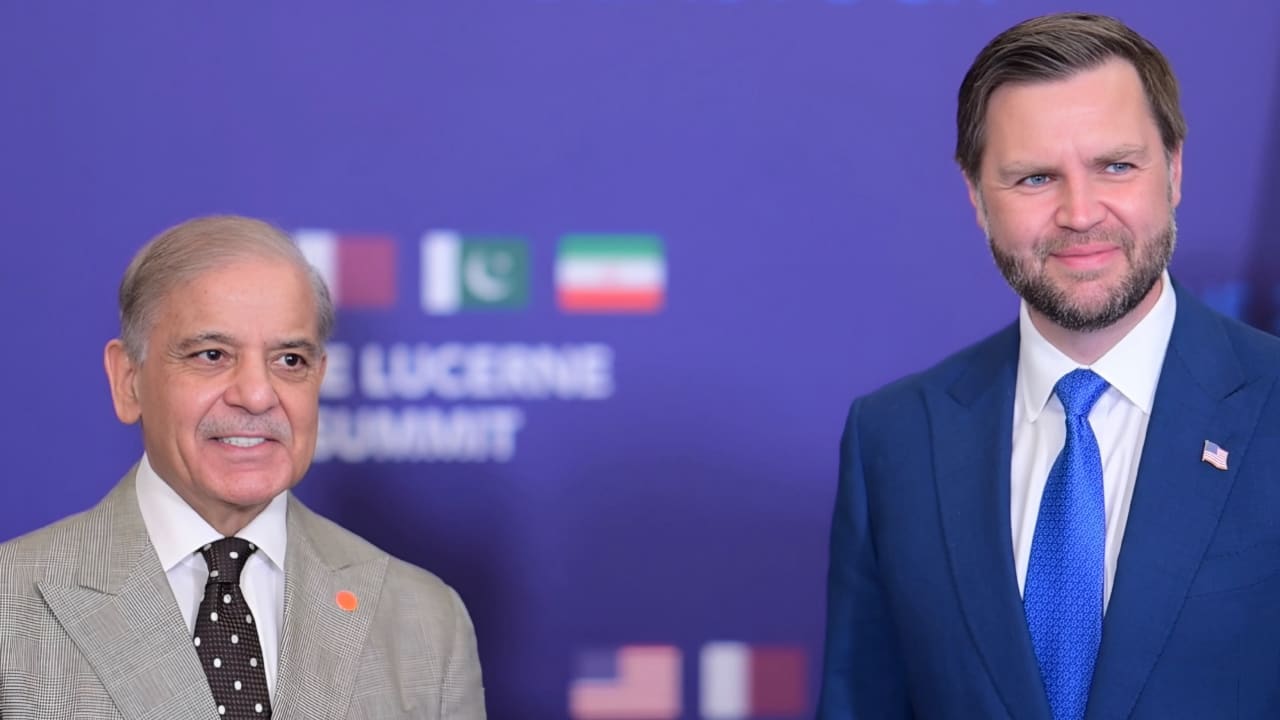
Senior American and Iranian officials are preparing to meet in Switzerland as renewed fighting in Lebanon and uncertainty over the Strait of Hormuz test a fragile agreement intended to bring the wider regional conflict to an end.
U.S. Vice-President JD Vance arrived early on Sunday, while an Iranian delegation led by parliamentary speaker Mohammad Bagher Ghalibaf and Foreign Minister Abbas Araghchi reached the country the previous evening. Pakistan’s Prime Minister Shehbaz Sharif and military chief Field Marshal Asim Munir are also expected to attend after Islamabad helped mediate earlier negotiations.
The talks follow an initial agreement signed by the U.S. and Iranian presidents, which called for an immediate halt to hostilities and opened a 60-day period for further discussions. Vance said the meeting would address Iran’s nuclear programme and efforts to maintain the ceasefire in Lebanon.
Iran has accused Washington of failing to honour the agreement after Israeli forces continued operations against Hezbollah. Foreign ministry spokesman Esmail Baghaei said Tehran would be “demanding that the other side fulfil its commitments.”
Although a ceasefire between Israel and Hezbollah was announced on Friday, violence continued over the weekend. Lebanon’s health ministry said at least 47 people were killed in Israeli strikes on Saturday. Israel’s military said it had attacked 80 Hezbollah-linked targets and killed dozens of fighters, while four Israeli soldiers also died.
The clashes have also renewed tension around the Strait of Hormuz. Iran’s Islamic Revolutionary Guard Corps announced that the waterway had been closed again, arguing that Israeli attacks in Lebanon violated the agreement’s requirement for military operations to end across all fronts.
U.S. Central Command rejected the claim. Spokesman Tim Hawkins said “traffic continues to flow” and added that American forces were monitoring the situation. Centcom said 55 commercial ships carrying more than 17 million barrels of oil passed through the strait on Saturday.
The narrow passage is one of the world’s most important energy routes, carrying oil and liquefied natural gas from Gulf producers to international markets. Any prolonged disruption could drive up prices and place further pressure on global supply chains.
The Swiss meeting will be an early test of whether Washington and Tehran can turn their preliminary agreement into a lasting settlement, or whether continuing violence in Lebanon will push both countries back towards confrontation.