

The scoreboard flipped
In the June 2025 quarter, Bay of Plenty topped ASB’s Regional Economic Scoreboard for the first time in nearly a decade. The region led the country on consumer sentiment, posted employment growth of 3.2%, and recorded house sales up 25.8%. In September 2025, ASB chief economist Nick Tuffley told MPA Mag that the Bay’s primary sector strength gave it an edge over urban centres even as the national economy contracted slightly.
Canterbury reclaimed the top spot by the final quarter of 2025, backed by strong dairy incomes and tourism recovery. But the broader pattern was already set. The regions producing exportable goods were pulling away from the cities that shuffle paper.
Exports did the heavy lifting
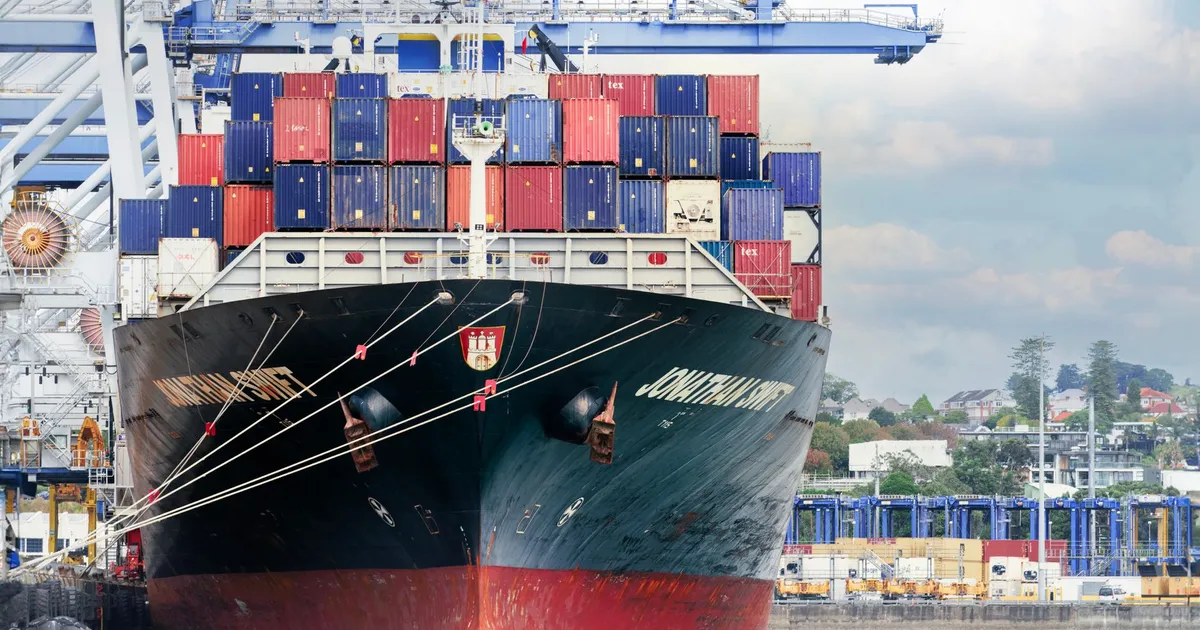
The Bay of Plenty story is not a housing boom or a consumer spending surge. It is an export story. New Zealand’s total exports surpassed $80 billion for the first time, with the Port of Tauranga handling a significant share of that volume. In December 2025, Infometrics data showed horticulture exports lifted 28% per annum and beef exports rose 21% over the 2025 calendar year.
Alan McDonald of the Employers and Manufacturers Association, speaking at the EMA’s Tauranga briefing in March 2026, put it plainly: “The strength of the export sector provides a degree of insulation, positioning Tauranga and the wider Bay of Plenty to continue outperforming as the national economy works through a slow and uneven reset.”
The Infometrics March 2026 Quarterly Economic Monitor confirms Bay of Plenty and Waikato are among the high-growth regions leading the recovery, growing at over 1% per annum. Twelve out of 16 regional economies expanded in the March 2026 quarter, with milk solid production up 4.0%. The regions driving that growth share a common trait: they grow, catch, or process something the world wants to buy.
The jobs picture is not as clean as it looks
Bay of Plenty added 9,200 jobs quarter-on-quarter in the March 2026 quarter, the strongest regional employment growth in the country. Its employment rate hit 65.6%, up 2.9 percentage points year-on-year.
But here is the uncomfortable detail: Bay of Plenty’s unemployment rate was 7.1% in March 2026, up 1.1 percentage points year-on-year. A booming region with rising unemployment sounds contradictory. It is not. Population growth and rising labour force participation mean more people are entering the market than even strong job creation can absorb. For businesses considering expansion, this means available labour, but it also means the region’s success is attracting competition for resources.
Canterbury’s employment rate sat higher at 69.0%, though its quarter-on-quarter growth of 4,100 jobs was slower. Canterbury has a more mature employment base. Bay of Plenty is growing faster from a lower starting point.
Wellington and Auckland are paying for their dependence
The contrast is brutal. In December 2025, Auckland employment was down 0.9% per annum and Wellington employment was down 1.5%. Wellington ranked last in the ASB June 2025 scoreboard with house prices down 3.3% and consumer confidence at its weakest of any region. Government spending reprioritisation has hit the capital hardest, and the flow-on effects are visible in every cafe, law firm, and consultancy that depended on the public sector gravy train.
Nationally, total unemployment stood at 406,000 in March 2026. In December 2025, Infometrics’ Nick Brunsdon warned that employment would be “one of the last indicators to recover.”
What this means for anyone making investment decisions
The structural lesson is straightforward. Regions with a hard export base in primary commodities are outperforming. Bay of Plenty, Canterbury, Southland, Otago. Regions dependent on domestic services, government spending, and discretionary consumption are lagging. This is not a temporary dislocation. It reflects the reality that when a national economy is weak, the regions plugged into global demand have a lifeline that domestically oriented cities do not.
For businesses weighing where to invest, hire, or expand, the data points in one direction. The regions that grow things the world buys are the regions where momentum is real. Everything else is waiting for a recovery that keeps arriving later than promised.
Sources
- Scoop: Bay Of Plenty Leads, Auckland Shows Signs Of Recovery In ASB’s Latest Regional Economic Scoreboard (2025-09)
- MPA Mag: Bay of Plenty tops regional growth for the first time in a decade (2025-09-15)
- Waikato Business News: Exports power regional recovery (2026-03-03)
- Infometrics: Widespread economic recovery – March 2026 Quarterly Economic Monitor (2026-05)
- NZ Herald: Economic recovery slowly rolling north into other regions (2025-12)
- RNZ: Canterbury tops economic survey – ‘It’s an ever-growing city’ (2026-01)