

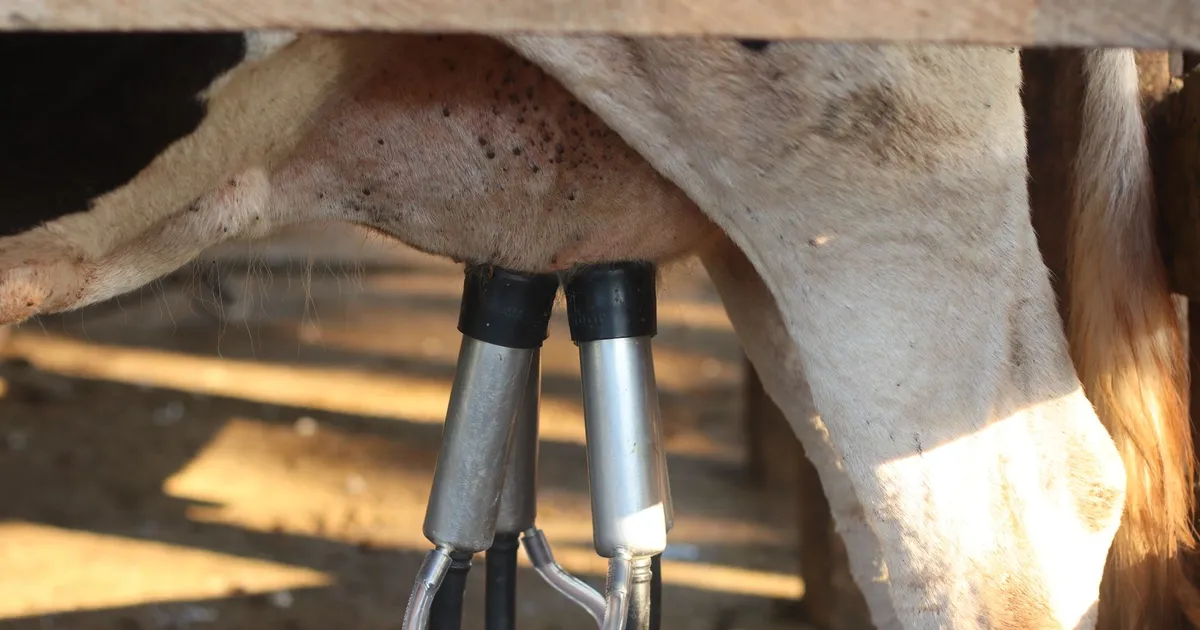
A study of nearly 1,100 New Zealand consumers published this week found something the political debate has not caught up with: resistance to gene-edited milk is neither fixed nor particularly high. When gene-edited milk was offered at a lower price, acceptance rose significantly. Allergy-free milk was the most popular product tested, suggesting shoppers respond to clear personal benefits rather than abstract promises about sustainability.
The finding reframes the entire commercial debate. Consumer acceptance is no longer the bottleneck. Regulation is.
A record-breaking sector with nowhere to go
New Zealand dairy is having a very good year. MPI’s June 2026 Situation and Outlook forecasts dairy export revenue at a record $28.6 billion for 2025-26, up 5% on the prior year. The farmgate milk payout sits at $9.85 per kilogram of milksolids, well above the breakeven point. Season-to-date milksolids production is running 3.3% ahead of last season, with the South Island leading the charge.
The wider food and fibre sector is forecast to earn $64.3 billion, representing roughly 82.9% of total exports and supporting around 360,000 jobs. This is a sector at peak performance. The question is whether it can stay there without access to productivity tools its competitors are already building.
The bill that cannot pass
The Gene Technology Bill was supposed to end nearly 30 years of blanket prohibition on genetic technologies outside the laboratory. Included in National’s coalition agreements, it would create a new regulatory framework within the EPA and exempt SDN-1 gene editing, which modifies DNA without inserting foreign genetic material, from the heaviest oversight.
It has stalled. Cross-party disagreement has left the second reading date unconfirmed. ACT has objected to a proposed Maori Advisory Committee. New Zealand First has cited health and environmental safety concerns. The bill attracted almost 15,000 submissions during the select committee process, reflecting the depth of feeling on both sides.
Meanwhile, Australia, Canada and the United States already impose close to no restrictions on gene editing in agriculture. The EU has moved from a blanket ban to a selective, science-based framework. The Mercosur bloc has reached coordinated approval. New Zealand risks becoming a global outlier.
The premium that may not exist
The strongest argument for caution is the “clean and green” premium. But the sector’s own analysis undercuts it. In October 2025, DairyNZ assessed the evidence and found that “quantifiable evidence of the economic benefit to New Zealand from a GM-free status is challenging to find.” Previous studies, DairyNZ noted, concluded that GM introduction was “unlikely” to have long-term impact on market perceptions, and the premium from GM-free status was “also unlikely” to be significant.
That is the sector’s own industry body saying the castle may be built on sand. The organic sector, worth an estimated $1.2 billion annually, has legitimate concerns about co-existence and contamination. But weighing a $1.2 billion sector against a $28.6 billion one, when the evidence for the premium protecting the larger sector is thin, demands honest accounting.
Five to ten years starts now, or it starts never
Even DairyNZ acknowledges that 5-10 years could pass between regulatory approval and gene technologies reaching the dairy market commercially. That timeline makes the legislative delay doubly costly. If competitors are already in development and field-testing, New Zealand is not just a parliament behind. It is a decade behind.
The dairy industry itself is broadly supportive. In a Federated Farmers survey, 60% of farmers backed allowing gene technologies in agriculture, with 23% opposed and 17% neutral. DairyNZ supports reform. Fonterra supports the legislation, though it has raised concerns about traceability for export markets, a solvable problem if the political will exists to solve it.
The clock is the cost
The consumer research published this week should be a wake-up call. New Zealanders are not as hostile to gene-edited dairy as the political theatre suggests. The science is not the problem. The regulatory framework, frozen since the 1990s, is the problem. And every year that framework stays frozen is a year competitors use to develop products New Zealand scientists are not even allowed to trial outside a lab.
A $28.6 billion export sector deserves a parliament that can at least get a bill to its second reading.
Sources
- Would you buy milk from a gene-edited cow? Consumers may be more open than you think (2026-06-12)
- Situation and Outlook for Primary Industries (SOPI) June 2026 (2026-06)
- Situation and Outlook for Primary Industries (SOPI) December 2025 (2025-12)
- EconTracker 2025-26 Season Forecast Update (2026-03)
- Gene technologies – DairyNZ (2025-10-10)
- Political parties negotiate controversial Gene Technology Bill, as progress stalls
- Why some of our biggest exporters are worried about the Gene Technology Bill
- Industry observers warn NZ is lagging behind amidst gene-tech indecision
- Why Feds is cautious on gene-tech