

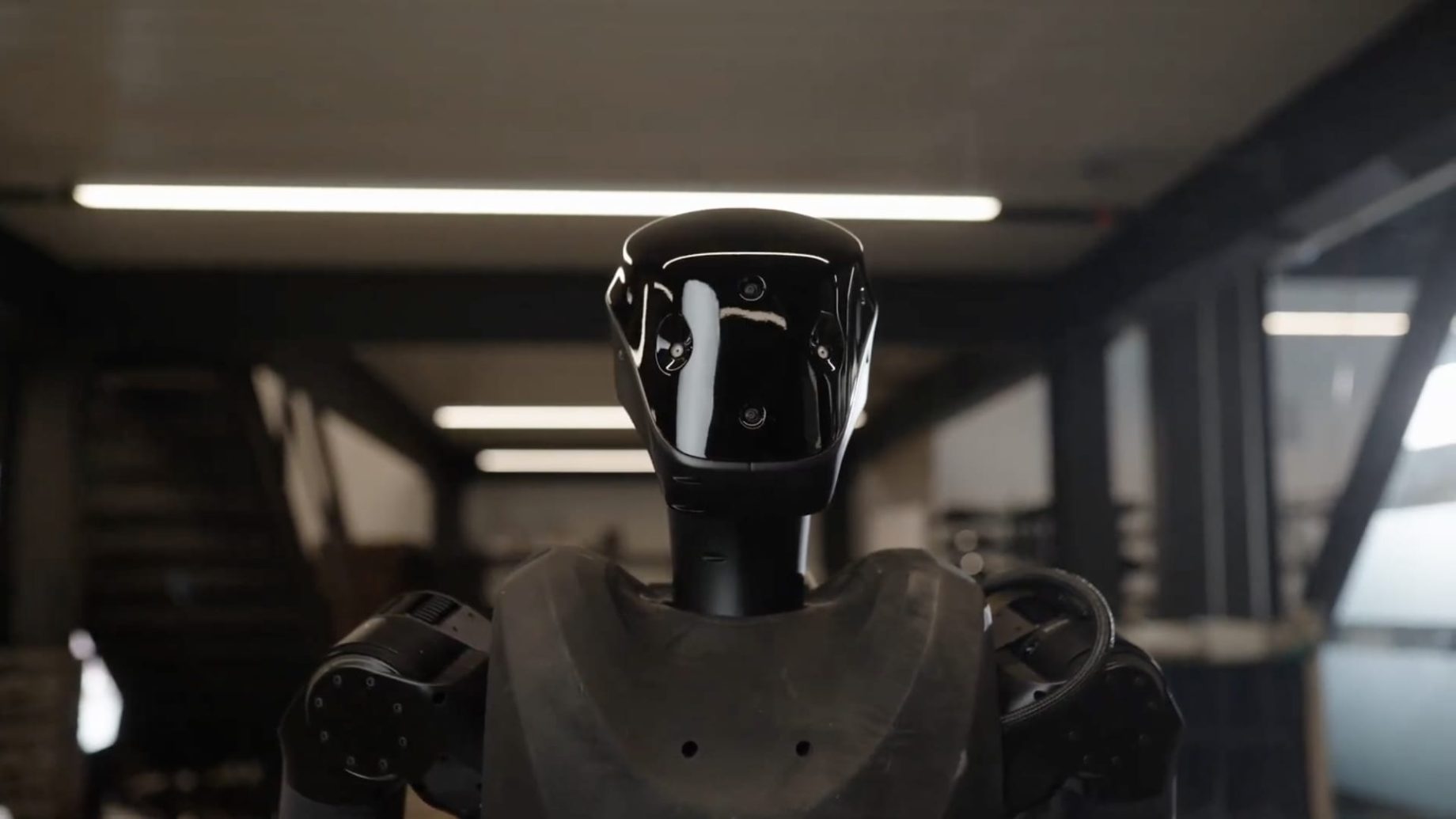
A San Francisco robotics company with ties to the Trump family is testing humanoid machines for military use, as armed forces increasingly turn to unmanned technology to carry out dangerous tasks on the battlefield.
Foundation Future Industries has sent two of its Phantom MK-1 robots to Ukraine for trials focused on logistics in hazardous areas. The machines are being assessed for duties such as collecting and moving supplies, which can expose soldiers to drone attacks, artillery fire, and other threats.
The company says its goal is to develop robots for high-risk industrial and defence work rather than everyday household tasks. Chief executive Sankaet Pathak said the technology could reduce the need for people to enter dangerous environments.
“I’m convinced the technology is reaching a level where it can replace jobs that are dangerous for humans to perform, and if you can do that, it’s the highest net good you can create out of all applications of robotics,” Pathak said.
Foundation was founded by Pathak, former Tribe Capital chief executive Arjun Sethi, and Cobalt Robotics co-founder Mike LeBlanc. Pathak previously led Synapse, a financial technology company that filed for bankruptcy in 2024.
The company has attracted scrutiny over its political connections after Eric Trump, the son of U.S. President Donald Trump, joined the business as chief strategy adviser. Foundation has also secured U.S. government research contracts worth a combined $24 million for feasibility testing involving inspections, logistics, and weapons handling across the Army, Navy, and Air Force.
For now, the Phantom MK-1 remains an early-stage model. It can carry around 44 pounds, is not waterproof, and has limited battery capacity. Foundation plans to send an upgraded Phantom 2 model to Ukraine later this year, with twice the payload capacity of its predecessor.
Supporters argue that humanoid robots could be useful in urban environments designed for people, including buildings with staircases, basements, and narrow corridors. However, experts remain divided over whether the machines can be produced cheaply and reliably enough for widespread military use.
The trials come as Ukraine expands its use of unmanned systems for logistics, surveillance, medical evacuations, and combat support, raising wider questions about the role of autonomous technology in future wars.