

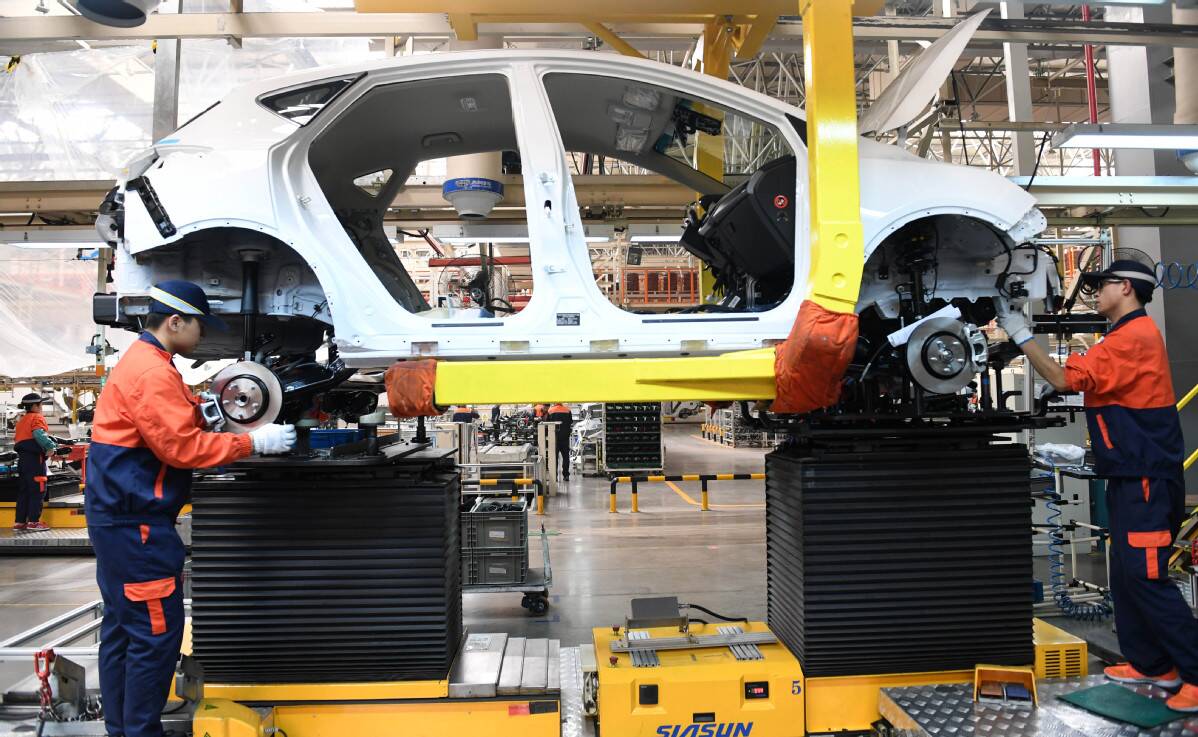
Global carmakers are facing mounting pressure as China’s auto industry moves from challenger to pace-setter, reshaping competition across electric vehicles, batteries, software, and manufacturing.
For decades, many Western and Japanese manufacturers treated China as a vital growth market and production hub. That relationship has shifted sharply. Chinese brands are now using their scale, supply chains, and technology expertise to build vehicles faster and more cheaply, while adding the digital features increasingly expected by drivers.
The change has alarmed some of the industry’s most senior figures. “We have no chance against this,” Honda chief executive Toshihiro Mibe told Japanese media after visiting a highly automated factory in Shanghai.
Ford chief executive Jim Farley has also warned that Western carmakers are “in a fight for our lives” as Chinese manufacturers push into overseas markets.
China’s advantage is not limited to electric cars. Its manufacturers are supported by a vast network of battery suppliers, component makers, robotics firms, and software developers. Years of state backing have helped domestic companies expand quickly, lower prices, and compete aggressively in one of the world’s toughest car markets.
Analysts say the industry is being transformed by more than the shift away from petrol engines. “The biggest mistake that the developed world is making is believing that the transition is only about electric cars,” says Shanghai-based auto analyst Bill Russo. “It’s about who will lead the next generation of mobility technology.”
Technology groups such as Xiaomi, Huawei, and Alibaba have added to the pressure by bringing smartphone-style ecosystems into vehicles. Cars are increasingly being sold not only on range and performance, but also on screens, apps, software updates, and connectivity.
“They’re not racing the West anymore,” says Russo. “They’re racing each other.”
Foreign brands remain deeply tied to China, but many are losing ground there. General Motors, Volkswagen, Nissan, Honda, and several luxury manufacturers have faced tougher competition as local buyers turn to domestic models with advanced features and lower prices.
The response is changing. Volkswagen has invested in XPeng’s software, Stellantis is deepening ties with Dongfeng, and other global manufacturers are expanding research work in China to tap local expertise.
Still, China’s own car market is becoming more difficult as sales growth slows and price wars squeeze margins. That has pushed Chinese brands such as BYD, Chery, and SAIC further into Europe, the UK, and emerging markets, even as tariffs rise.
“If you lock them out of one market, they will just find another,” says consultant James Pearson.
For established carmakers, the challenge is no longer just to build competitive electric vehicles. It is to keep pace with an industry whose centre of gravity is increasingly moving towards China.