

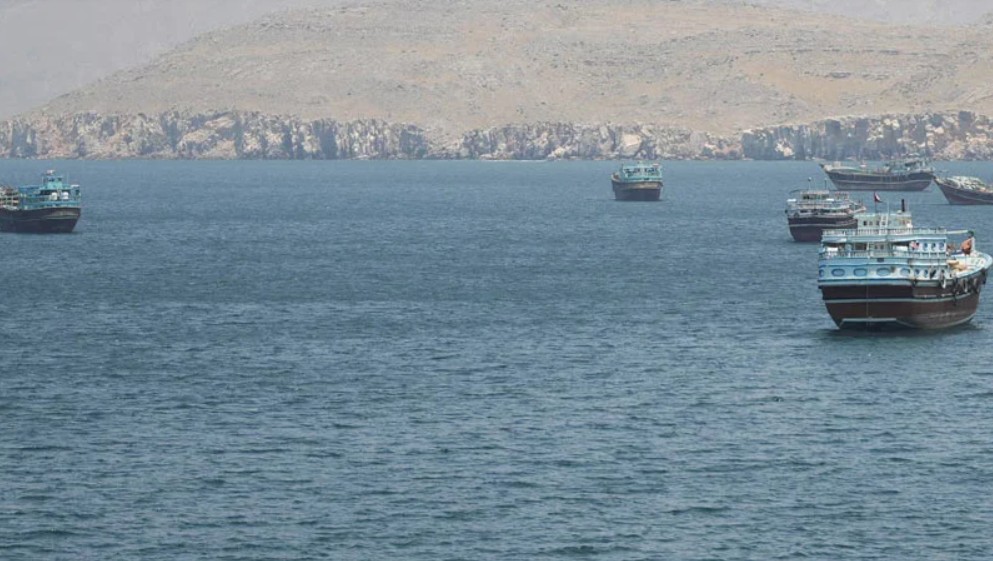
A local tracker monitoring fuel tankers in the Strait of Hormuz reports that several loaded vessels are leaving the area and heading toward ports supplying New Zealand’s fuel reserves.
Starboard Maritime Intelligence has also reportedly identified around 35 large tankers that appear to be stationary, carrying up to 60 million barrels of crude oil and described as “locked” behind the Strait of Hormuz, unable to move through reported restrictions in the area.
“We’re seeing a few coming out and heading to places where we’d like to see them go, the likes of Singapore and up round to Korea,” Starboard analyst Mark Douglas said.
However, this is still a relatively small volume compared with levels seen before the conflict.
Douglas said that, even under an optimistic scenario, it would take more than six months for oil supply chains to fully return to normal.
Overall, New Zealand’s fuel stocks remain comfortably above minimum requirements, according to the latest MBIE update. However, fuel prices still rank as the fourth most pressing concern for New Zealanders in a recent survey.
Starboard Maritime provides real-time vessel tracking and delivers maritime intelligence to 11 government agencies, including the New Zealand Defence Force, as part of the national security data fusion system.
However, many vessels caught up in the Strait of Hormuz standoff reportedly switched off their Automatic Identification System (AIS) transponders, which are normally used for ship tracking.
“Because when you’re in the middle of a war zone, you don’t really want to be transmitting your location. But they do come on and off every so often,” Douglas said.
He added that additional tankers not directly affected were deviating from their usual routes, instead heading to West Africa, the U.S. Gulf Coast and South America to load crude oil.
“The bright spot is that there has been a repositioning of vessels, and it’s continuing to provide some kind of supply from those locations and bring it to the refineries that matter for New Zealand.”
“It’s not making up for the entire difference that losing access to the Persian Gulf has caused, but it is allowing the refineries to continue to operate.”
Less than 10% of pre-war fuel volumes were managing to pass through the strait.