

European companies are showing little sign of retreating from China, despite the European Union’s efforts to encourage businesses to reduce their exposure to supply chain and geopolitical risks.
A new survey by the European Union Chamber of Commerce in China suggests that many firms still see the country as central to their global competitiveness. The findings, based on responses from nearly 300 member companies gathered between January and February, found that 68% of respondents were either keeping their operations in China or expanding them.
Nearly a third said they were moving more production into China, while 37% said their supply chain strategy had not changed over the past two years. Only 7% said they were shifting factory sourcing out of the country or creating alternative production bases elsewhere.
“We don’t see sort of de-risking becoming a theme,” said Jens Eskelund, President of the EU Chamber of Commerce in China.
“If anything it would indicate that European companies continue to be more dependent on China as a sourcing and manufacturing location for their products,” he said.
The results underline the difficulty of reducing reliance on a manufacturing base that remains unmatched in scale, supplier depth, and speed. While Brussels has increased scrutiny of China’s trade practices, particularly in sectors such as electric vehicles, batteries, and clean technology, many companies appear unwilling to give up the cost and efficiency advantages available there.
Some are choosing a middle path. About 24% of respondents said they were expanding in China while also building supplier networks in other countries, suggesting that diversification is not always the same as leaving.
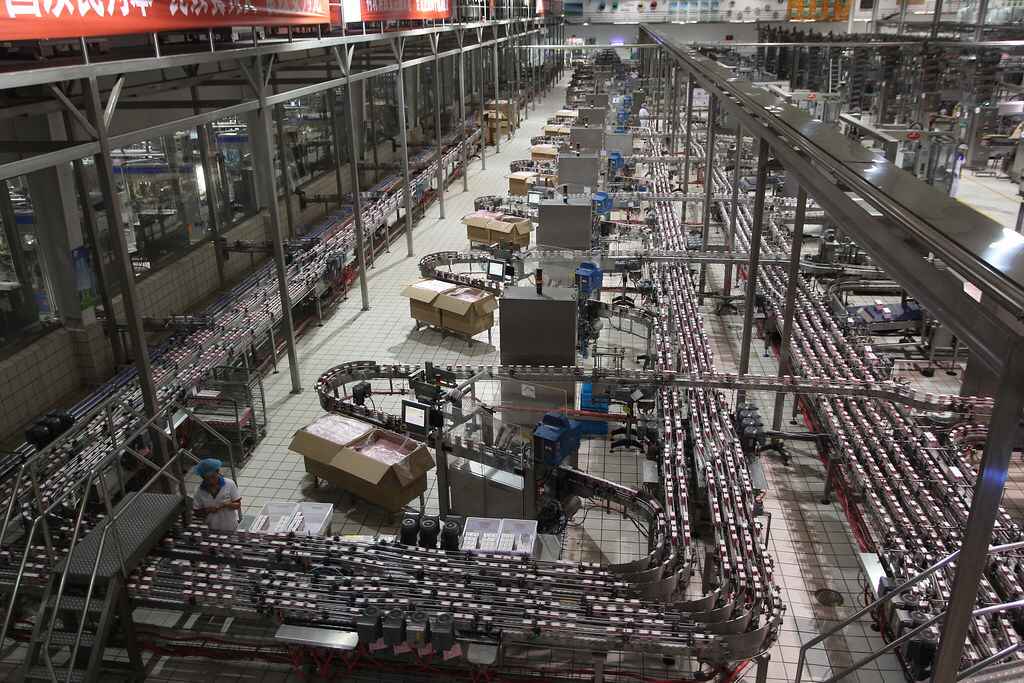
Automation has also strengthened China’s appeal. Denis Depoux, senior partner and global managing director at Roland Berger, said the shift towards highly automated factories is changing the cost equation.
“The cost of labor, which might be lower anyway, is becoming irrelevant itself, because [of] automation,” he said.
Chinese electric vehicle maker Nio has said one of its factories uses 941 robots that can operate across multiple vehicle models, allowing production to continue around the clock with limited human presence.
Around three-quarters of European companies surveyed said their facilities in China were more efficient than operations elsewhere.
“In most industries today, you have at least one Chinese competitor, or an international competitor, that are leveraging Chinese supply chains,” Eskelund said.