

The National Land Transport Fund was already running short before oil prices spiked. Now the fund that pays for every state highway, pothole repair, and roading project in New Zealand faces a shortfall of up to $311 million this financial year, and the government’s planned fix has been shelved indefinitely.
This is not a temporary disruption. It is a structural problem that the fuel crisis has made politically unsolvable.
Revenue is collapsing while costs explode
The NLTF depends on three revenue streams: fuel excise duty, road user charges, and vehicle registration fees. All three are volume-based, meaning they shrink when people drive less. By late March, vehicle kilometres travelled were down 20 percent for cars and five percent for commercial vehicles. Nationwide pump spending was up $4.3 million a day, but that money flows to oil companies, not the transport fund.
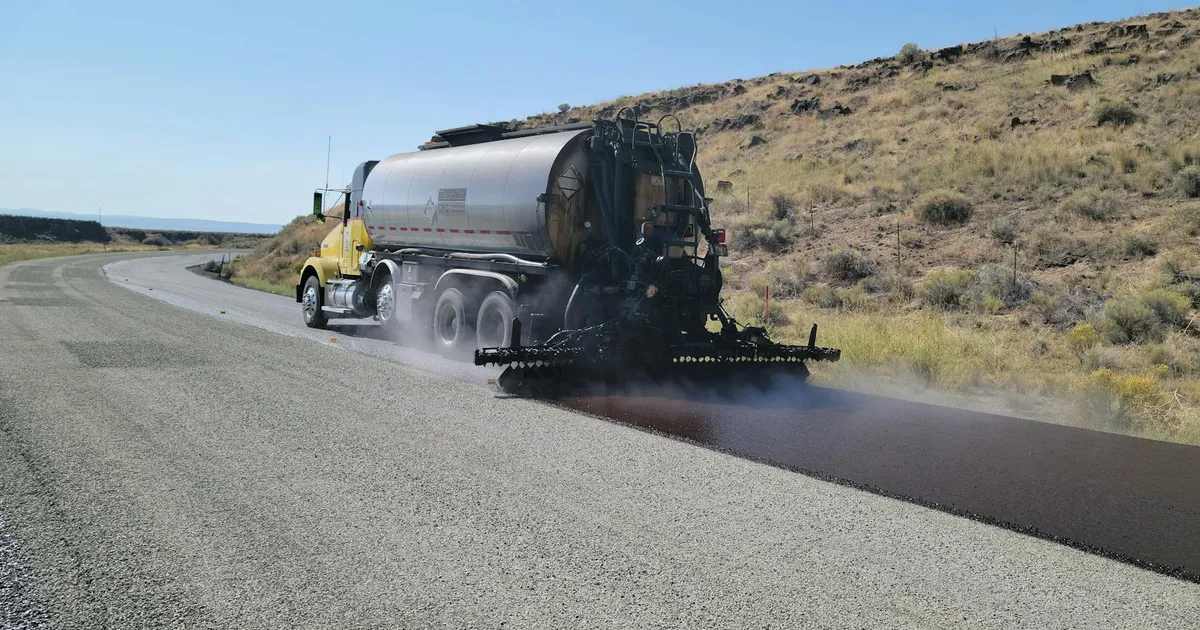
On the cost side, the picture is equally brutal. Bitumen prices jumped almost 75 percent in three weeks after the Iran conflict escalated. Diesel makes up seven percent of the road construction cost index, and NZTA modelling shows big project costs rising five percent at US$100 a barrel and 10 percent at US$150. Treasury has modelled scenarios ranging from US$110 to US$180.
Contractors on projects less than a year old are in the worst position. In that 12-month window, fuel price index movements are not contractually compensated. NZTA has announced price flexibility measures, but for firms already locked into fixed-price contracts, the margin destruction is immediate.
The fix that can’t happen
The government had a plan: a 12 cents per litre fuel excise increase from January 2027, followed by six cents in 2028 and four cents in subsequent years. That plan is effectively dead.
Transport Minister Chris Bishop has been unusually candid. “It’s politically extremely unpalatable to put up fuel tax by 12c a litre when petrol prices are $3.40 a litre,” he told Newsroom in April. “So yeah, it’s a bloody tough situation.” Speaking to RNZ the following day, he went further: “The idea that we would raise fuel tax during a fuel crisis doesn’t seem like a starter to me.”
Prime Minister Christopher Luxon has described the 12-cent increase as “unlikely” to proceed.
Treasury’s own advice offers no easy alternative. Reducing fuel excise or road user charges would “provide limited relief” that is “poorly targeted”, meaning a tax cut would drain the fund further without meaningfully easing the pain for those who need it most.
The $56 billion question
The flagship Roads of National Significance programme, 17 projects that were a centrepiece of National’s election platform, has seen its combined cost balloon to $56 billion. Bishop has tasked the Infrastructure Commission with reviewing their cost-benefit cases.
A Ministry of Transport briefing warned that delaying the fuel excise increase would have a “significant impact” on NZTA’s work programme, including state highway maintenance. NZTA is already building a framework to prioritise critical work and identify what can be deferred.
The AA’s principal policy adviser Terry Collins has warned that delaying planned increases risks pushing back major projects and worsening long-term funding pressure.
Stop-start is the most expensive option
Engineering New Zealand chief executive Dr Richard Templer has been direct about the compounding cost of indecision. “Evidence indicates that project costs don’t decrease over time, regardless of shocks to markets,” he wrote in April. “The costs of stopping and starting projects are well documented. Overcoming inertia is costly.”
Templer flagged a practical problem already hitting the sector: engineers are taking two-hour detours to reach sites that would normally be 30 minutes away, because roads remain cut off from earlier heavy rainfall and slips.
NZTA’s own 2024/25 annual report, published in November 2025, had already flagged a widening gap between projected revenue and the investment required to maintain the network. The Iran conflict has accelerated an existing trajectory, not created a new one.
For freight operators, contractors, and any business waiting on a road upgrade, the maths is unforgiving. National chose not to raise fuel taxes in its first term. That was a defensible call during a cost-of-living crisis. But the consequence is a fund that was already short, now facing a revenue collapse and a cost surge simultaneously, with the one planned remedy politically impossible. Every month of delay compounds the eventual adjustment. The bill does not shrink by ignoring it.
Sources
- 1News: Fuel price surge hits transport fund, project delays feared (2026-05-14)
- RNZ: Tensions and price increases ahead for getting roads built (2026-05-13)
- Newsroom: ‘It keeps me awake at night’: Bishop orders cost-benefit review of promised roads (2026-04-23)
- RNZ: Government may pause fuel taxes increases (2026-04-24)
- BusinessDesk: Fuel crisis ‘just another handbrake’ for infrastructure sector, NZTA announces price flexibility (2026-05-01)
- Engineering New Zealand: Fuel disruption sharpens focus on infrastructure (2026-04-08)
- NZ Transport Agency Waka Kotahi annual report 2024/25 (2025-11)