

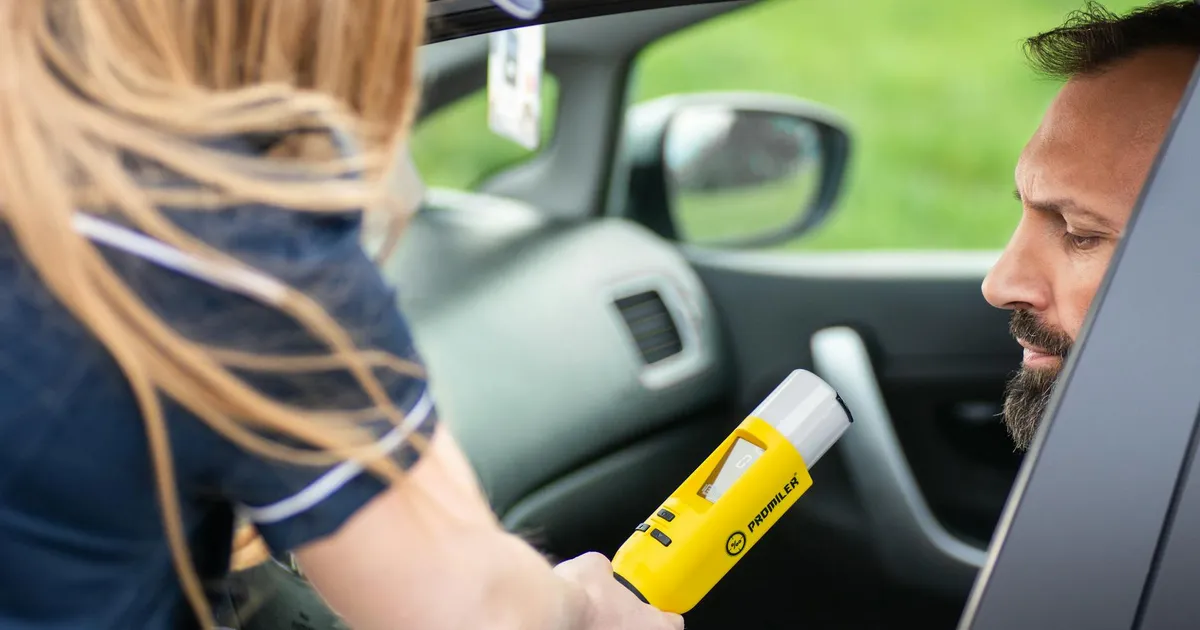
120 officers, 30,000 phantom tests
Sometime in late August 2025, a GPS-enabled dashboard at the National Road Policing Centre flagged something odd. An officer had recorded 11 breath tests over five minutes across 3.5 kilometres with no traffic stop, checkpoint, or call for service logged. That single anomaly triggered an audit that eventually identified 30,961 falsely or erroneously recorded breath screening tests between July 2024 and September 2025.
The algorithm was simple: flag any test taken within 90 seconds of another while the device appeared to be moving faster than 20 km/h. Police’s own analysis concluded it was “almost certain that most of these tests are not legitimate”. Around 120 to 130 staff are under investigation, more than 80% of them in dedicated road policing roles. Waitematā, Wellington, and Canterbury districts accounted for two-thirds of the irregular tests.
NZTA found out last
The governance failure is arguably worse than the data fraud itself. Police discovered the problem in late August 2025. The Police Minister was briefed on 12 September. NZTA, the agency that funds road policing and is contractually entitled to accurate delivery data, was not told until 22 September, and even then only via the Transport Minister’s office rather than directly.
NZTA Group General Manager Richard Forgan did not mince words. He wrote to police leadership that the notification delay was “a clear breach of this expectation”. That language, from one Crown agency to another, is unusually blunt. During those 22 days, NZTA’s quarterly reporting to its board and the Minister was based on potentially compromised data.
NZTA responded by pausing $6 million in delivery-dependent funding and commissioning an independent data analysis to determine the full scale of the problem. Transport Minister Chris Bishop called it “very concerning” but endorsed the funding pause as prudent.
Targets created the incentive nobody wants to own
The Road Policing Investment Programme 2024-27 is a $1.3 billion agreement. Of that, $24 million per year is delivery-dependent, paid quarterly only if Police meet agreed targets for breath testing and speed enforcement. The target is 3.3 million passive breath and screening tests per year.
Police insist there was no pressure. Acting Deputy Police Commissioner Jill Rogers said in November 2025 that the force “legitimately exceeded the national target by approximately 900,000 tests” and that individual officers have no specific quotas. But 120-plus officers across every major district did not independently decide to simulate tests for fun. Greater Auckland’s November 2025 analysis of road policing performance noted the inherent tension: tying financial incentives to enforcement numbers is “kind of weird” and creates predictable perverse outcomes.
The August 2024 analysis from the same outlet documented what happens when enforcement funding stagnates. Before the RPIP targets were introduced, annual breath testing had collapsed from around 3 million to fewer than 1.3 million tests. Death and serious injury numbers worsened during that period.
Road safety is economic infrastructure
For businesses with mobile workforces, these are not abstract governance questions. In 2024, Police conducted 4,118,159 roadside breath tests, the most ever recorded. Alcohol-related fatalities fell nearly 40%, from 92 in 2023 to 57 in 2024. But 113 deaths, 38% of all road fatalities, still involved drivers above the alcohol limit or positive for drugs.
Every serious crash on a state highway disrupts freight corridors, delays supply chains, and exposes employers in transport, logistics, construction, and field services to duty-of-care liability. The bulk of road policing funding, $103 million per quarter, continued flowing during the pause. But the signal matters as much as the dollars. When enforcement credibility is damaged, the deterrent effect weakens regardless of whether officers are still on the road.
Paying twice for the same outcome
The pattern is depressingly familiar in Wellington. Underfund enforcement, watch outcomes deteriorate, then spend more restoring what was lost than it would have cost to maintain. The RPIP was designed to prevent the pre-2019 collapse from recurring. Instead, the performance-based model introduced a new failure mode: data fraud that undermines the measurement system itself.
Assistant Commissioner Michael Johnson said Police were “working closely with our NZTA partners to resolve this matter as quickly as possible”. The independent review is expected to confirm the full scale of falsification. The $6 million will presumably be released once new verification systems are in place. But the cost of rebuilding trust between two Crown agencies, reauditing years of data, and redesigning incentive structures will far exceed the original funding at stake.
For business owners watching this unfold, the lesson is straightforward. Road safety enforcement is not discretionary spending that can be gamed, cut, or fudged without consequence. The consequences just arrive on someone else’s balance sheet.
Sources
- Transport Agency halts $6m in funding to police until breath test targets met (2025-12-04)
- How police discovered 30,000 ‘falsely or erroneously’ recorded breath tests (2025-11-28)
- Proactive Release of Breath Screening Test issue information (2026-01)
- ‘There was no pressure’: Police rule out reviewing breath-test targets after 30,000 tests falsified (2025-11-06)
- NZTA orders data analysis to identify full scale of falsely recorded breath tests (2025-12-05)
- Breath testing data concerns to be resolved ‘as quickly as possible’, police say (2025-12-05)
- Roadside breath testing up; alcohol-related road deaths down (2025-05-12)
- Road Policing Performance – Greater Auckland (2025-11-13)
- Road Policing Reduction – Greater Auckland (2024-08-19)