

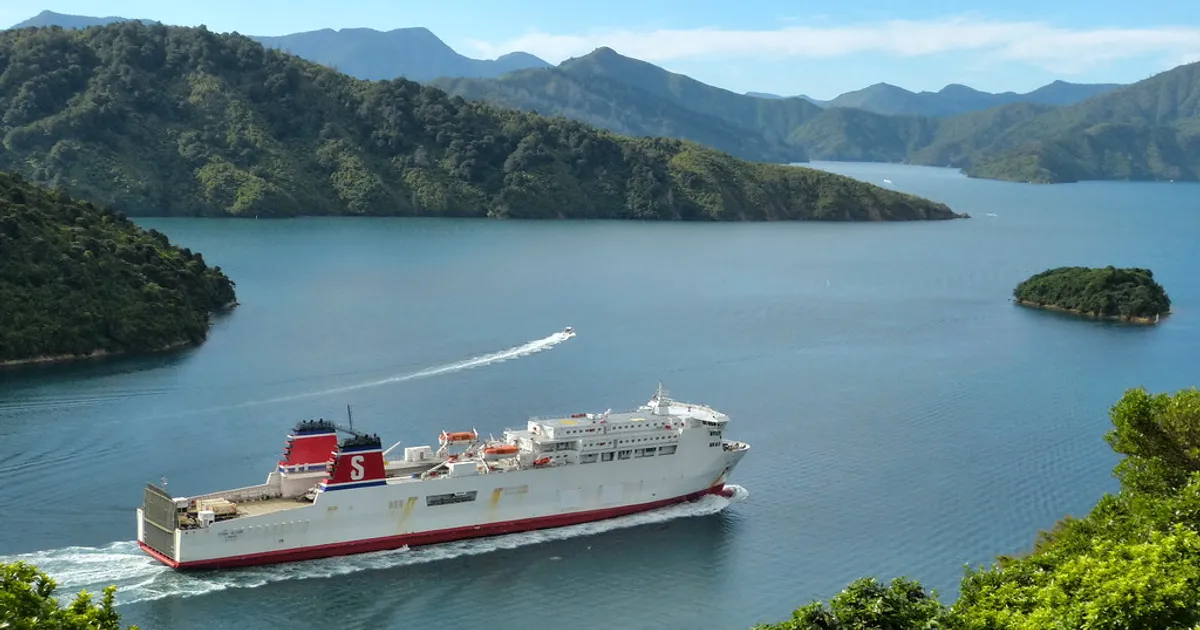
A surcharge with nowhere to hide
Interislander has increased its fuel surcharge by 54% on Cook Strait freight crossings. For any business that moves product between New Zealand’s two main islands, this is not optional, not negotiable, and not avoidable. It is a line item on every freight invoice, effective immediately, applied to a route where the operator faces no meaningful competition at scale.
The surcharge lands inside a broader diesel crisis that has already added $14 million per day in costs across the economy. But the Cook Strait element is structurally different from a road freight fuel adjustment. Road carriers at least compete with each other. On Cook Strait, businesses are price-takers on a monopoly chokepoint.
The diesel shock that made it inevitable
Diesel hit $3.80 per litre in mid-April, up from roughly $2 a litre just weeks earlier. The National Road Carriers Association estimates New Zealand burns 11 million litres of diesel daily, making even small per-litre movements enormously expensive at national scale.
Pump prices have since retreated to the mid-$2.80s per litre, a 27% fall over three weeks. But National Road Carriers chief executive Justin Tighe-Umbers warns that Brent Crude at $111 per barrel signals continued volatility rather than relief. The Commerce Commission’s analysis to mid-April found diesel prices stabilising at a high level, not falling back to pre-shock norms.
Tighe-Umbers framed the situation plainly: “New Zealand continues to experience a price shock but not a supply shock.” Diesel stocks sit at 46.1 days cover. There is no shortage. There is only cost.
The pass-through machine is already running
Mainfreight group managing director Don Braid confirmed in March that the company is “having to recover that cost from our customers with an increase in fuel adjustment factors”. Freightways chief executive Mark Troughear noted their businesses all have fuel adjustment factors, with some kicking in immediately while others have a slight lag.
NZ Trucking Association chief executive Dave Boyce warned in April that “I don’t think the average person has felt the full effects of this yet”, predicting families could face an additional $100-200 per week for groceries within weeks. The Interislander surcharge is one more cost input feeding that machine.
An ageing fleet with no backup plan
The surcharge arrives on a route already under structural stress. In March, a technical fault took the Kaiārahi out of service, reducing the effective Interislander fleet from six ships to four. Contract electrician Michael Casey put it bluntly: “That’s 25% of the market gone.”
Winter maintenance will reduce capacity further. The freight sector is now calling for a third Interislander ferry to provide a buffer. KiwiRail has responded by rebooting a coastal shipping service as an alternative, but coastal shipping is slower and less flexible than the roll-on roll-off model freight operators are built around.
The Government’s replacement ferries won’t arrive until 2029 at the earliest. Minister Winston Peters claims reliability has been “near 100% over the past year,” but that statistic becomes meaningless the moment a ship goes down and capacity drops by a quarter overnight.
What businesses should actually do
The Government has moved NZTA to monthly fuel cost adjustments in major contracts, up from quarterly. Tighe-Umbers welcomed the move but stressed that “it is critical that the large contractors extend the same through the supply chain” to smaller operators.
For businesses moving goods across Cook Strait, the calculus is simple. The 54% surcharge is already baked into invoices. Diesel may have retreated from its peak but remains elevated. The ferry fleet cannot guarantee full capacity through winter. And there is no structural alternative until the decade’s end.
This is not a temporary disruption to plan around. It is the new cost base for inter-island commerce, layered onto a route where the infrastructure is ageing, the alternatives are inadequate, and the customers are captive. Managed vulnerability is an expensive way to run a supply chain.
Sources
- Cook Strait crunch: Freight sector calls for third Interislander as winter maintenance looms (2026-04-15)
- Cook Strait crunch: KiwiRail reboots coastal shipping service (2026-04-24)
- Diesel price surge: Freight firms add fuel surcharges as costs jump $14m a day (2026-03-25)
- Grim warning from Trucking Association, as impact of rising fuel costs hit consumers (2026-04-18)
- Monitoring and focus reports – Commerce Commission (2026-04-16)
- Steadying the ship on New Zealand’s fuel position (2026-05-01)