

A transport project without a transport plan
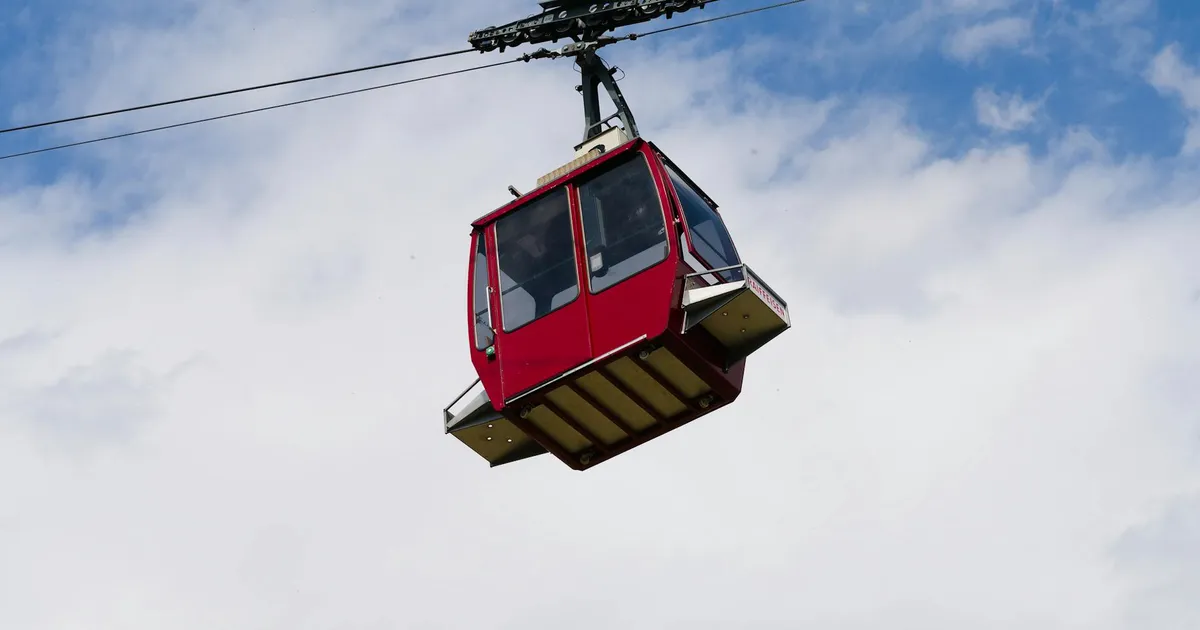
Queenstown Lakes District Council has issued a pointed warning about a $400 million cable car project moving through the government’s fast-track approvals process. The council said it was “unlikely” that 3,000 passengers per hour in each direction would actually use the system, identified “critical gaps” in information across financial viability, patronage, and governance, and asked the question that should have been answered before the application was accepted: “Will the district be left with a white elephant defunct cable car system?”
The project, backed by Sir Rod Drury and filed as application FTA380 under the Fast-track Approvals Act 2024, claims capacity equivalent to a 50-seater bus every minute in each direction. A consultant’s review raised concerns about long queues due to low cabin capacity. The application placed “heavy reliance” on unsecured public funding while ongoing maintenance and operating costs had not been detailed, which the council called a “significant oversight.”
Significant information has been withheld under the Official Information Act, including WSP engineering reports marked confidential. Southern Infrastructure Ltd, the applicant, did not respond to requests for comment.
The gondola that already failed once
This is Drury’s second attempt. In 2024, he backed the Coronet Village proposal combining a gondola up Coronet Peak with a 780-house development in the Malaghan Valley. He told Lakes Weekly in September 2024: “I just want to do the gondola. We’ve been accused of green washing our property development and I’m certainly not into that.”
By August 2025, both Drury and environmental partner Te Tapu o Tane had withdrawn, leaving developer Bernard Cleary holding what planner Ben Farrell confirmed was “very much a Cleary-led project going forward.” In August 2025, Drury’s chief executive Jenna Adamson said he had pivoted to the standalone cable car as “more closely aligned with the community’s immediate needs.”
The pattern is instructive. The housing cross-subsidy collapsed, so the gondola now stands alone without the revenue justification the housing was meant to provide.
Queenstown has become the fast-track laboratory
The cable car is one of at least five major fast-track proposals in the district. Homestead Bay received approval in February 2026 for approximately 2,800 residential allotments despite the panel acknowledging adverse effects including loss of six wetlands and pressure on transport and servicing infrastructure.
The Ridgeburn subdivision of 1,242 homes was referred to fast-track in October 2025 despite having been initially rejected as incomplete and despite all three relevant agencies opposing it. The council said it was “not located in a future growth area” and “within and next to an outstanding natural feature”. The ORC warned residents would be “reliant on private vehicle use”.
A Fernhill funicular project sought consent in March 2025 for a cable railway including chalet-style housing on a 56.6-hectare block. The cumulative scale is extraordinary for a district whose ordinary consenting system already processed 3,259 building consent applications in the year to June 2025 with a 97.6% pass rate.
When fast-track is slower than the normal route
The most damaging critique comes from inside the system. In September 2025, Glenpanel director Mark Tylden described the process as a “bureaucratic nightmare” after a nearly four-year battle for 384 homes. He paid $78,000 in cost recovery to the fast-track panel and ended up with unlawful decisions and Environment Court appeals. His verdict: “Ironically, we have made much faster progress by simply going through ordinary council consenting processes.”
Cutting tape is not the same as building well
The fast-track regime was sold to business as a way to get productive development moving. In Queenstown, it is increasingly functioning as a mechanism for advancing projects that lack the financial rigour to survive ordinary scrutiny, sit outside planned growth areas, or depend on public funding that has not been committed.
A $400 million gondola with unconfirmed patronage, undetailed operating costs, and no secured funding is not a transport solution. It is a speculative infrastructure bet. Business owners in Queenstown and beyond should be asking not whether fast-track can approve things faster, but whether the things it approves are worth building at all.
Sources
- Warning over Queenstown cable car use (2026-04-18)
- Fast-track plan loses big backers (2025-08-07)
- Approval for huge Queenstown subdivision to be moved on to next stage of fast-track process (2025-10-23)
- Queenstown Homestead Bay housing development fast-tracked despite backlash (2025-04-29)
- Fast-track consent for cable railway sought (2025-03-06)
- Queenstown Park Gondola and associated tourist activities – Ministry for the Environment (2024-12-19)
- Homestead Bay – Fast-track Approvals (2026-02-18)
- Fast-track process a ‘nightmare’ (2025-09-13)
- Concerns over Malaghans fast-track – Lakes Weekly Bulletin (2024-09-23)