

The company that rezoned its own future
While Wellington debates infrastructure priorities and port authorities shuffle joint ventures, a Christchurch-based construction and property firm has quietly assembled over 200 hectares of rezoned industrial land in South Otago and started building on it.
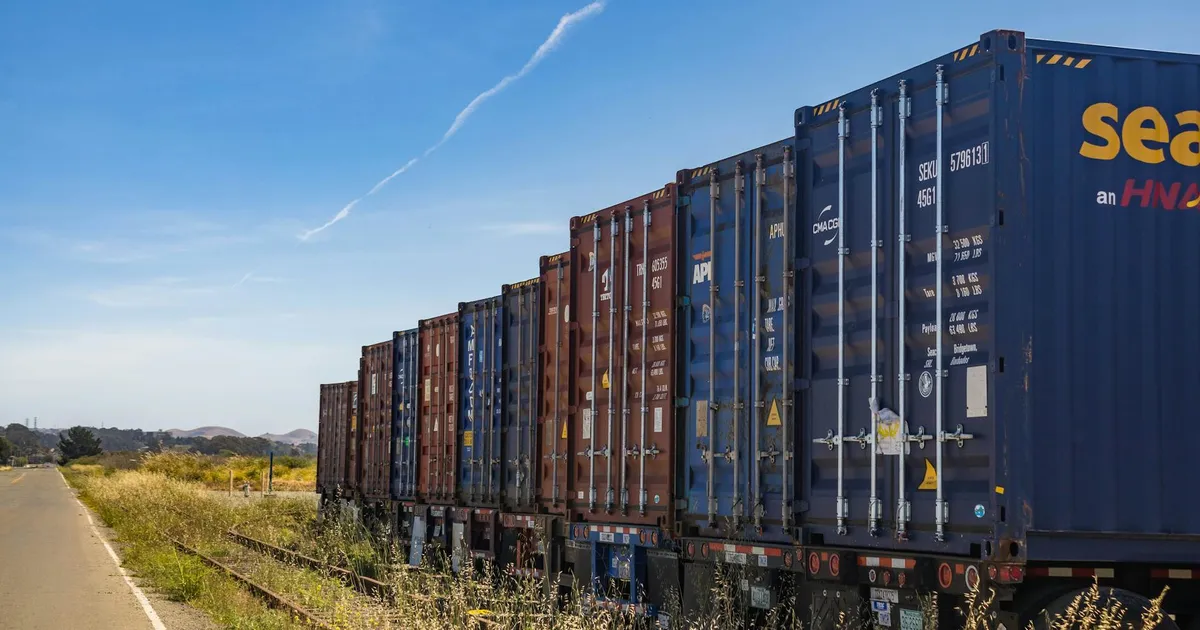
Calder Stewart’s Milburn Quadrant project sits north of Milton on direct access to State Highway 1 and the South Island’s main trunk rail line. The company has been working on it for eight years. The price tag is $3 billion in private capital, no government money required. The centrepiece is a 55-hectare inland port with capacity for 400,000 to 600,000 TEUs annually, which would make it New Zealand’s largest.
Ben Stewart, Calder Stewart’s property associate director, said in October 2025 that the company had already rezoned 200 hectares of land and was privately funding the development, moving ahead independently of public processes. Stage 1, a 10,000 square metre steel fabrication facility and office campus, was complete by then.
That is not a vision document. That is concrete and steel.
Freight volumes are growing faster than existing infrastructure can handle
The commercial logic is straightforward. Freight volumes from Central and South Otago are forecast to grow 30 to 40 percent over the next decade, driven by seasonal peaks in forestry and dairy exports. Port Otago is New Zealand’s sixth-largest port by export volumes, but its hinterland logistics are under strain.
In 2025, Dunedin City infrastructure services committee chair Jim O’Malley flagged a real and uncomfortable scenario: ships bypassing Dunedin entirely, turning around at Tauranga rather than making the southern leg. If that happens, the South Island’s primary exporters lose direct access to international shipping lanes. O’Malley also noted that upgrading alternate sites like Mosgiel was projected at over $100 million in public spending, making the private Milburn model look significantly cheaper for the public purse.
A deliberate challenge to the port establishment
Milburn Quadrant is not the only inland port project in the pipeline. The $200 million Southern Link, a joint venture between Port Otago and Dynes Group with government backing, was expected to open near Mosgiel around October 2025. NBR reported in May 2025 that Calder Stewart was pressing ahead without formal support from Port Otago.
Ben Stewart described Milburn as “port and operator agnostic”, designed to serve freight regardless of which port it exits through. That is a polite way of saying Calder Stewart does not need Port Otago’s permission or cooperation.
Mark Johnston, Calder Stewart’s land and delivery manager, was more direct: “Milburn is a shovel-ready, future-facing development that solves real capacity issues for our exporters.”
Not everyone agrees it will work. Port Otago CEO Kevin Winders flagged topographical challenges, noting trains would start uphill and the site is 63 kilometres from Port Chalmers, well beyond the typical 20 to 30 kilometre range for inland ports. These are legitimate engineering concerns that will influence whether anchor tenants commit.
The bigger picture stretches to Invercargill
Milburn is only half the play. RNZ reported in October 2025 that Calder Stewart is coordinating Milburn with a second development, Awarua Quadrant near Invercargill, to create an integrated export and logistics network. Together the two projects could cost up to $5 billion depending on tenant mix.
John D’Arcy, Calder Stewart’s lower South Island business development manager, explained the logic: “While Awarua creates the volume, Milburn provides a staging area and facilitates the movement of hundreds of shipping containers by rail in alignment with vessel schedules.”
The sustainability credentials are notable. All new buildings at Milburn will include rooftop solar with potential to produce up to 50MW of power, and the shift to rail could eliminate over 10,000 heavy truck movements annually.
What exporters and investors should be watching
Resource consent for the inland port itself has not yet been granted. Construction is expected to begin within 24 months of consent, with operations commencing 18 to 24 months after that, putting full operations around 2028 or 2029 at the earliest.
For forestry and dairy exporters, the “port agnostic” model means genuine pricing leverage over existing logistics chains. For property investors, 200 hectares of rezoned industrial land with anchor infrastructure already in place is a rare commodity in the South Island. For freight operators, two competing inland port projects mean rate competition is coming whether they want it or not.
Calder Stewart has bet $3 billion that the South Island’s export economy will outgrow its current infrastructure. The company is not asking for public funding, not waiting for government sign-off, and not seeking Port Otago’s blessing. That is either admirable commercial conviction or expensive overreach. The freight growth forecasts suggest the former.
Sources
- Creation of NZ’s largest inland port set to boost primary exports (2025-05-03)
- Inland ports: Government-backed Southern Link faces off with privately funded Milburn Quadrant (2025-05-14)
- $3bn industrial precinct planned for Otago (2025-05-14)
- ‘$3 billion’ Otago inland port plan revealed (2025-05-14)
- $3 billion inland hub to steam ahead, without port support (2025-05-14)
- ‘So excited’: $3bn inland port plan hailed (2025-05-15)
- Milburn inland port progressing (2025-10-01)
- Southland industrial park to be linked with new inland port in Otago (2025-10-01)