

Nine months, another billion
Halter closed a US$220 million (NZ$377 million) Series E today at a US$2 billion valuation, led by Peter Thiel’s Founders Fund with Bond Capital and Blackbird Ventures participating. The Auckland-based agritech company doubled its valuation in nine months, making it New Zealand’s largest-ever venture capital raise.
But the headline number matters less than what ships with it. Halter announced direct-to-satellite connectivity for its smart collar system, removing the dependency on proprietary transmission towers and patchy cellular coverage that has constrained rural deployment since the company’s founding.
For a country that has poured public money into rural broadband initiatives with incremental results, a private company just solved the problem with a product update.
The vulnerability that storms exposed
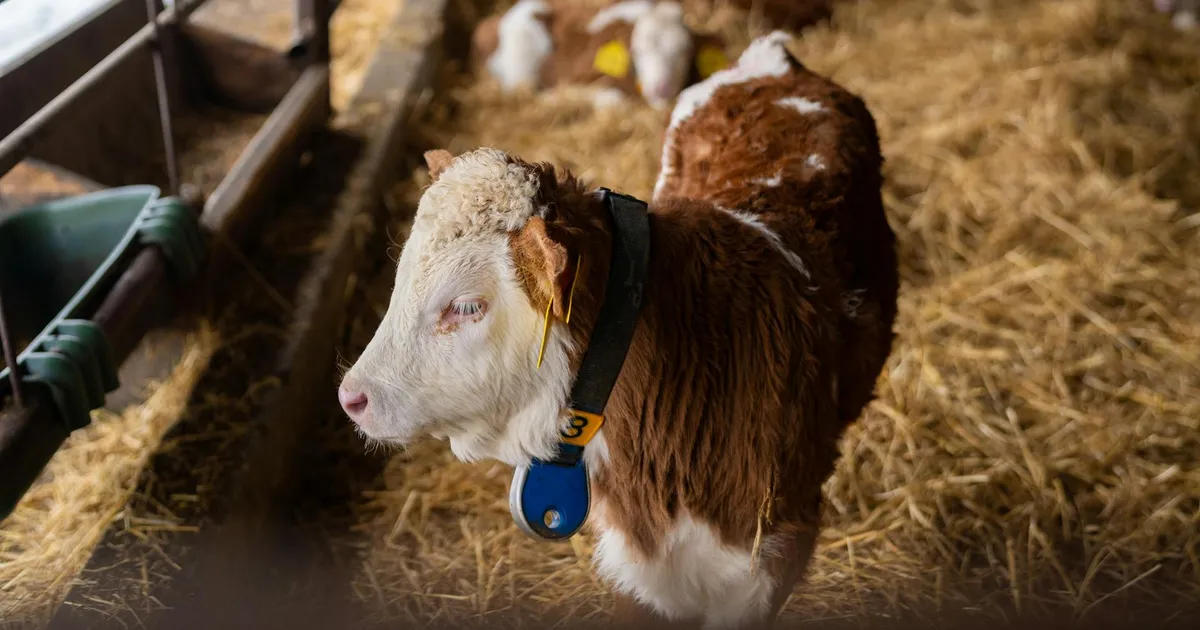
Halter’s system manages cattle through solar-powered collars that deliver sound and vibration cues, track location and health metrics, and replace physical fences with virtual boundaries. The company now operates across more than 2,000 farms with over one million cattle in New Zealand, Australia, and 22 US states.
The weak link has always been connectivity infrastructure. In October 2025, storms knocked out around 30 transmission towers, disrupting 70 South Island farms in Canterbury, Southland, and Otago. Failsafes prevented virtual fences from dropping, but 12 farms were mid-mating and 23 were about to start. For a system that CEO Craig Piggott says needs “many nines of uptime”, tower dependency was a known ceiling.
As recently as January, Piggott said he was “keeping an eye on direct-to-satellite versions but cellphone towers remained easier and more cost-effective”. Three months later, the shift is official. Satellite removes both the coverage constraint and the physical vulnerability in one move.
What government programmes never cracked
The Commerce Commission’s 2024 Telecommunications Monitoring Report confirmed fibre reaches 87% of New Zealand’s population through the UFB initiative. That remaining 13% is disproportionately rural, disproportionately productive, and disproportionately underserved. Government programmes including the Rural Broadband Initiative have spent years and significant public money closing the gap incrementally.
Halter’s satellite integration is not a broadband replacement. It solves a narrower problem: getting enough data to and from a collar to manage livestock in real time. But it demonstrates that private innovation, driven by commercial necessity, can bypass infrastructure constraints that public programmes struggle with. The lesson is uncomfortable for anyone who has argued rural connectivity requires more government spending.
The productivity promise has a caveat
Halter claims its system can lift land productivity by as much as 20%. One North Otago farmer achieved a 22% lift in pasture harvest and 20% more milksolids per cow across a 2,000-cow herd.
But an independent Kellogg Rural Leadership Programme report from December 2025 found financial returns were “negative across all baseline scenarios” when analysing high-performing case study farms. The report concluded that a 25% reduction in hardware cost would shift several scenarios into positive territory, and that farms with poorer baseline performance would see the highest benefits.
This is the paradox: the technology delivers its biggest gains to underperforming farms, but early adopters tend to be operations already running well. Satellite connectivity helps by expanding the addressable market to remote farms that previously couldn’t deploy the system at all, many of which are exactly the underperforming operations where ROI is strongest.
The Fonterra benchmark
Icehouse Ventures CEO Robbie Paul, whose firm turned a NZ$100,000 seed cheque into a NZ$409 million holding, offered a striking comparison: “At the pace they’re growing, it will take Halter 11 quarters to be worth more than Fonterra.”
That framing matters. Fonterra processes the milk. Halter wants to control how efficiently it gets produced. If the satellite upgrade delivers what it promises, the company removes the last major infrastructure excuse for farms not adopting precision management. The gap between tech-enabled and traditional operations widens further, and the pressure on holdouts intensifies.
Whether the ROI closes fast enough to justify the hype is the open question. But the connectivity bottleneck? That one is solved.
Sources
- Halter raises $377 million at $3.3 billion valuation, reveals what’s next (2026-04-28)
- Peter Thiel’s big bet on solar-powered cow collars (2026-04-04)
- Halter tipped for raise at $3.3 billion valuation, Kiwi fund details huge gains (2026-03-30)
- Storms knocked out virtual farm fences (2025-10-24)
- Collars, costs and returns: assessing the value of cow wearables in NZ pasture systems (2025-12)
- 2024 Telecommunications Monitoring Report (2025-06-30)