

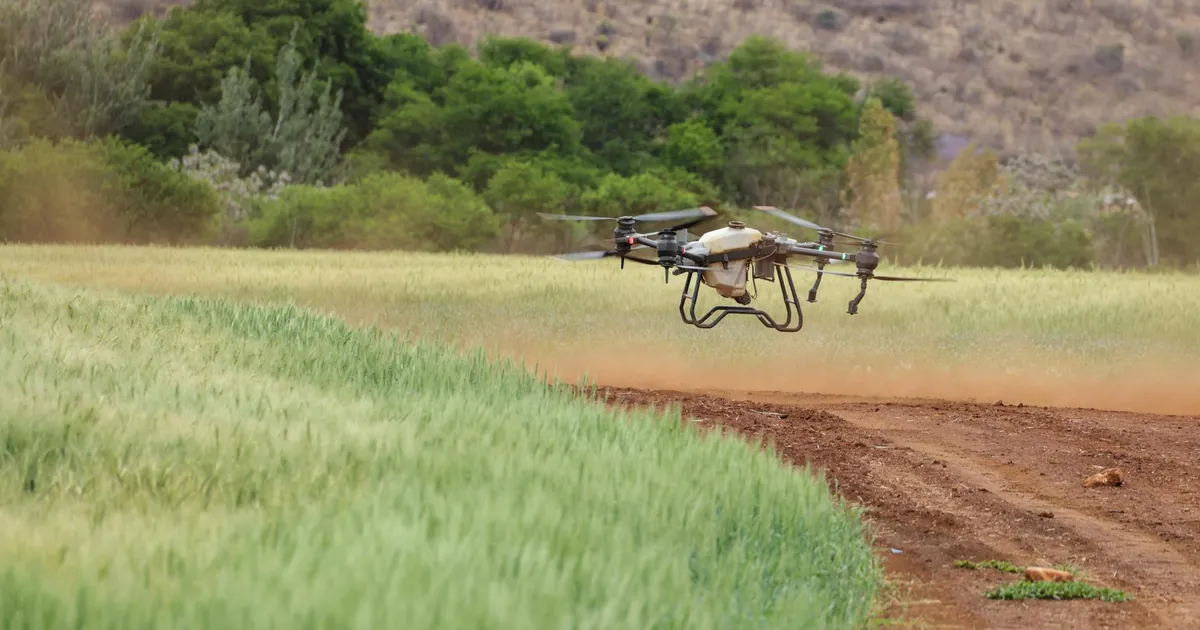
For years, a farmer wanting to survey paddocks with a drone faced the same regulatory pathway as someone testing experimental air taxis. That absurdity ended in December 2025, when the government introduced what it called a global-first advanced aviation rule rewriting how New Zealand treats uncrewed and emerging aircraft technology.
The reform matters not because drones are new, but because the government explicitly framed regulation itself as an economic constraint. That framing, applied consistently, could reshape how Wellington thinks about compliance costs across sectors far beyond aviation.
The old rules were driving innovators offshore
Under the previous Part 102 pathway, operators of uncrewed aircraft needed fresh Civil Aviation Authority approval every time they modified their technology. A 2024 Regulatory Impact Statement described this process as “burdensome” and “not always proportionate to operational risks”, and identified that innovators were relocating overseas because of regulatory uncertainty.
That is the quiet cost of over-regulation. Not dramatic factory closures, but a slow leak of capital and talent to jurisdictions that make experimentation easier. The RIS set a target of delivering a world-class regulatory environment for advanced aviation testing by end of 2025. The government met that deadline.
The new framework, which took effect on 22 December 2025, creates a regulatory sandbox model. Approved research organisations can test emerging aviation technologies in pre-defined airspace for up to five years without seeking fresh CAA approval for every incremental system change. The rules are technology-agnostic, covering everything from delivery drones to autonomous passenger aircraft.
Practical changes farmers and operators can use now
The headline reform is the sandbox, but the practical wins are more immediate. Surveying and mapping by drone no longer require CAA certification. Some night operations and beyond-visual-line-of-sight flights in enclosed spaces shifted from the higher-risk Part 102 category to the lighter Part 101 framework. Agricultural spraying and top dressing retained appropriate oversight, but now operate under clearer rules that reduce uncertainty for operators and investors.
In November 2025, Space Minister Judith Collins said the advanced aviation sector was “no longer emerging” and was “central to New Zealand’s economic and high-tech future.” Associate Transport Minister James Meager framed it in rural terms: the changes were “about backing our farmers and rural communities by reducing unnecessary regulatory burden”.
The Tāwhaki National Aerospace Centre south of Christchurch, which received $5.85 million in operational funding and permanent Special Use Airspace in 2025, is positioned as the primary test-bed. The economic stakes are material. The government’s own RIS cited a 2019 study estimating the drone sector could deliver benefits as high as $7.9 billion over 25 years.
Conventional aviation is still bleeding
The deregulatory push for advanced aviation runs in awkward parallel with a conventional sector under serious cost pressure. In April 2026, Air New Zealand announced that more than 1,100 domestic flights would operate at reduced frequency, affecting approximately 44,000 passengers, with fuel costs as the primary driver. Tauranga services to Auckland, Wellington, and Christchurch are all being cut.
The government’s broader Aviation Action Plan acknowledged the problem but kicked the hardest question down the road. Fees and levies on the sector are set across regulatory silos, with MPI, Customs, the CAA, and Airways all setting charges independently. A funding and pricing review is not due until end of 2027. For regional businesses already losing air connectivity, that timeline is cold comfort.
The principle matters more than the drones
The most significant aspect of this reform is not the specific rule changes but the reasoning behind them. The government identified that regulation was functioning as an economic barrier, that compliance friction was driving productive activity offshore, and that the appropriate response was to reduce that friction while maintaining safety standards.
That logic applies well beyond aviation. Every sector where incremental regulatory approval adds cost without proportionate safety benefit, from building consents to food safety to financial services, could benefit from the same analysis. The question is whether this remains a one-off win for a politically attractive sector, or whether it signals a genuine shift in how Wellington weighs compliance costs against the economic activity those costs suppress.
For now, the drone operators and aerospace startups have their sandbox. The rest of the economy is still waiting.
Sources
- Advanced aviation rule to support innovation in our skies (2025-12-10)
- Global-First New Civil Aviation Rule To Slash Red Tape (2025-12-10)
- NZ government loosens regulations on aerospace development (2025-11-27)
- Interim Regulatory Impact Statement: Supporting Advanced Aviation (2024-09-04)
- Air New Zealand Slashes Flights from This Popular Coastal City as Fuel Costs Bite Hard (2026-04-08)