

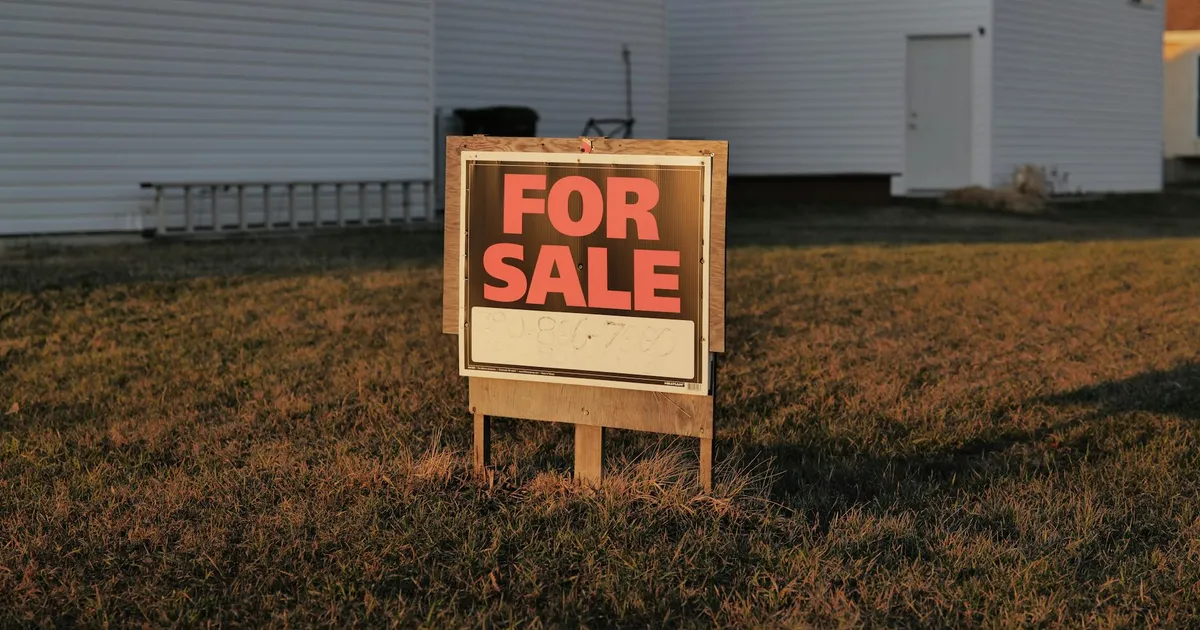
The exit queue is getting longer
For a generation, New Zealand property investment operated on a simple formula: borrow heavily, wait for prices to rise, refinance, repeat. That formula required falling interest rates, reliable capital gains, and a tax system that rewarded negative gearing. All three pillars are now cracked.
Tony Alexander’s latest survey of 200 existing property investors found a record 38% planning to sell, against just 12% looking to buy. That three-to-one ratio of sellers to buyers is unprecedented in the survey’s history. Alexander told RNZ that geopolitical uncertainty, including the Iran conflict, has added another layer of hesitation on top of already weak fundamentals.
The professional investors who buy for cashflow are still in the market. It is the amateur cohort, those who bought expecting capital gains to paper over negative yields, who are heading for the door.
The losses are real and getting worse
Inland Revenue data makes the cashflow problem concrete. In the 2023 tax year, 53,350 taxpayers reported negative rental income, with an average loss of $9,020, up from an average loss of $7,450 the year before. That is over 50,000 investors subsidising their tenants’ housing costs out of their own pockets, and the situation has likely deteriorated further since.
Cotality’s Kelvin Davidson offered some nuance in a separate RNZ report, noting the weekly cashflow gap for a typical new investor has eased from $400-$450 at the peak to around $150-$200 now. That is improvement, but $150-$200 per week is still a significant ongoing drain for anyone who bought expecting appreciation to do the heavy lifting.
Squirrel CEO David Cunningham put it more bluntly: “There was a 20 or 30 year period where you could buy anything and it would go up.” That period is over.
The cavalry is not coming
Investors banking on rate cuts to restore the old equation face an uncomfortable reality. Retail mortgage rates moved higher in March 2026 as wholesale funding costs rose. CPI inflation came in at 3.1% in Q1 2026, above the RBNZ’s 1-3% target band and above market consensus. That leaves the central bank with limited room to cut aggressively.
The price picture offers no comfort either. The national median sale price fell from $790,000 in Q4 2025 to $740,000 in Q1 2026, a $50,000 drop in a single quarter. Four of the five major banks revised their 2026 house price forecasts to neutral or negative. The property market has now attempted and failed three recoveries since early 2023, with a net 28% of agents reporting falling prices in their area.
Generate Wealth’s analysis in the NZ Herald captures the structural shift: “For nearly three decades, falling borrowing costs acted as a powerful tailwind for property values. That trend has now run its course.” When rental yields sit at 3-4% before costs and prices are flat or falling, leverage amplifies losses instead of gains.
The one-bank trap catches the overleveraged
The Banking Ombudsman has already seen how this plays out in practice. An investor tried to sell one property to discharge $680,000 in mortgages, but falling values meant the sale price fell short. A third property’s value had also dropped, leaving insufficient equity. The investor ended up on hardship assistance.
Sarina Gibbon of the Auckland Property Investors Association warned that more investors are confronting limited financing options as valuations fall below expectations. Cross-collateralising multiple properties with a single lender, the so-called “one-bank trap”, turns a portfolio problem into a personal financial crisis when values decline across the board.
With RBNZ data showing total housing stock valued at $1.65 trillion, the scale of capital exposed to this slow-motion correction is enormous.
Who fills the gap when mum-and-dad landlords leave
This is the question that matters most for business readers. The retreat of small-scale investors does not just affect property prices. It shapes rental supply, construction demand, and bank risk.
Gibbon noted the market is shifting toward “more cash rich” investors with higher incomes. That replacement landlord class will demand higher yields, which means higher rents. Almost 50% of agents say investors are not motivated at all to buy, even as building consents recovered to 36,944 new homes in the year to January 2026. A construction pipeline without a buyer pool is a pipeline to nowhere.
Davidson’s conclusion deserves the last word: “You can’t just rely on the capital gain. It has to turn cash flow positive a bit sooner.” That is not a cyclical adjustment. It is the end of a model that shaped New Zealand housing for three decades. The investors who recognise it early will survive. The ones still waiting for the old formula to restart are the ones feeding the exit queue.
Sources
- NZ Herald: Record number of ‘mum-and-dad investors’ look to sell properties amid uncertainty
- RNZ: Record number of ‘mum and dad investors’ look to sell properties amid uncertainty
- RNZ: More than 50,000 property investors making losses
- RNZ: Reports of property investment dying may be overstated
- RNZ: Property investors warned about ‘one-bank trap’
- Valocity Market Insights Report: March 2026
- Mitrade: New Zealand’s CPI inflation steadies at 3.1% YoY in Q1 2026
- NZ Adviser: NZ property recovery stalls again as buyers regain upper hand
- NZ Herald/Generate Wealth: Property or managed funds – why investors are rethinking where to invest