

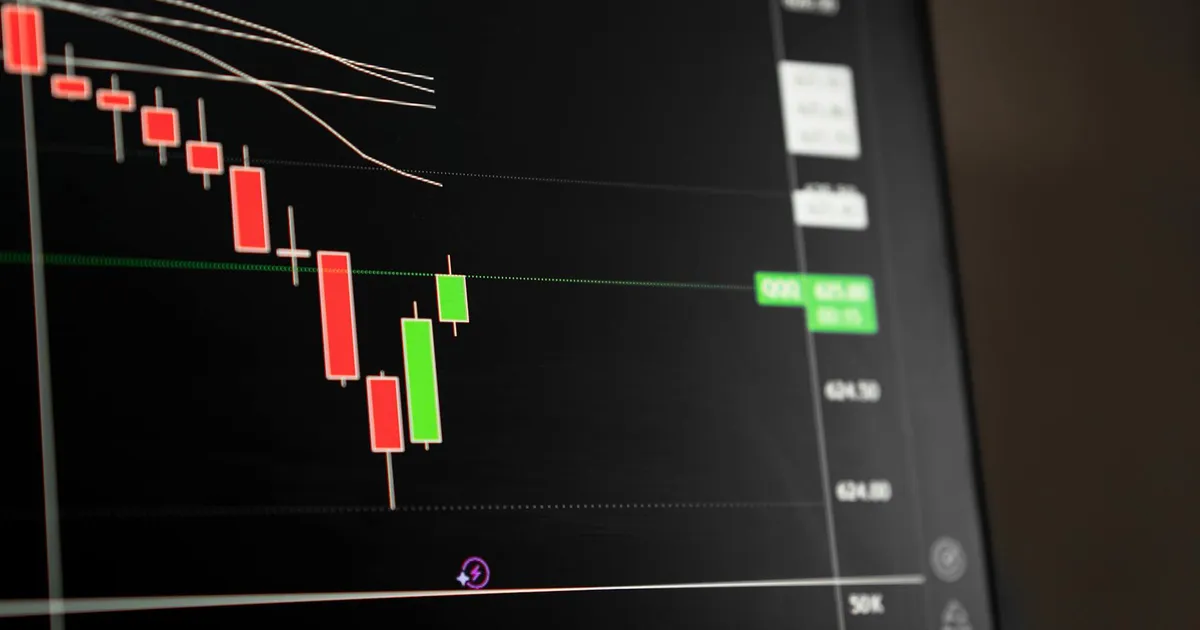
Global sharemarkets are hitting record highs. The S&P 500, Nasdaq, FTSE 100 and Russell 2000 have all been at or near all-time highs despite a Middle East conflict, oil supply disruption and rate uncertainty. New Zealand’s benchmark index is down 2.8% year-to-date and roughly 5% lower since the Iran conflict began on February 28.
Pull back to a five-year view and the gap becomes grotesque. The NZX 50 has returned just under 1.7% in total. The S&P 500 and Nasdaq returned around 85-90%. Over the last twelve months alone, Fisher Funds data shows the S&P 500 up 27.9% against the NZX 50’s 1.9%, a 26-point gap. This is not a blip. It is a structural problem, and business owners with capital tied up in domestic equities or KiwiSaver funds heavy on NZ stocks are paying the price.
A legacy market in an AI world
The composition of the NZX tells you everything. RNZ business reporter Jeffrey Halley puts it plainly: “Our NZX is really made up of sort of what you might describe as legacy industries – there’s utilities and telcos and some manufacturers, some shops and some airlines. It’s not technology.”
Mark Lister, investment director at Craigs Investment Partners, explains why that matters right now. “Our market just happens to not have many of those high-flying types of sectors,” he says. “What we do have is all of those interest rate sensitive sectors and companies – lots of utilities, infrastructure – great businesses and companies but they tend to perform well when you have got interest rates that are low and stable or falling.”
Meanwhile the AI trade is re-rating US equities at speed. Generate investment specialist Greg Smith points to “the big tech names and the AI names”, noting Microsoft climbed 15% in a fortnight. New Zealand has nothing comparable on its exchange.
A broken domestic foundation
Sector composition alone does not explain a 26-point annual gap. The domestic economy underneath is cracked. GDP fell 0.5% over the year ended September 2025. Annual average growth to March 2025 was -1.1%. GDP per capita sat at roughly the same level as the end of 2021, meaning four years of zero per-capita progress.
Unemployment hit 5.3% in September 2025, the highest since December 2016. Electricity prices surged 11.3% annually, the steepest increase since 1989. And the fiscal picture offers no cavalry: net core Crown debt stood at $186.5 billion, or 42.8% of GDP, with tax revenue $0.6 billion below forecast.
Smith captures the timing problem neatly: “We were quite different economically. We’re running below par growth and were just coming into a mini recovery as the conflict hit.” Fisher Funds noted the central bank divergence was backwards, with the Fed holding steady over a strong US economy while the RBNZ held at 2.25% over a contracting one.
Oil exposure turns a drag into a crisis
New Zealand imports all its oil. The Strait of Hormuz remains largely closed, blocking about 20% of global supply. Air New Zealand’s fuel bill more than doubled to $8.5 million per day. Salt Funds managing director Matt Goodson warns that “if the Iran war continues for weeks and months, it could be extremely concerning for the domestic economy”.
Global equity markets are pricing in a short conflict. If that bet is wrong, New Zealand faces the worst combination: no domestic oil production, elevated inflation, a weak economy, and a sharemarket with nowhere to hide.
Capital is voting with its feet
The investment industry has already drawn its conclusion. Fisher Funds states explicitly that most of its diversified strategies have “far more exposure to global equity investments than domestic equity investments”, calling it deliberate design. A Sharesies survey found nine of the ten largest declines on its platform over the past year were NZX investments, with Nasdaq the most popular choice among users.
There are green shoots. The NZX’s IPO pipeline is “probably the strongest it’s been in a really long time” according to NZX head of origination Anna De Souza, with five new listings in six months. But new listings in gold and critical minerals do not change the structural composition of a market dominated by gentailers and property trusts.
For business owners planning capital raises, managing KiwiSaver allocations, or simply watching their net worth, the message from five years of data is uncomfortable but clear. The NZX is not broken because of a war or a rate cycle. It is broken because New Zealand does not produce enough growth companies to attract capital. Until that changes, the rational money will keep leaving.
Sources
- Newsroom: Global markets are struggling, but NZers are used to it (2026-03-18)
- Fisher Funds: Buoyant offshore markets drive investor returns
- BusinessDesk: NZ sharemarket has fallen 2.8% so far this year (2026-04-10)
- NZ Herald: Why investors are jittery but not in full-blown panic yet
- RNZ: Why sharemarkets are still hitting records and why NZ’s left out
- RNZ: Wall Street hits record highs following Lebanon ceasefire
- RNZ: NZ-listed shares underperformed compared to global markets
- NZ Herald: Why is the NZ sharemarket failing to fire?
- Stats NZ: Economic snapshot September 2025 quarter
- Stats NZ: Gross domestic product March 2025 quarter
- Treasury: Financial Statements of the Government – four months ended October 2025 (2025-12)
- BusinessDesk: NZ sharemarket ends Easter up 1.3% with a strong rally