

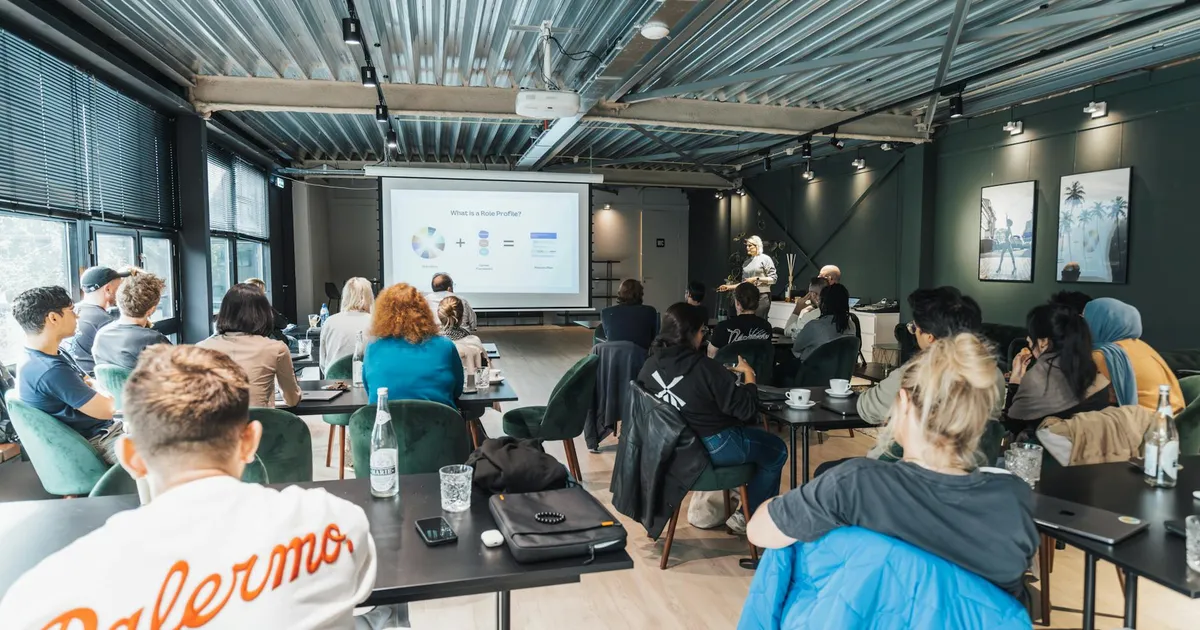
Microsoft wants to train 100,000 New Zealanders in AI skills by 2027, part of a broader one-million-person initiative across Australia and New Zealand. The tools are free: AI Skills Navigator, Microsoft Learn, LinkedIn Learning, GitHub. Partners include Te Pūkenga and Auckland Council.
It is a genuinely useful programme. It is also, unmistakably, ecosystem-building. Every person trained on Microsoft’s tools is a future enterprise licence seat. That does not make the initiative cynical. It makes it rational. And the underlying problem it targets is real enough that businesses should treat the whole exercise as a diagnostic, not a press release.
The gap is worse than most owners realise
NZTech estimates the sector needs roughly 2,400 additional AI specialists by December 2026 to meet current project commitments. Domestic institutions are graduating fewer than 800 students annually with relevant qualifications. That is a shortfall of about 1,600 specialists per year, with demand outstripping supply by nearly 400%.
The University of Auckland has increased machine learning course offerings by 150% since 2024 and still has a two-year waiting list for specialised AI modules. Senior AI engineers are commanding salaries above $200,000, a 60% premium over traditional software development roles. Critical positions are sitting unfilled for six months or longer in Auckland, Wellington and Christchurch, with companies delaying product launches and scaling back international expansion as a result.
This is not a manufactured crisis. Microsoft did not invent the shortage. But it is positioning itself as the solution.
SMEs have effectively opted out
The most alarming figure in the government’s own July 2025 AI Strategy is this: 68% of New Zealand SMEs have no plans to evaluate or invest in AI. In Australia, that figure is 38%. New Zealand is not just behind. It is almost twice as disengaged at the small business level.
Free training sounds like the answer, but Microsoft’s own Tim Allen, Skills for Employability Lead at Microsoft ANZ, has acknowledged the structural barrier: “72 per cent of organisations said they simply didn’t have the bandwidth or resources to train interns or upskill their existing workers to fill senior roles, in SMBs especially.” Free courses only work if businesses have the capacity to absorb them. A 15-person firm in Palmerston North does not have a Chief AI Officer. It barely has an IT budget.
$37 billion rides on how this plays out
Research from Accenture, Microsoft and Mandala models two scenarios. A balanced approach combining automation with workforce augmentation could deliver $76 billion annually to the NZ economy by 2038. Deploy AI mainly for cost-cutting without retraining workers, and the figure drops to $39 billion. The $37 billion gap is the economic value of getting skills right.
BusinessNZ CEO Katherine Rich framed it clearly: “It underscores the importance of working broadly with government, education providers and employers in a coordinated way.” That coordination has been slow. NZ was the last OECD country to publish an AI strategy, only managing it in July 2025.
Training people Australia will hire
Here is the uncomfortable logic nobody in the programme wants to discuss. Australian firms are offering $50,000 relocation packages to poach Kiwi AI specialists. US firms pay double NZ salaries. Skilled migrant visa processing averages eight months for tech professionals, making it hard to replace departing talent with international hires.
Microsoft NZ’s Vanessa Sorenson has noted that 84% of Kiwi knowledge workers already use generative AI, one of the highest adoption rates globally. Workers are using the tools. They just are not trained to use them well, and many of the best ones will leave for better money.
What business owners should actually do
Ignore the headline number. Training 100,000 people in AI basics is not the same as creating 100,000 AI-capable workers. The real signal here is that Microsoft, a company with better market intelligence than most governments, sees a capability gap severe enough to justify giving away its training for free.
Tim Allen’s practical suggestion deserves more attention than it has received: “Instead of setting targets like a million more people in tech, let’s break it down into actionable steps, say 20% of early career hires should come from alternative pathways.” That is a change any business can make without waiting for a government strategy document.
Three quarters of Australian business leaders say they would not hire someone without AI skills. That hiring filter will cross the Tasman. The 68% of Kiwi SMEs sitting this out are not being cautious. They are falling behind a curve that Microsoft, for its own reasons, is trying to flatten for them.
Sources
- Microsoft: NZ North One Year On – Building the Foundations of New Zealand’s AI Future (2025-12-19)
- Reseller News: Microsoft pledges to upskill one million people in AI across A/NZ
- Reseller News: Microsoft study – Worker reallocation one key to unlocking AI benefits in New Zealand
- New Zealand’s Strategy for Artificial Intelligence: Investing with Confidence (2025-07)
- Leak: NZ Tech Sector Faces Critical Skills Gap as AI Investment Surge Outpaces Local Talent Pipeline
- Leak: NZ Tech Sector Faces Critical Skills Gap as AI Adoption Accelerates Across Industries
- Microsoft: Why we need to think smaller on skilling (2023-08-24)
- Microsoft launches new AI skills program to expand opportunities for Australians and New Zealanders