

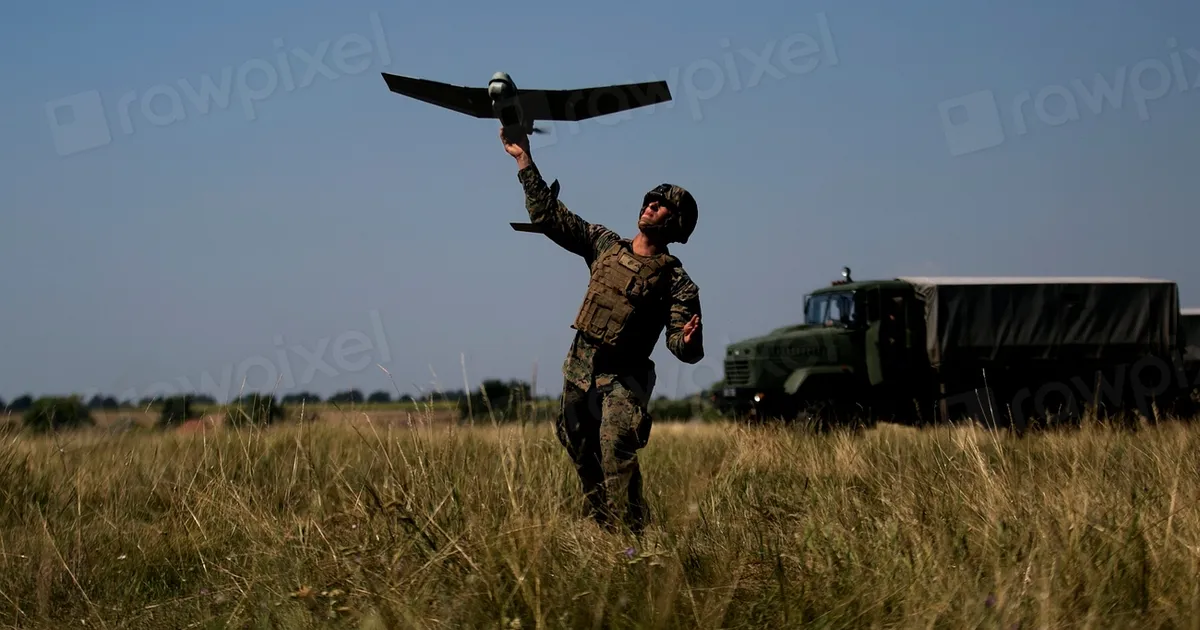
Fifty NZDF personnel are heading to a major US aerial and ground drone exercise. That is the news peg. But the real story is bigger, better funded, and already moving faster than most New Zealand business owners realise.
The 2025 Defence Capability Plan commits $12 billion over four years, including $9 billion in new funding. Within that, $200 million to $450 million is earmarked for drone systems by 2029, covering short and long-range aerial and marine platforms plus whole-of-life maintenance. Budget 2025 backed the broader plan with $4.2 billion in defence funding, including $2.7 billion in capital spending. The Ministry of Defence spent $522 million on procurement alone in 2024/25.
The plan’s language is unusually blunt for a Wellington document: “intensifying strategic competition is increasing global and regional tensions, and raising the prospect of military confrontation and conflict.” Distance, it notes, no longer provides insulation.
This is not aspirational. The money is allocated and the NZDF is spending it.
A Mount Maunganui company shortlisted alongside Lockheed Martin
If you want proof the commercial opportunity is real, look at Syos Aerospace. The Mount Maunganui firm is four years old, employs 170 people globally with most in New Zealand, and won the 2025 NZ Hi-Tech Company of the Year award.
The UK government has bought £30 million worth of Syos drones to supply to Ukraine. The British Army then shortlisted Syos alongside Lockheed Martin, Leonardo, BAE Systems and Thales for a £100 million loyal wingmen contract for Apache attack helicopters. The Royal Navy has deployed modified Syos SM300 maritime drones in exercises around Greenland.
Back home, the NZDF has signed a deal to trial 14 Syos platforms across air, land and sea domains, integrated with a fire control system built in New Zealand by Hirtenberger Defence Technology. Defence Minister Judith Collins confirmed the army will use its new drones for “combat tasks including precision targeting”.
This is not a feel-good story about punching above our weight. It is evidence that defence-grade drone technology is a viable commercial category for New Zealand firms right now.
The NZDF is actively looking for domestic suppliers
The NZDF has released a request for information asking New Zealand companies to help map domestic drone capabilities. Supply chain resilience is described as “a central factor” in procurement decisions. Specific opportunities flagged for domestic firms include sensor and payload development, training solutions, and command and control systems.
Collins has framed the ambition explicitly: she wants “the world coming to this country for its smart military technology”.
The skills pipeline is building in parallel. The NZ Army ran its first dedicated FPV drone training course at Burnham Military Camp, qualifying ten drone pilots using platforms from NZ companies Kiwi Quads and Fenix that can be 3D printed and assembled on site. NZ Army UAS lead Captain Richard Adams put the urgency plainly: “Drones now account for approximately 70 per cent of casualties on the modern battlefield.”
Drone industry body UAVNZ already has a Defence Force liaison officer to align civilian and military best practice. Chair Dr Isaac Henderson argues the military-civilian boundary is artificial: “The drone doesn’t know if it’s being flown for military or civilian purposes.”
Not everyone thinks the strategy is real
Three defence commentators quoted by RNZ called the strategy “36 pages of waffle”. Mark Obren offered the sharpest critique, contrasting NZ’s approach with Australia’s: “Australia is trying to resolve the bigger issues of building capabilities, while I would characterise New Zealand’s position as relying on three silver bullets leveraging off others’ capabilities.”
The criticism is fair up to a point. New Zealand’s defence spending remains well below the 2 per cent of GDP target it has committed to reaching within eight years. Strategy documents are cheap. Sustained procurement is expensive.
But the sceptics are fighting the last war. The money this time is allocated, the RFI is live, and a four-year-old Kiwi company is already competing against Lockheed Martin for real contracts. The NZDF itself cites Ukraine as the model: “smaller nations can effectively challenge larger adversaries by rapidly adopting and adapting new technologies.”
The window is open but it will not stay open
New Zealand’s uncrewed systems sector is mostly SMEs focused on commercial and dual-use technology. The skills, software and sensor work these companies are already doing is directly transferable to defence applications. The question is whether they recognise the procurement pipeline as a legitimate growth channel before the specifications are locked in and the contracts awarded.
The allied interoperability angle matters too. Sending 50 personnel to US drone exercises is not a photo opportunity. It is the mechanism by which the NZDF learns what systems need to be compatible with Five Eyes forces, which shapes procurement specifications, which shapes what domestic suppliers need to build.
For NZ tech firms, the maths is straightforward: up to $450 million in drone procurement, an explicit preference for domestic suppliers, and a request for information that is open right now. Companies that engage early will shape the requirements. Companies that wait will compete on someone else’s terms.
Sources
- 2025 Defence Capability Plan – NZDF (2025)
- Budget 2025 Defence Funding Factsheet (2025)
- Ministry of Defence Annual Report 2024/25 (2025)
- Iran strikes underscore strategic intent of NZ’s new combat drones – Newsroom (2026-03-02)
- How NZ military plans to ramp up drone use – Newsroom (2026-03-23)
- Defence Force to test air, land, and sea drones from Mount Maunganui company – RNZ (2026)
- Military and civilian aerospace sectors benefit each other – dronemaker – RNZ (2025)
- New Zealand Army partners with defence industry on FPV drone training – Defence Connect (2025)
- Kiwi drones to boost Defence capability – GlobalSecurity.org (2026-02-26)