


Employees at the Australian Broadcasting Corporation (ABC), Australia’s vital public media service, embarked on their first national strike in 20 years on Wednesday, driven by concerns over meagre pay rises, unstable contracts, and the potential for artificial intelligence to erode jobs.
Hundreds walked out, halting flagship programmes like the 7.30 current affairs show and breakfast radio slots, while stations such as Triple J and ABC Classic shifted to music and repeats. The 24-hour action, starting at 11:00 local time, spared only emergency broadcasts.
Backed by the Media, Entertainment and Arts Alliance, staff rejected an offer of a 10 per cent pay increase over three years—3.5 per cent initially, then 3.25 per cent annually—deemed inadequate against 3.8 per cent January inflation.
A $1,000 bonus excluded many casual workers among the ABC’s 4,400 staff, with news forming the largest division. Union members also seek better night-shift pay, promotion opportunities, and guarantees against AI replacing roles, amid government experiments with such tools.
ABC managing director Hugh Marks defended the proposal as responsible given budget constraints since 2019. “The pay offer reflects the maximum level the ABC can sustainably provide and is balanced when looking across all the factors that we need to consider,” he said. The dispute now heads to the Fair Work Commission.
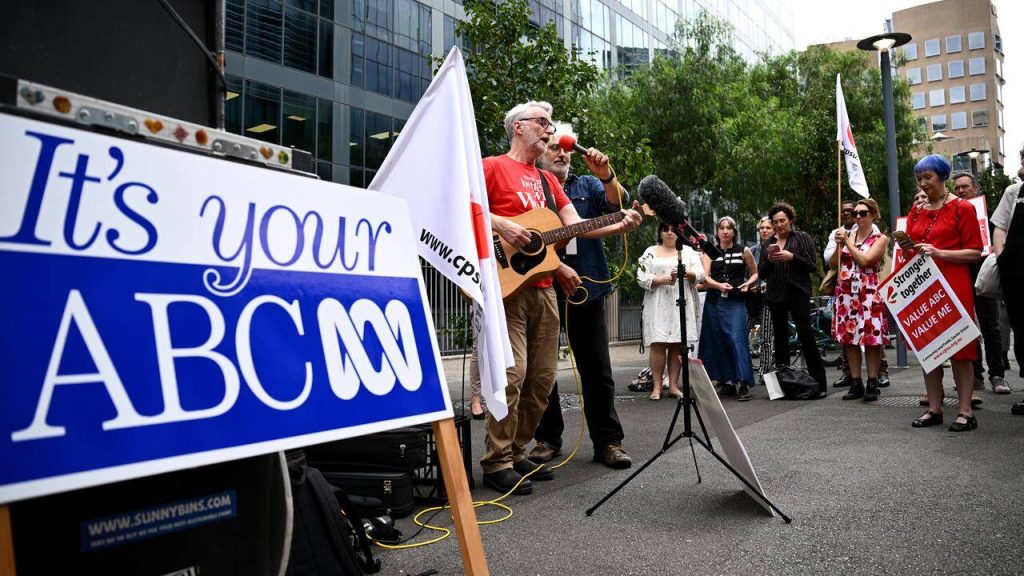
Protests drew crowds to Sydney and Melbourne offices. Veteran David Marr told the BBC as he joined the picket, “Public broadcasting is the hope of the future of journalism, and it has to keep up with wages… and promise secure futures for those who invest their lives in it.”
Fran Kelly, longtime breakfast host, rallied Sydneysiders, recalling her path from insecure contracts to permanency via union efforts. “I want you all to have the same choice,” she said. “It’s not acceptable that you get stuck at a pay level that is not enough to live on in Sydney or Melbourne or wherever you are.”
A casual podcast producer confided her dilemma over a rival’s permanent offer. “It’s really stressful, I love my job and I want to stay but that’s the decision I have to make,” she said.
Union’s Melissa Donnelly emphasised the ABC’s role in national storytelling. “ABC plays such an important role in our society and in Australian storytelling and it’s really important ABC management come to the table,” she told Australian Associated Press.
Opposition’s Sarah Henderson called it a disgrace. “There has never been a more important time in this country when we need ABC journalists and other content makers to be out in the field informing Australians,” she said.