

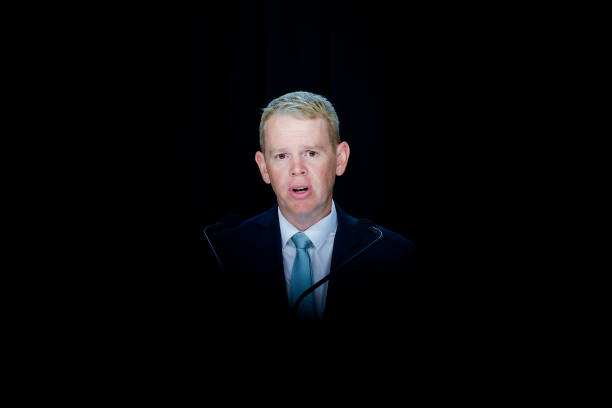
Labour leader Chris Hipkins’ emotional defence of his private life this week has reignited a familiar tension in modern politics: when do public figures get to claim privacy — and when do they willingly give it up?
Hipkins has strongly denied allegations made by his ex-wife, describing the situation as a deeply personal matter and insisting he has “made a very conscious effort to keep my private life private.”
Yet that claim sits uneasily alongside his own past decisions to share aspects of that same private life in carefully managed, positive settings.
In January this year, Hipkins and his fiancée Toni Grace featured in glossy magazine coverage, discussing their relationship, engagement and family plans in detail.
Those appearances were voluntary, curated and – crucially – favourable. They presented the human side of a politician, reinforcing relatability at a time when personal branding is increasingly central to political success.
This is the contradiction at the heart of the current controversy. Politicians often want to draw a line between “private” and “public” — but that line is frequently movable, depending on whether the exposure is beneficial or uncomfortable.
New Zealand has seen this pattern before. Winston Peters famously described details of his superannuation overpayment as a “private matter” and took legal action over its disclosure, despite being one of the country’s most high-profile political figures.
Similarly, former minister Kiri Allan’s personal relationships and wellbeing became matters of public scrutiny only after her conduct raised wider questions about her fitness for office — demonstrating how quickly “private life” can become politically relevant.
Even Hipkins himself has previously been criticised over privacy boundaries — most notably when he apologised for releasing personal information about journalist Charlotte Bellis without consent, highlighting how selective the application of privacy principles can be.
The phenomenon is hardly unique to New Zealand. In the United Kingdom, politicians from Boris Johnson to Keir Starmer have alternated between inviting media into their family lives and pushing back against scrutiny when controversies arise. In the United States, figures like Donald Trump and Joe Biden have similarly used family narratives to shape public perception while resisting probing coverage when it turns negative.
What emerges is not so much hypocrisy as a structural feature of modern politics. Personal stories are political assets — until they become liabilities.
Hipkins’ predicament illustrates the risk of that trade-off. Once a politician opens the door to their personal life, even selectively, it becomes harder to convincingly close it again.
Privacy, it seems, is no longer a fixed boundary but a negotiation.