

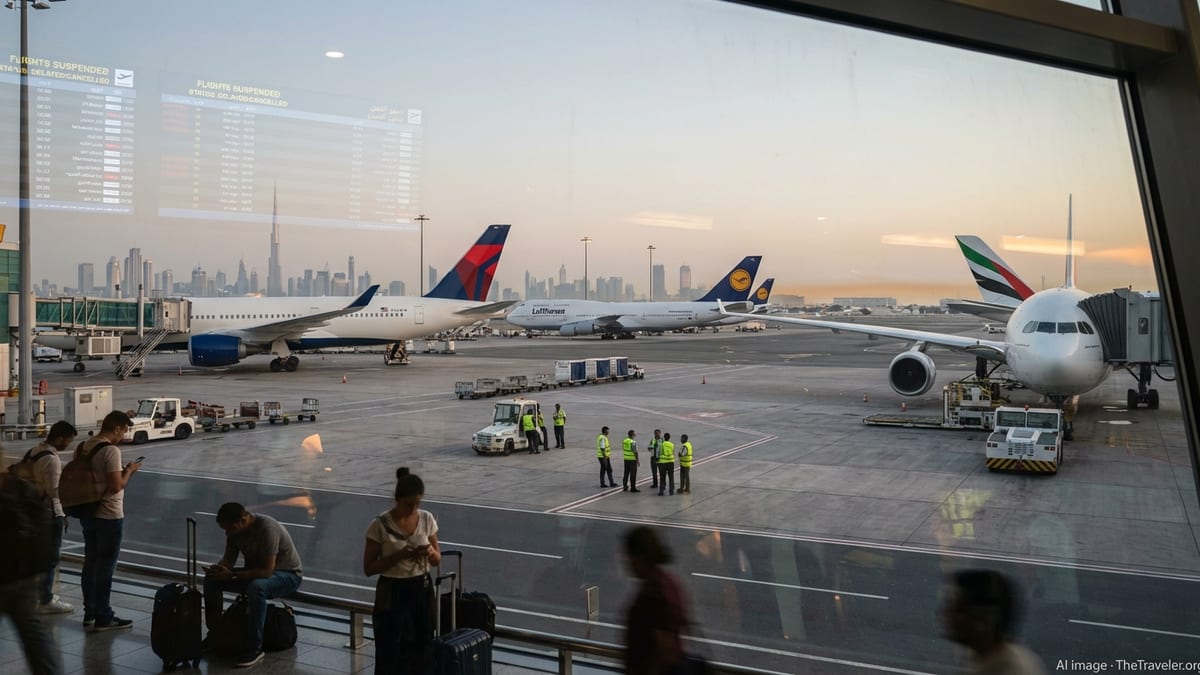
Airlines have grounded flights across the Middle East after U.S. and Israeli strikes hit Iranian targets early Saturday, prompting retaliatory missile and drone attacks on Gulf states.
Airports in Tel Aviv, Dubai, Doha and other hubs remain closed, with full shutdowns over Iran, Israel, Iraq, Qatar, Bahrain, Kuwait and Syria. Partial restrictions affect the UAE and Saudi Arabia, rerouting global routes via Saudi or Caucasus paths.
The UK Foreign Office bars all but essential travel to Bahrain, Qatar, Kuwait, and the UAE, and all trips to Israel and Palestine. Those present must shelter; over 76,000 Britons registered, mostly UAE-based.
Those in Oman’s Duqm should shelter in place, while visitors in Salalah must leave as soon as commercial transport allows, following local authorities. Saudi Arabia residents are to remain indoors in secure locations. In Jordan, Iraq and similar areas, stay vigilant and take shelter if directed.
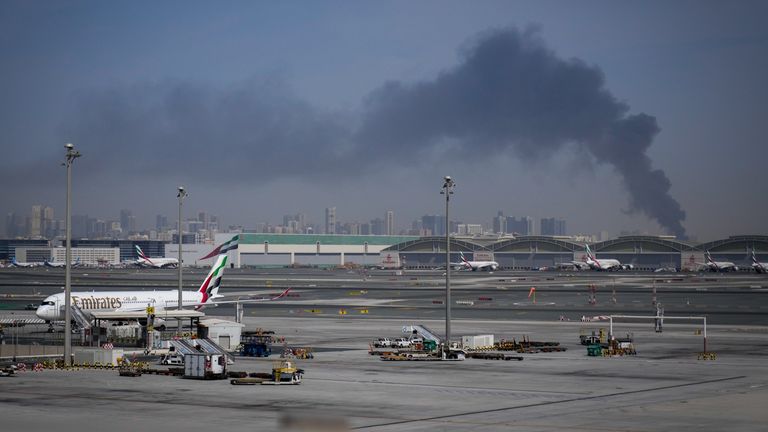
Emirates paused Dubai until 15:00 local (13:00 GMT) Monday. Etihad halted Abu Dhabi outflows until 02:00 local. British Airways axed Tel Aviv and Bahrain to Wednesday, with Heathrow links to the region at risk. Virgin Atlantic cut London-Riyadh and Dubai, delaying India and Maldives flights. Qatar Airways suspended amid intercepts in Doha.
One person has died and 11 others sustained injuries at Dubai and Abu Dhabi airports since the strikes. Four of the injured were staff at Dubai International, the world’s busiest airport for passenger traffic. The UAE, Kuwait, and Iraq all reported explosions alongside successful interceptions of missiles and drones.
UK eyes evacuations amid closures. Crude oil surged 8 per cent to $92 as airlines lose $500 million daily. Trump cited nuclear and regime issues. Starmer spoke to Trump, deploying RAF defensively to protect interests, urging Iran against indiscriminate attacks with allies.