

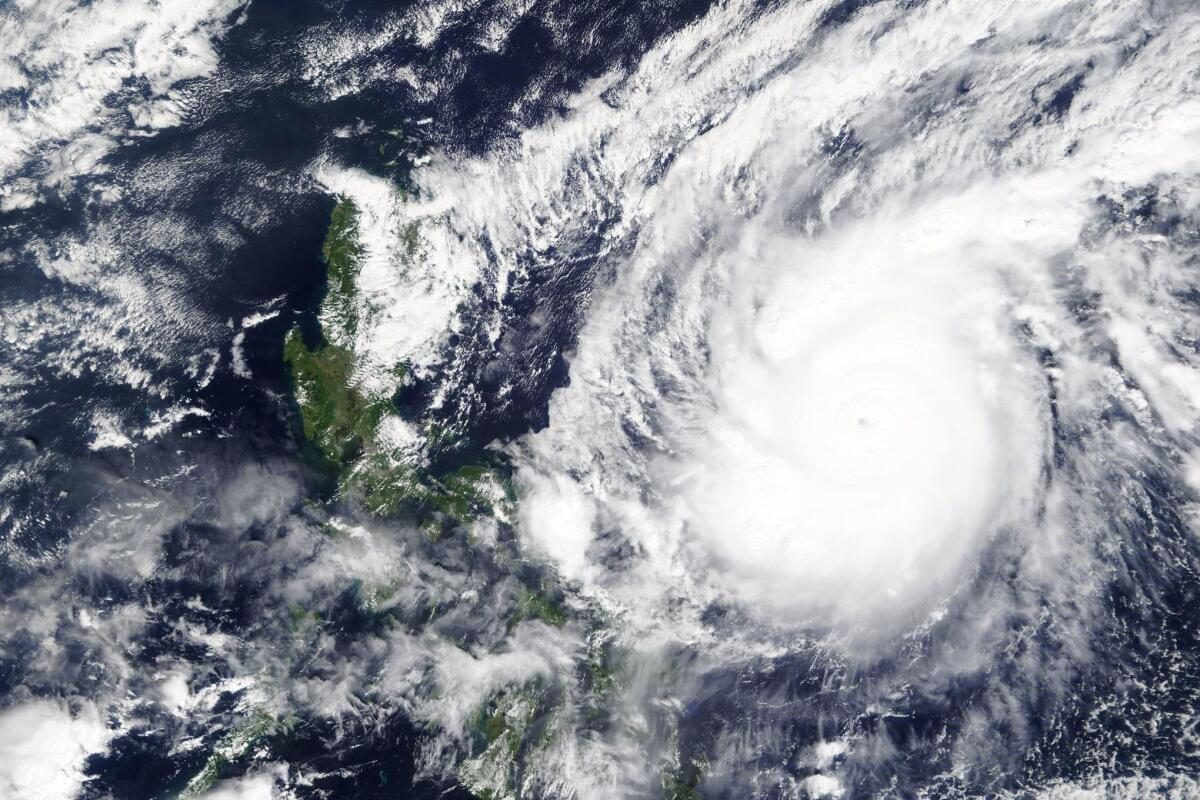
The Philippines has evacuated over 900,000 people as it prepares for Typhoon Fung-wong, which has been upgraded to a super typhoon. Expected to hit late Sunday, the storm brings sustained winds of about 185 km/h (115 mph) and gusts up to 230 km/h (143 mph).
The country’s meteorological agency warned of a “high-risk of life-threatening and damaging storm surge with peak heights exceeding 3m [10ft]” as Fung-wong moves northwest across Luzon, the Philippines’ most populous island.
Only days after Typhoon Kalmaegi caused widespread devastation and nearly 200 deaths, Fung-wong—locally known as Uwan—was already battering the eastern Bicol region early Sunday before heading past the Polillo Islands.
Many schools suspended physical classes or shifted online, and around 300 flights were cancelled. Though expected to weaken slightly after landfall between Baler and Casiguran, Fung-wong will likely retain typhoon strength over Luzon.
Rainfall could surpass 200mm in some areas, with Metro Manila expecting 100–200mm, raising risks of severe flooding and landslides. Heavy rain and wind have already hit eastern provinces, with authorities urging coastal communities to move to higher ground.

In central Aurora, over 200 evacuees sheltered in a sports centre, many with young children too young to remember Typhoon Haiyan, which killed thousands in 2013.
Rescue efforts from Kalmaegi’s aftermath have paused due to Fung-wong’s approach.
Kalmaegi caused mudslides, flash floods, and destruction, especially in poorer neighbourhoods. At least 204 fatalities have been reported, with over 100 missing. Vietnam also suffered five deaths from the storm.
The government declared a nationwide state of calamity to expedite emergency funding and aid distribution. Residents directly affected by Kalmaegi expressed fears about the new typhoon.
The Philippines is located in a cyclone-prone region, with around 20 tropical systems each year, half making landfall. While climate change may not increase cyclone frequency, rising ocean and atmospheric temperatures can intensify storms, causing stronger winds, heavier rains, and greater flood risks.