

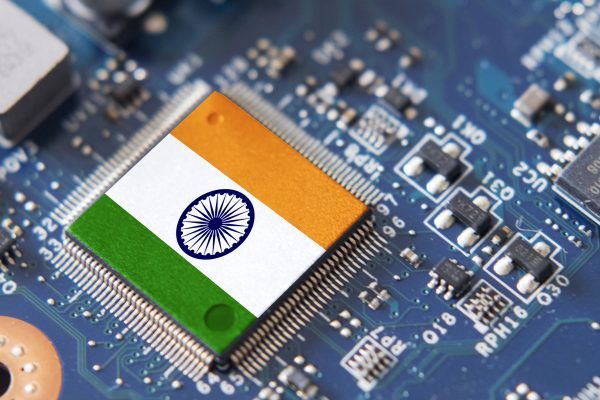
India is investing $18 billion to establish itself as a big player in the semiconductor industry and to reduce reliance on imports and secure chips for strategic sectors amid shifting global supply chains.
This push gained momentum after the U.S. restricted advanced AI chip exports to China in 2022, prompting countries to pursue self-sufficiency. While India is a major consumer of electronics, it currently has little chip manufacturing presence.
The government’s “Semiconductor Mission” targets building a comprehensive ecosystem—from design and fabrication to testing and packaging—within India.
So far, New Delhi has approved ten projects worth over 1.6 trillion rupees ($18.2 billion), including fabrication plants and testing facilities. India also has a skilled engineering talent pool, primarily involved in chip design for global firms.
Experts caution progress is uneven and emphasise that an ecosystem, not just isolated fabs, is essential. Stephen Ezell, vice president at the Information Technology and Innovation Foundation, noted, “India needs more than a few fabs or ATP facilities. It needs a dynamic and deep and long-term ecosystem.”
In May, India introduced incentives to promote electronic component manufacturing, addressing a key gap since local demand for semiconductors was limited by few domestic component producers. The government also broadened fabrication subsidies to cover all chip sizes and related testing and packaging units, attracting interest from international companies.
Leading projects include a $11 billion fabrication plant in Gujarat by Tata Electronics and Taiwan’s Powerchip, producing chips for AI, automotive, and data storage sectors. Another compound semiconductor fab in Odisha, a UK-India partnership, will support defence and clean energy applications.
Building fabs requires strict site conditions and ultra-pure specialty chemicals, areas where India faces challenges. Meanwhile, many Indian firms are entering higher-margin testing and packaging, offering a promising growth path. Sujay Shetty of PwC India described the coming years as “pivotal” for realising India’s semiconductor dreams.
India is still far from producing advanced 2nm chips, expected soon from Taiwan Semiconductor Manufacturing Corporation. However, ARM’s new design centre in Bengaluru will focus on such cutting-edge chip design.
Most Indian talent works on design testing rather than core intellectual property creation, which remains centred in established IP hubs like the U.S. and Singapore.
To reach its goals, India must enhance IP laws and enforcement. The country’s massive semiconductor investment is ambitious, requiring continued improvements in infrastructure, policy, talent, and IP protection to succeed amid global competition.