

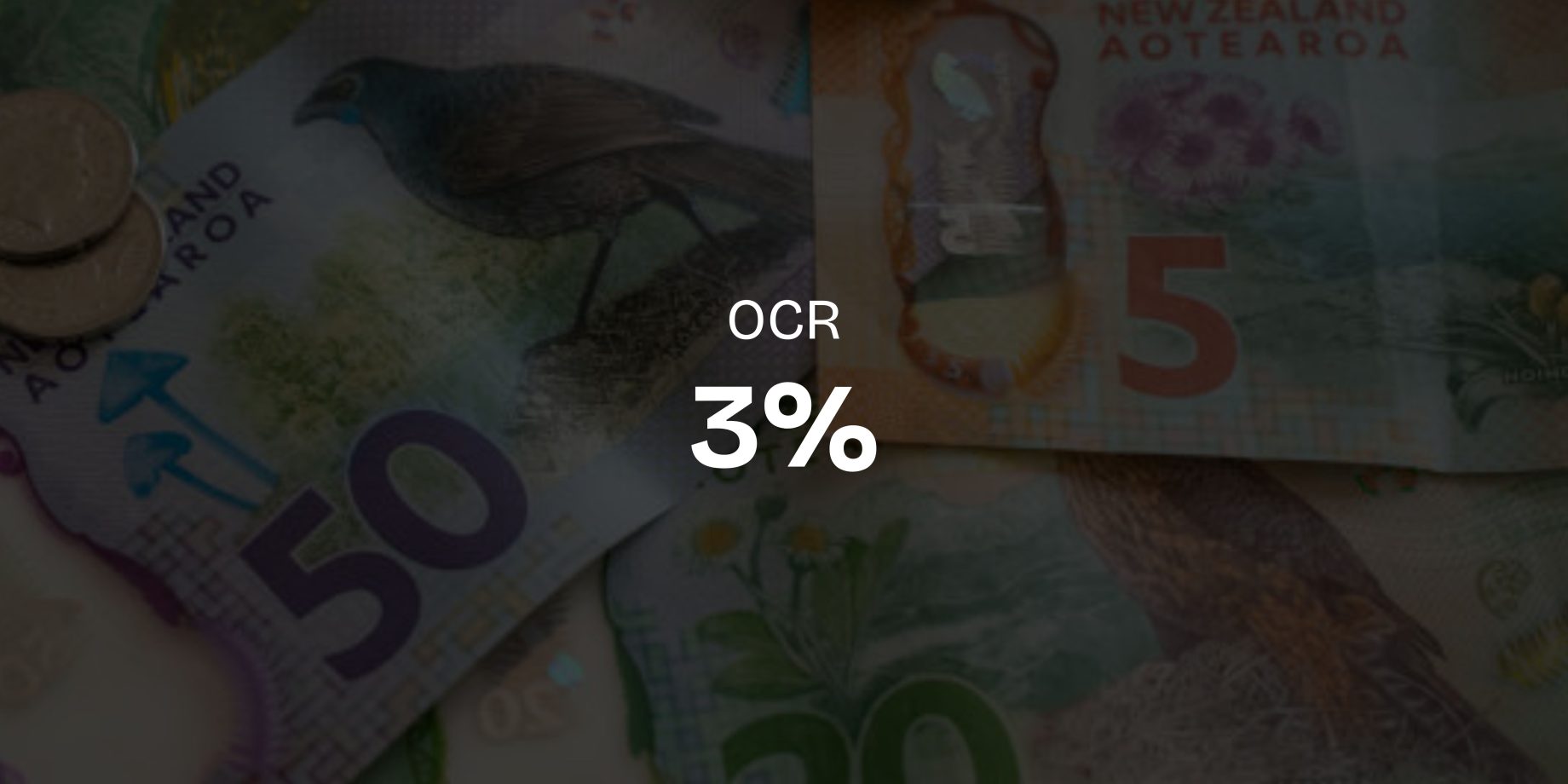
The Reserve Bank (RBNZ) has reduced the Official Cash Rate (OCR) to 3% from 3.25%.
The central bank said the economy has stagnated in recent months as households and businesses remain cautious due to rising prices, a weak labour market, and global uncertainty.
It said underlying inflation pressures are projected to settle around the target of approximately 2%, despite headline consumer inflation rising toward the upper limit of the broader 1-3% range.
The Monetary Policy Committee considered options including maintaining the current rate or cutting it by 25 or 50 basis points, ultimately voting four to two in favour of the smaller 25 basis point cut.
It indicated that additional cuts are likely.
“Further data on the speed of New Zealand’s economic recovery will influence the future path of the OCR. If medium-term inflation pressures continue to ease as expected, there is scope to lower the OCR further.”
Economists largely anticipated the Reserve Bank’s decision on the OCR level.
“Financial markets, they’re pretty much expecting the Reserve Bank to cut interest rates by that 25 basis points, or 0.25%,” Kiwibank senior economist Mary Jo Vergara said.
ANZ’s OCR preview also predicted the same.
Meanwhile, the RBNZ forecasted that annual inflation would reach 3% in the September quarter, driven by increased administered prices, food costs, and other tradable goods and services. However, medium-term inflation expectations remain stable around the 2% midpoint of the RBNZ’s target range.
“Headline inflation is expected to converge to the midpoint of the target range over the next year as tradables inflation pressures dissipate and significant spare capacity continues to reduce domestic price pressures.”
The RBNZ stated that high-frequency data indicated the economy shrank in the second quarter of 2025, weaker than it had anticipated in May.
The slower recovery in domestic spending was likely influenced by declining employment, slower wage growth, reduced household savings, and increased costs for essentials like food, gas, electricity, and council rates.
The RBNZ also noted that tariffs and economic uncertainty were weighing on the global economic outlook, but evidence indicated that the world economy was reacting to these conditions as anticipated.
The bank said tariffs on New Zealand exports to the US were higher than initially anticipated, and that certain firms and industries could face tougher export conditions as a result.