

The United States has dramatically deepened its involvement in the volatile Middle East by directly targeting Iran’s nuclear infrastructure, a move that has sent shockwaves through diplomatic circles and raised fears of a much wider regional conflict.
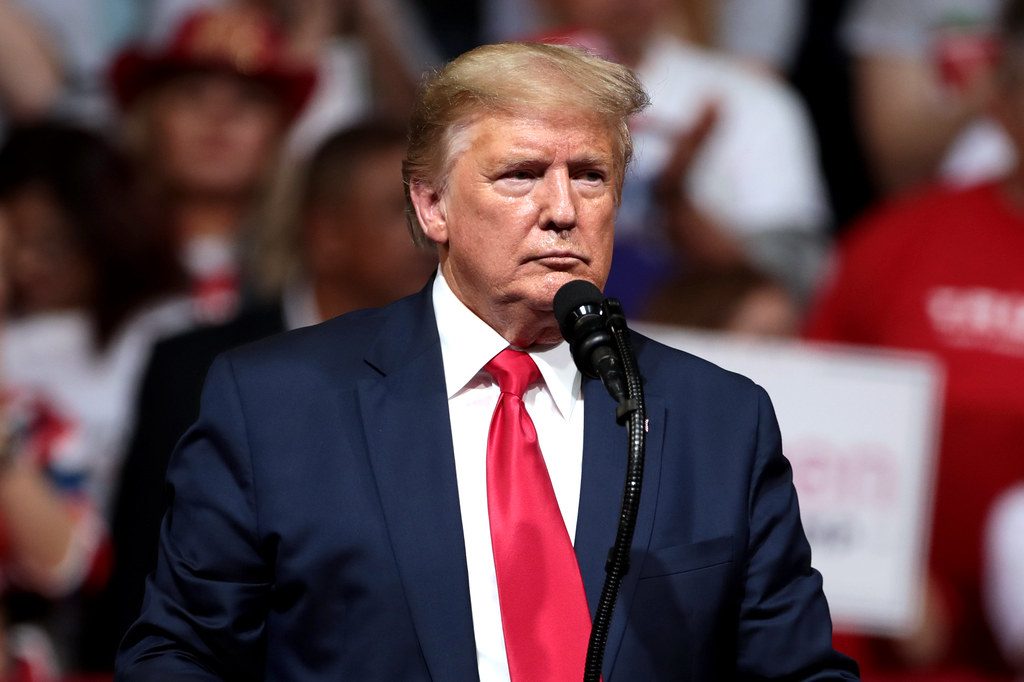
President Donald Trump confirmed in a televised address that American forces had struck three of Iran’s most critical nuclear sites—Fordo, Natanz, and Isfahan—using what he described as “massive precision strikes.”
“A short time ago, the U.S. military carried out massive precision strikes on the three key nuclear facilities in the Iranian regime, Fordo, Natanz and Isfahan,” Trump stated.
According to multiple defence sources cited by outlets such as NBC News and The Guardian, the operation included over 30 Tomahawk cruise missiles launched from U.S. Navy submarines in the region, as well as airstrikes involving advanced stealth bombers.
The Fordo facility, in particular, is known for its heavy fortification, being buried deep within a mountain. Military analysts from the Royal United Services Institute have noted that only specialised “bunker buster” bombs, such as the GBU-57 Massive Ordnance Penetrator, are likely to cause a great deal of damage to such sites.
Trump emphasised the unprecedented level of cooperation between the United States and Israel during the operation. “We worked as a team, like perhaps no team has ever worked before. We’ve gone a long way to erasing this horrible threat,” he added.
Israeli Prime Minister Benjamin Netanyahu, in a message translated from Hebrew, expressed his gratitude, calling Trump “a friend like no other.”
“There will be either peace, or there will be tragedy for Iran far greater than we have witnessed over the last eight days. Remember, there are many targets left,” he said.
The International Atomic Energy Agency (IAEA) has been closely monitoring the aftermath of the strikes. As of Sunday morning, the agency stated, “no increase in off-site radiation levels has been reported as of this time,” and an emergency meeting of the Board of Governors has been scheduled.
Iranian officials, quoted by state media and translated by international outlets, have also stated that no radiation leaks have been detected at the affected facilities.
Iran’s response has been swift and unequivocal. Its permanent mission to the United Nations has lodged a formal protest, condemning what it called the “unlawful and reckless bombing of Iran’s nuclear facilities,” and insisting that both Washington and Israel “shall be held fully accountable for these flagrant violations of international law and must face the grave consequences thereof.”
Supreme Leader Ayatollah Ali Khamenei, in a statement broadcast on Iranian television, warned, “If they enter militarily, they will face harm that they cannot recover from.”
Reactions from the international community have ranged from alarm to calls for restraint. Regional actors such as Saudi Arabia and Qatar have urged all parties to avoid further escalation, while the European Union and United Nations Secretary-General António Guterres have appealed for renewed diplomatic efforts to prevent a wider war.
Analysts at Chatham House and the International Crisis Group have highlighted the risk that Iran may retaliate by targeting U.S. interests in the region or by disrupting vital shipping lanes, particularly the Strait of Hormuz, through which nearly a fifth of the world’s oil supply passes.
The decision to launch strikes shows a dramatic reversal for President Trump, who had previously signalled a preference for diplomacy and a reluctance to become further entangled in Middle Eastern conflicts. Only days before the operation, he had stated, “Based on the fact that there’s a substantial chance of negotiations that may or may not take place with Iran in the near future, I will make my decision whether or not to go within the next two weeks.”
The move also follows years of tension since the U.S. withdrawal from the 2015 nuclear agreement, a deal which Trump had criticised as inadequate for preventing Iran’s nuclear development.
Despite repeated assessments from U.S. intelligence agencies that Iran had not resumed its nuclear weapons programme, Trump has publicly dismissed these findings. Israel, for its part, has long maintained that Iran’s nuclear activities pose an existential threat and has previously used covert means to disrupt Tehran’s progress.