

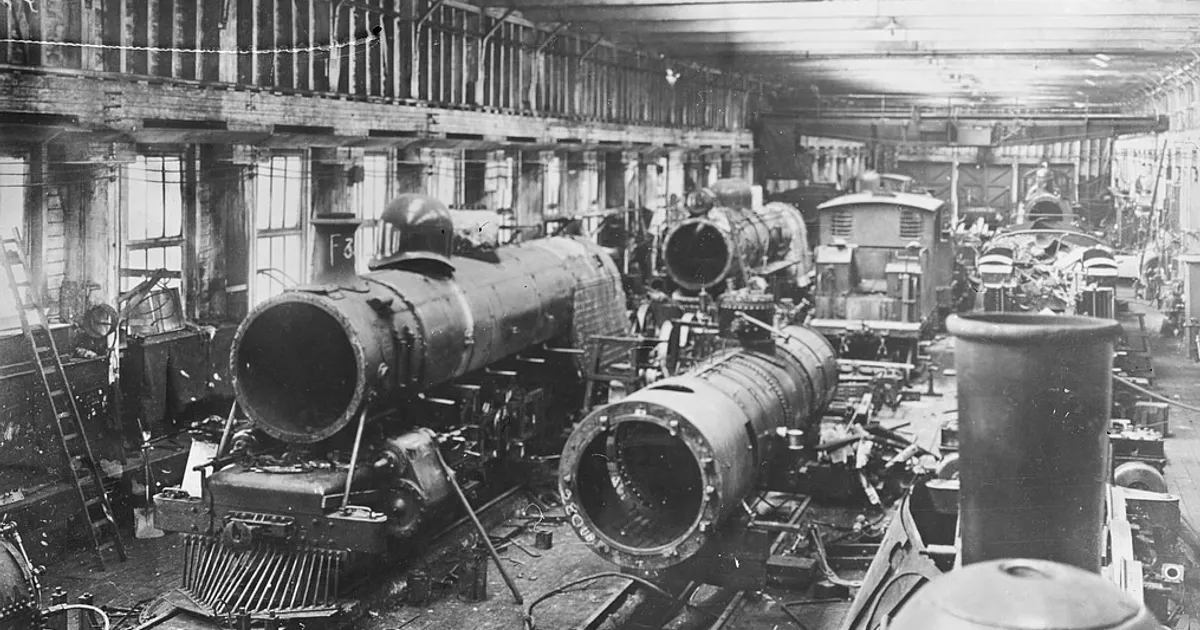
Hillside workers in Dunedin fear significant job losses in a restructure they are describing as “an ambush”, the ODT reports. The detail is thin. The number of roles at risk, the timeline and KiwiRail’s rationale have not been made public. But the bigger question does not hinge on the headcount. The site taxpayers were told would anchor a revived rail manufacturing base, reopened in May 2025, is facing cuts again. That points to an order book that was never as solid as the politics wrapped around it.
The building is not the problem
Credit where it is due. KiwiRail delivered. In its 2025 integrated report, the company said Hillside was completed under budget, with a first batch of 450 wagons finished and a second under way, as part of a mechanical facilities programme carrying a total value of $312 million. This is a modern, properly equipped workshop, not vapourware.
The problem is that a workshop is a fixed cost. It only pays its way if the work keeps coming, and on that point the warnings were there before a single dollar was spent.
Officials said no, ministers said yes
In 2022, the NZ Herald revealed that the Ministry of Transport did not support the original $85 million bid, and that KiwiRail’s own officials estimated properly equipping Hillside would cost $305 million to $400 million. The business case projected just 45 new jobs from wagon assembly and conceded 780 wagons would still need to be imported. It went into the 2021 Budget anyway, every dollar requested.
The eventual $312 million programme value lands squarely inside the range officials flagged. That is not a scandal, but it is a tell. The decision was made on regional signalling, with the cost discovered later. Jobs justified that way are only as secure as the next budget cycle.
Demand softened where it mattered
The 2025 report also showed the commercial backdrop weakening in exactly the segments that justify wagon building. Domestic freight fell 6 percent and forestry 4 percent, while group headcount dropped 6 percent through voluntary redundancy and what KiwiRail called workforce optimisation. Only bulk freight grew.
The picture has since improved. KiwiRail’s half-year report to December 2025 showed operating surplus up to $73.4 million from $25.8 million, freight volumes up 7 percent, and restructuring costs down to $1.0 million from $9.3 million. That is a company recovering, and one whose big restructuring bill appeared to be behind it.
Which makes the timing at Hillside awkward. Either this is a fresh process not reflected in those figures, or the existing programme has simply reached Dunedin. KiwiRail owes workers and the region a straight answer on which it is, and on what the wagon pipeline looks like once the current batches are done.
Third time at the same station
Hillside has been here before. In 2011, KiwiRail outsourced wagon manufacture to China after the Hillside bid came in about 15 percent dearer than the winning tender. In 2012, with no buyer for most of the site, 80 to 90 more jobs went. That year, Farra Engineering’s then-CEO John Whittaker said a local purchase was unlikely without heavy KiwiRail support, as heavy engineering drifted to Asia.
When the revival began in 2019, the ODT’s editorial put the problem bluntly. It warned it was “still unlikely the volume of railway-based work going through Hillside will be enough to sustain a healthy and profitable business. It will need to diversify.” Seven years on, that reads less like scepticism and more like a forecast.
What this means beyond Dunedin
The lesson for business is not that local manufacturing is doomed. It is that capital without a contracted, recurring customer base is a bet, and when the state places that bet for political reasons, workers absorb the downside first. Suppliers do too, and Dunedin’s engineering ecosystem has already been hollowed out once.
If Hillside is to avoid a fourth cycle, it needs what it has never had, a pipeline that does not depend on a single state-owned customer’s capital plan. That means competing for maintenance, refurbishment and non-rail heavy engineering work on commercial terms, and KiwiRail being transparent about the volumes it can commit. A good building was never the hard part. Filling it is.
Sources
- ODT: ‘It’s an ambush’: Hillside workers fear significant job losses in restructure (2026-11-20)
- KiwiRail: Integrated Report 2025 (2025)
- KiwiRail: Half-Year Report 2026 (2026)
- NZ Herald: Officials cold on $85m train workshop (2022-01-06)
- ODT: Renewed calls to save Hillside (2011-06-15)
- RNZ: Dozens of railway workshop jobs to go (2012-11-15)
- RNZ: Local purchase of rail workshops considered unlikely (2012-04-20)
- ODT: Reincarnation must be sustainable (2019-07-01)
Join the discussion
Add useful context, ask a good question, or challenge an idea — keep it specific and respectful.