

New Zealand manufacturing usually makes headlines when it closes. This week, Taranaki gave the country a better story. Three ammonia storage vessels built by Dialog Fitzroy in New Plymouth crossed the city by night, bound for Port Taranaki and a green fertiliser plant in New South Wales. The work was won against Asian fabrication yards, and it went to a regional firm because that firm had the skills to do it.
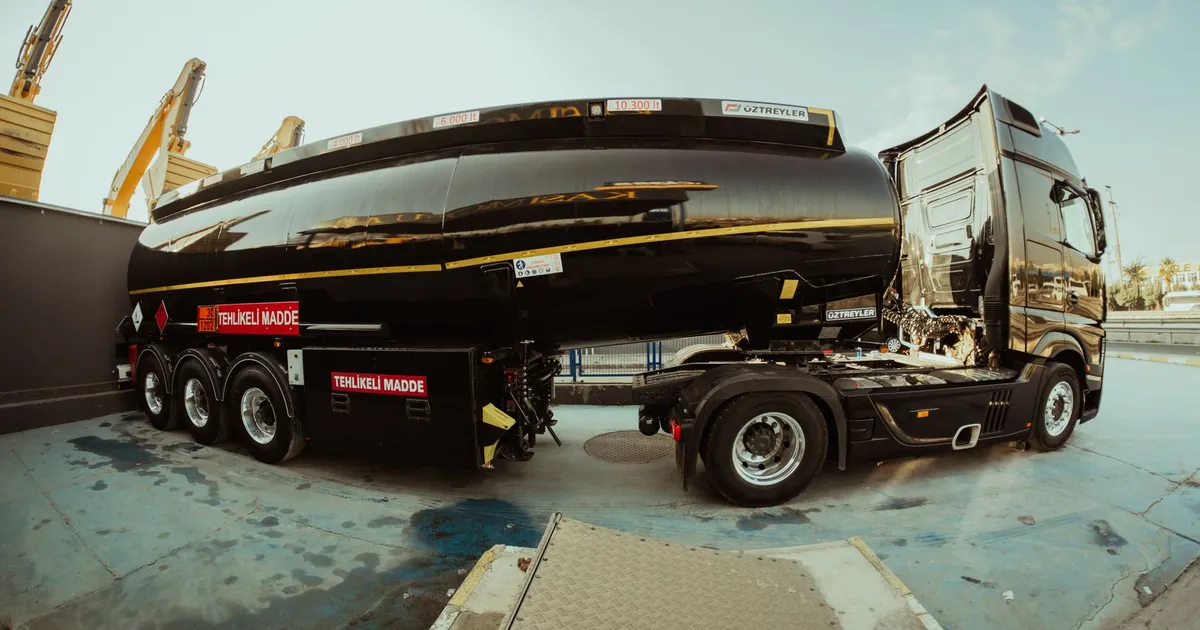
Each vessel is 35 metres long, 3.5 metres in diameter, more than 5 metres high and weighs 100 tonnes. The three together cost about $3 million to build. Moving them took a 12-axle trailer and a combined truck and load of roughly 56 metres and 215 tonnes. On a wet night a second truck was kept on standby for the climbs. Part of the route used a bypass ramp built for the Think Big project at Motunui in the mid-1980s. A ramp built for the last energy boom is now carrying exports for the next one.
Built for a plant powered by sunlight
The tanks are going to Hiringa Energy’s Good Earth green hydrogen and ammonia project at Moree. Hiringa chief executive Andrew Clennett describes it as Australasia’s first green fertiliser production plant. Solar power and batteries run an electrolyser that makes hydrogen, which is then combined with nitrogen from the air to make ammonia. RNZ’s Morning Report framed the order as a boost for Taranaki’s engineering sector, and the details support that.
The commercial point matters more than the green one. Dialog Fitzroy general manager Doug Timanus said winning the job was hard because “it’s very competitive trying to do something like this in New Zealand, rather in Asia,” and that with “the skillset going out of tradespeople and apprentices, it is really important and we’ve been really lucky to be involved.”
No subsidy features in that sentence. A private firm priced a technically demanding job against low-cost offshore competitors and won. The prize is continuous work that keeps welders, fitters and apprentices employed in the region, so they don’t drift to Australia or leave the trades altogether.
This is a cluster, not a one-off
The tanks are part of a pattern. Last month, Normanby-based DTS Engineering delivered a 14-tonne stainless-steel tank holding nearly 100,000 litres of sulphuric acid for a Taupō geothermal plant, as part of a wider Dialog Fitzroy project. DTS employs 35 people, including six apprentices, and built its stainless capability serving dairy. Chief executive Gavin Thwaites credits cross-firm collaboration as what will keep Taranaki at the front of New Zealand engineering.
The most telling line came from Dialog Fitzroy project manager Adrian van’t Hof: “The workload ahead for the sector is huge. We don’t want to be limited just by our own capacity.” Most manufacturers would envy that problem. The bottleneck he describes is people and floor space, not demand.
The region’s own strategy now leans into this. The Taranaki Regional Investment Prospectus 2026 pitches the region as an engineering hub with a record on plants, pipelines, shutdowns and multi-party builds. It points to clear intent across the sector to work more collectively to win national and international contracts.
Forty years in the making
None of this appeared overnight. In 2011, Fitzroy Engineering shipped accommodation modules for Australia’s BassGas project, then the biggest structure ever moved in New Plymouth. Then-PEPANZ chairman John Bay said that thirty years earlier New Zealand energy projects needed modules built in Japan, and that “today the traffic is the other way.”
By 2014, Fitzroy had grown from 10 staff in the 1970s to about 400 workers, with an Australian arm, and had been owned by Malaysia’s Dialog since 2010. Its then-managing director said everything was built on skills gained from oil and gas. A 2013 BERL study for the regional council found metal product manufacturing in Taranaki employed 1,521 FTEs across 123 businesses, with more than double the national employment concentration in that sector.
Those figures are old, but they explain the present. Oil and gas built the welding, pressure-vessel and project-management depth. Geothermal and hydrogen are now using it. Back in 2021, the Hydrogen Council’s then-chief executive Linda Wright called green hydrogen an “incredible export opportunity” and warned the supply chain would need far more skilled engineers. Five years on, the opportunity is being fabricated in New Plymouth.
Fix the people pipeline
For business, the lesson is that capability compounds. Taranaki kept its heavy-engineering base through the swings of the energy cycle, and that base is now winning offshore contracts in new markets. The risk ahead is not a shortage of orders. It is running out of tradespeople before the work runs out.
That makes apprenticeships, skilled migration settings and regional training the policy levers that matter. If New Zealand wants more nights like this one, it needs to keep the welders.
Sources
- RNZ: New Plymouth-built storage tanks headed for Australian fertiliser plant (2026-11-13)
- RNZ Morning Report: Taranaki engineering sector gets a boost from tank exports (2026-11-12)
- The Post: Normanby firm takes Taranaki expertise to Taupō (2026-10-04)
- Taranaki Regional Investment Prospectus 2026 (2026)
- Scoop: NZ Engineering Expertise Helping Australia Energy Future (2011-11-15)
- Otago Daily Times: Cooking with gas (2014-04-07)
- BERL for Taranaki Regional Council: Economic Impact of Port Taranaki (2013-03)
- Engineering New Zealand: Green light for green hydrogen? (2021-11-29)
Join the discussion
Add useful context, ask a good question, or challenge an idea — keep it specific and respectful.