

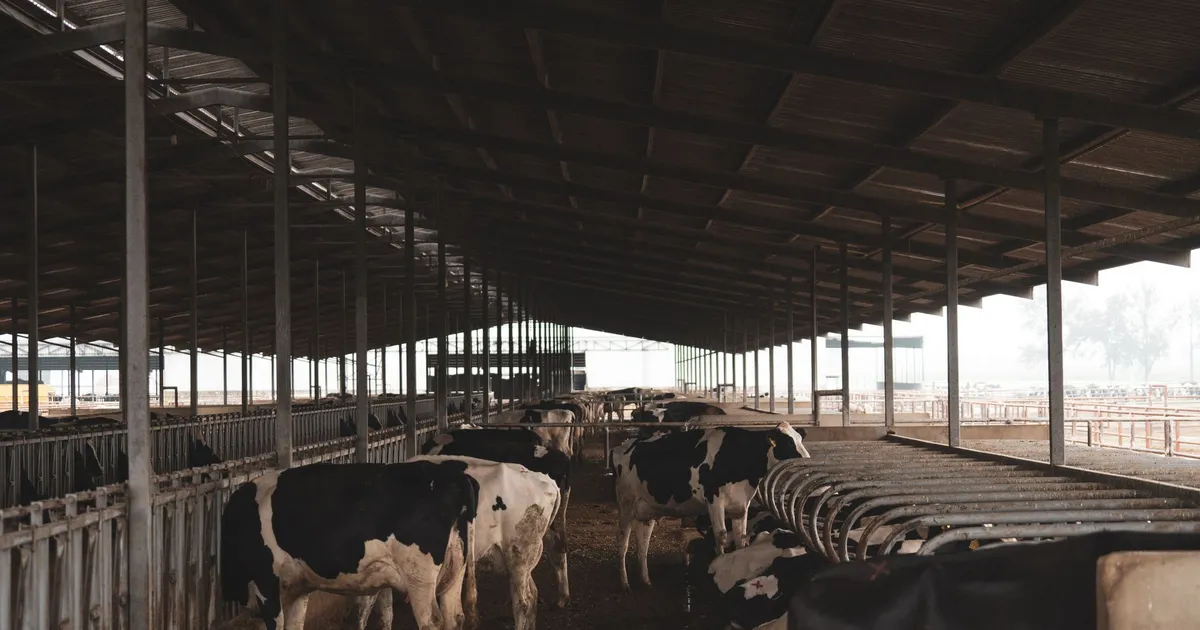
Dairy farmers wanted certainty from the new cattle welfare code. What they may have got is a lawsuit waiting to happen.
Newsroom reports the code, published the day Parliament rose for the election, is ‘extremely vulnerable’ to court challenge. The problem is not the welfare science. It is the process. Andrew Hoggard, associate agriculture minister through the last term and a former Federated Farmers president, sent the code back to the National Animal Welfare Advisory Committee (NAWAC) demanding it weigh costs to farmers, then admitted a conflict of interest.
For a sector that runs on long investment cycles and bank lending, a code that a judge can unpick is worse than a tougher one that holds.
A lighter code than the one consulted on
The final code covers almost six million dairy cattle. It requires calves to be fed twice daily in their first two weeks and vet approval before very thin cows, below body condition score three, are sent off farm. But standards consulted on since 2022 were dropped: intensive winter grazing rules, cull-cow transport standards and a requirement for a working relationship with a vet. It takes legal effect on 19 April 2027.
MPI says most farmers already operate in line with the code, so it will only shift practice for some. That is the good news. A modest code is cheap to comply with. The question is whether it survives.
The process behind it was long. More than 3,500 submissions were made on the 2022 draft, according to Newsroom, and NAWAC itself said then that scientific advances and changing public expectations demanded an update.
Turning ‘may’ into ‘must’
The legal exposure traces back to 2024. In May that year, Hoggard sent NAWAC a letter of expectations asking for ‘elevated consideration of economics and practicality’ when reviewing codes. He said at the time the criteria did not override welfare but needed to be considered so standards were workable.
The trouble is the Animal Welfare Act 1999. Section 73(3) says decision-makers may take practicality and economic impact into account. It does not say they must, let alone give it elevated weight. Converting a discretion into an instruction by letter, rather than by amending the law, is textbook judicial review territory.
NAWAC appeared to see the risk. Its August 2024 minutes recorded the chair saying what would keep the committee safe in judicial review was that its proposals were reasonable given the evidence. A 2025 report, A Commissioner for Animals in New Zealand, produced with SAFE’s support, argued the letter was the first of its kind and that the proportionality test it implied may run contrary to the Act.
The conflict that compounds it
The conflict issue was flagged early. In November 2025, SAFE chief executive Debra Ashton complained to the Prime Minister about Hoggard’s efforts to weaken the Act. Luxon accepted Hoggard’s assurance he was following the Cabinet Manual.
By September, Hoggard had been removed from the decision, and acting minister Nicola Grigg signed off the code. A parliamentary committee in October then raised questions about industry influence and predetermined outcomes in Hoggard’s decisions. Swapping the signatory late does not clean up a process shaped by his directive from the start.
Courts have done this before
This is not hypothetical. In 2020 the High Court found pig farrowing crate rules unlawful after a challenge by welfare groups. In 2025, lawyer Gillian Coumbe KC, who acted for those groups, said there was ‘a reasonable basis for perceived bias’ in the pig reforms, where the minister chose a 10-year transition even though MPI and NZ Pork were comfortable with five.
Two codes, one minister, the same objection. Opponents now have a pattern, a precedent and a template.
What farmers and lenders should price in
The stakes are large. Dairy cattle numbers rose from 3.4 million in 1990 to 5.9 million by 2023. Codes are not directly enforceable, but compliance is a defence in ill-treatment prosecutions, a structure academic Rebecca Ong argued in 2020 was already vulnerable to regulatory capture. If the code falls, so does that defence, and farmers could face tougher standards imposed on a court’s timetable rather than their own.
For processors and exporters selling welfare credentials into the UK and EU, a code tainted by conflict claims is a reputational liability, not an asset. Banks lending against dairy platforms should be asking the same question.
The pro-business case for weighing costs is legitimate. Rules should be workable. But the right way to require that is to change the Act through Parliament, not to lean on an advisory committee by letter. Whoever holds the portfolio in the new government should fix the statute properly. Until then, farmers are planning capital spending around a code that may not see out its first season.
Sources
- Newsroom: Animal welfare codes ‘extremely vulnerable’ to court challenge (2026-11-11)
- RNZ: NZ’s revised dairy welfare code finally revealed (2026-09-29)
- MPI: Dairy Cattle Code of Welfare – September 2026 Update (2026-09)
- Farmers Weekly: Hoggard moves on animal welfare codes (2024-06-11)
- NAWAC: Minutes and Records (2024-08)
- A Commissioner for Animals in New Zealand – Report on Animal Welfare Governance (2025)
- RNZ: Minister Andrew Hoggard assures PM he’s following Cabinet rules after complaint (2025-11-24)
- RNZ: Parliamentary committee echoes calls for greater oversight of animal welfare system (2026-10-08)
- RNZ: Minister defends decision to only consult pork industry on new pig welfare reforms (2025-10-30)
- Stats NZ: Dairy Cattle Numbers – Historical Statistics (2023)
Join the discussion
Add useful context, ask a good question, or challenge an idea — keep it specific and respectful.