

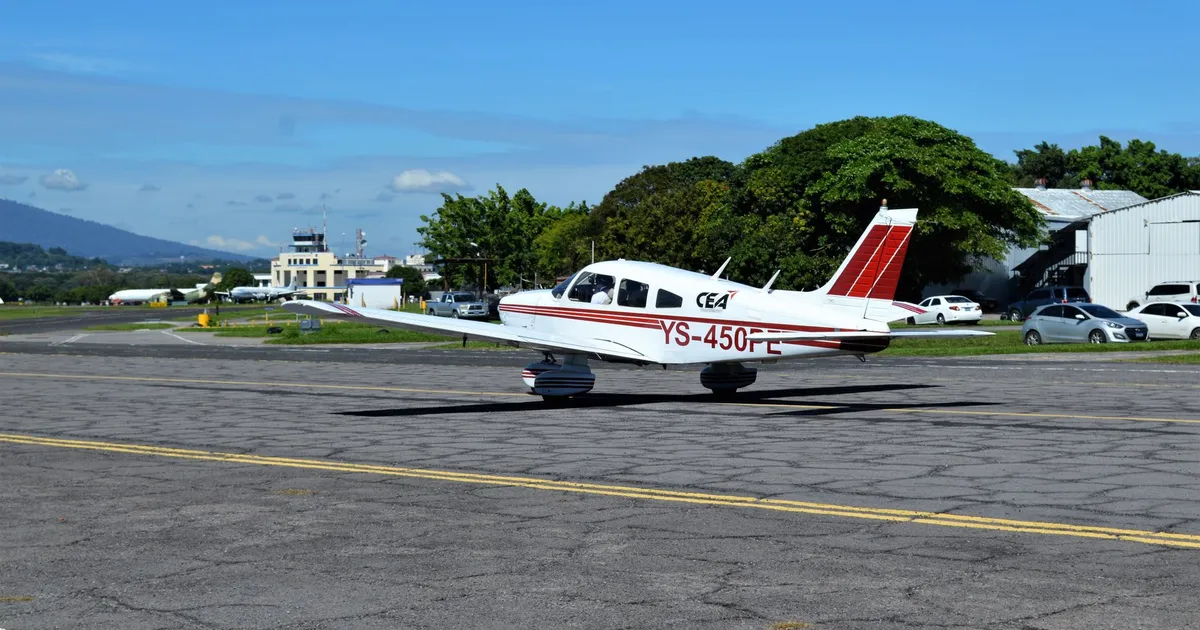
Kāpiti Coast Airport is expected to announce its closure, with representatives of owner NZ PropCo meeting tenants at Paraparaumu to deliver the news. The shutdown could come before the end of November.
Most coverage treats this as a heritage fight. The real story is about how the deal was built. The owner has made closure a contractual condition of sale, so the question of what happens to 124-plus hectares of strategically placed land now runs on a buyer’s deadline. The council’s planning cycle, and the government’s stated preferences, come second.
Closure is a condition, not a consequence
The airport’s largest shareholder, Templeton Group, confirmed a conditional sale and purchase agreement that requires the airport to close. That fits the history. NZ PropCo bought the site from Todd Property Group in 2019 originally wanting to close it for housing, and any redevelopment still needs Kāpiti Coast District Council to rezone the land out of its ‘Airport Zone’.
By late October there were two competing bids. One came from Hāpai Property, a grouping of mostly out-of-Wellington iwi that wants to build housing on condition the airport closes. The second, undisclosed buyer was reportedly open to a hybrid model that would keep some aviation alongside medical facilities.
Tenants are told as the ink dries
The businesses and clubs on site are hearing the details as the deal lands, not while it was being negotiated. The Kāpiti Aero Club had 256 members, including 67 juniors learning to fly. Scheduled service had already thinned to seven Sounds Air flights a week after Air Chathams pulled its Auckland route. Air Chathams chief executive Duane Emeny said the airline won’t return because of “ongoing complications surrounding the airport’s ownership”.
That is the commercial trap. Ownership uncertainty drove carriers away, falling traffic weakened the case for the airport, and a weaker airport strengthened the case for houses.
The only lever sits with a council that can’t afford to pull it
Kāpiti Coast District Council controls rezoning, which is the one decision a developer cannot avoid. On the commercial side it has been a bystander. Its August OIA response confirmed it holds no shares and had received no formal bid proposals. Mayor Janet Holborow has said the council cannot afford to buy the airport but will use “anything available” to keep it viable.
Central government has offered warm words and nothing else. Local National MP Tim Costley has ruled out a Crown purchase. Labour candidate Sophie Handford has pointed out that the Emergency Management Act lists 21 essential airports and Kāpiti isn’t one of them. Former councillor Gwynn Compton summed up the problem: Costley is “demanding the airport owners to keep it open but he’s not demanding anything of central government”.
A business audience should be sceptical of politicians who want private owners to keep running a loss-making asset as a public service at no cost to the state. Either the airport is essential, and the government should protect or fund it, or it isn’t, and the owners are entitled to sell.
The numbers favour redevelopment
The economic case for keeping the airport has weakened over time. In 2018, TDB Advisory valued its net benefit to the district at about $4.3 million a year, mostly travel time savings. It also found no material link between airport proximity and land values across 4,940 nearby properties. That modelling predates the service cuts and should be read as a historical baseline only.
A May analysis put the airport’s annual loss at around $815,000. It estimated that full redevelopment could deliver more than double the long-run GDP uplift of a hybrid model, and warned that once subsidies and infrastructure costs are included, keeping any aviation use becomes “much harder” to justify.
On those numbers, housing is the rational commercial outcome. What has been missing is an orderly public process to get there.
Offer-back law and a zoning fight come next
Kāpiti Airport Holdings has engaged LINZ to carry out its obligations under section 40 of the Public Works Act, which governs offering former public-works land back before private disposal. That process, followed by a contested rezoning, will determine how long the buyer’s land bank stays idle.
The lesson extends well beyond Paraparaumu. Privately owned regional infrastructure in New Zealand lasts only as long as its balance sheet holds up, and political rhetoric gives it no legal protection. Any operator leasing space at a marginal airfield, port or rail siding should treat its tenure that way.
Sources
- RNZ: Kāpiti Coast Airport to announce closure, RNZ understands (2026-11-11)
- NZ Herald: Kāpiti Airport could close before the end of the month, MP Tim Costley fighting to save it (2026-11-09)
- 1News: ‘Important asset’: Fight to save privately-owned Kapiti airport (2026-10-30)
- The Post: Sale agreement in place for Kāpiti Coast airport (2026-10-20)
- RNZ: National and Labour stick to lobbying over keeping Kāpiti Airport open (2026-10-28)
- AeroSouthPacific: Kāpiti Coast Airport faces uncertain future as sale talks advance (2026-11-03)
- Kāpiti Coast District Council: Request for Information – Kāpiti Airport Bids and Council Meetings (2026-08-11)
- TDB Advisory: Kāpiti Airport, An Estimation of its Economic Benefit to the Kāpiti District (2018-06-12)
- TDB Advisory: Kāpiti Airport, An Estimation of its Economic Value (2018-08-01)
- Local Aotearoa: Why the Kāpiti Airport debate keeps circling the runway (2026-05-18)
Join the discussion
Add useful context, ask a good question, or challenge an idea — keep it specific and respectful.