

Juken New Zealand has opened formal consultation with staff at its Triboard Mill in Kaitāia after failing to find a buyer willing to take on the whole business and its workforce. That puts more than 140 jobs at risk at what NBR calls one of Kaitāia’s biggest employers.
This is the second blow in a matter of months. The neighbouring Northland Mill closed two weeks ahead of schedule in August. Juken’s own figures show 78 workers were affected, with 44 leaving the business entirely and 19 redeployed to Triboard. Some of those people may now be facing redundancy twice in one year.
The market has been asked twice
This is not a company quietly walking away. In March 2026, Juken opened consultation on both mills, citing declining demand in key export markets and increasing operating costs. In April 2026, Northland NZ announced PwC had been engaged to run a formal market process for the roughly 200-staff combined operation, pitching the forest resource, skilled workforce and market access to investors.
That process failed for the Northland Mill, and Juken proposed its closure in June. Now, after an eight-month search, Triboard has drawn the same blank. Two structured sale processes for two different mills, with no buyer prepared to take the lot. Whatever else that says, it is a clear commercial verdict on processing wood in Kaitāia under current conditions.
The log goes, the value stays offshore
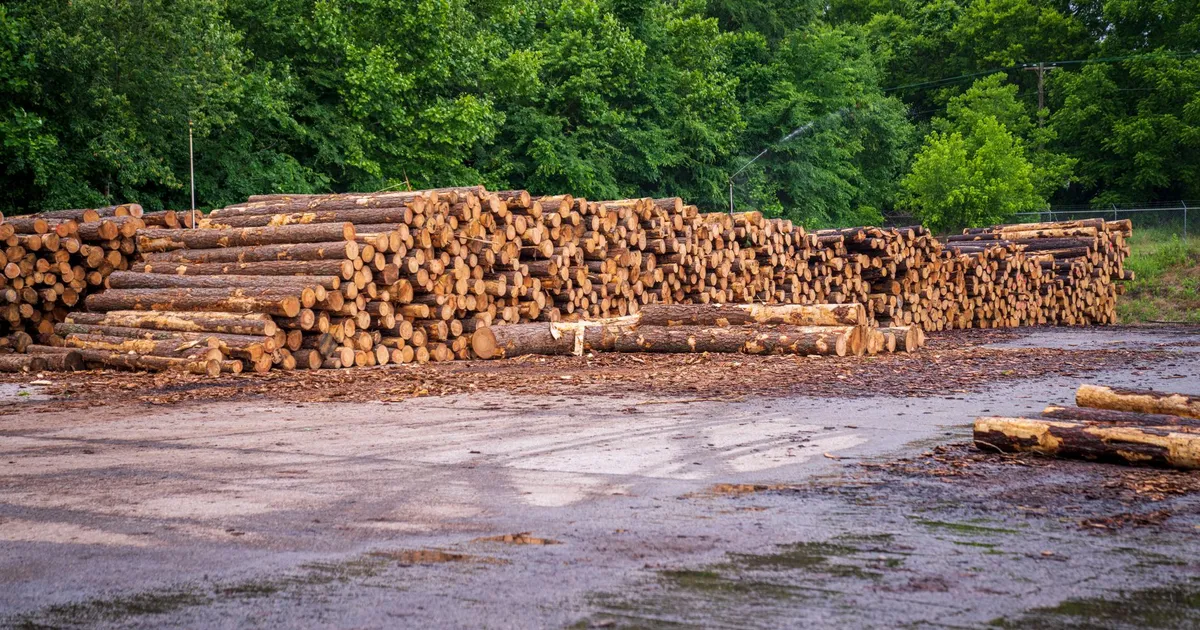
The real economic loss is not just the payroll. In June, Workers First Union organiser Marcus Coverdale explained why the two mills worked as a pair: “Between the two mills, the full log is used. Without a buyer found for the Northland Mill, we’ll be taking the top of the log for Triboard and sending the other raw two-thirds overseas without any value added.”
If Triboard goes too, that becomes the whole log. The Far North reverts to the lowest-value end of forestry: grow trees, cut them, truck them to a port. Coverdale also pointed to high power and transport costs, and the lack of a rail link to Kaitāia, as factors behind the first closure.
The pain spreads beyond the mill gate. “It’s the flow-on effect of those wages not being spent in the local community anymore,” Coverdale said in August, adding that transport and maintenance companies would feel the pinch. For Far North contractors, Triboard is a customer, not just a neighbour.
Power is a network problem, not just a price
In March 2026, RNZ reported high power costs were a central viability issue. An April 2026 energy analysis argued the story is more awkward than that. The 110kV line into Kaitāia is already fully used by three solar farms at peak export, while winter demand peaks in the evening when solar is not generating.
“A sawmill does not run on the abstract existence of solar panels somewhere on the network. It runs on dependable power,” the analysis said. Worse, losing the mills would make the solar-curtailment problem worse, not better, because a large, steady industrial load is one of the few things that can soak up local generation. Kaitāia risks ending up with new generation it cannot export and no industry left to use it.
Wellington has already said no once
In June, Prime Minister Christopher Luxon rejected a union request for government intervention to save the Northland Mill, and Resources Minister Shane Jones said Juken had never formally approached the Government. In July, Northland’s economic agency and both councils lobbied for a co-investment plan, with Northland NZ head of investment Tui Rutherford arguing “conservative modelling predicts that investing right now will generate a good return”. It did not save the Northland Mill.
The Government’s refusal to write a cheque was defensible. Taxpayers propping up a business that two sale processes could not sell is a poor use of capital. But non-intervention is not the same as having no role. Power network constraints, transport costs and the missing rail link are infrastructure problems the state does own, and they apply to any investor looking at the Far North, not just Juken.
The decision is coming fast
No outcome for Triboard is confirmed yet, and no minister has publicly responded to the latest consultation. With 140-plus jobs now at stake rather than 60, the June stance will be tested harder. Forest owners, contractors and suppliers across Northland should plan for the likelihood that local processing disappears. If it does, the Far North will still grow the trees. It just won’t be paid much for them.
Sources
- Stuff: Over 140 jobs at risk as mill faces closure within months (2026-11-11)
- RNZ: ‘It’s a shock’: Kaitāia’s Northland Mill closes down two weeks early (2026-08-07)
- Juken New Zealand: Update on Northland Mill Workforce Transition (2026-08-07)
- Juken New Zealand: JNL Business Update (2026-03-27)
- Northland NZ: Northland leaders encourage investor interest in key wood processing opportunity (2026-04-23)
- NZ Herald: Juken New Zealand to close Northland mill after buyer search fails (2026-06-23)
- The Post: PM rejects union’s request for help to save Kaitāia timber mill jobs (2026-06-24)
- RNZ: Kaitāia timber mills may close with loss of hundreds of jobs (2026-03-31)
- New Zealand Energy: The curious case of Kaitāia (2026-04-28)
- Northland NZ: Time ticking on successful outcome for Juken Kaitāia mills (2026-07-14)
Join the discussion
Add useful context, ask a good question, or challenge an idea — keep it specific and respectful.