

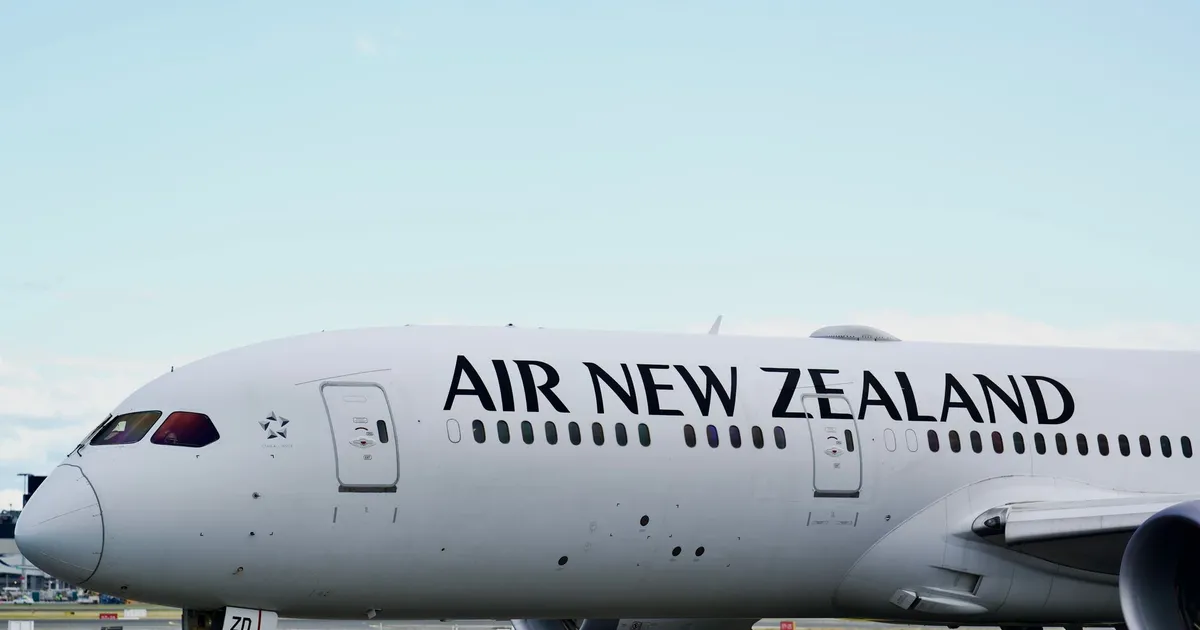
Air New Zealand’s economy bunk beds will not be ready for the summer they were built for. The airline confirmed on 30 October that Skynest, its world-first lie-flat pods for economy passengers, will not be installed in its new Boeing 787 fleet before the 2026/27 peak. The December target has gone, and no replacement date has been set.
The cause is not the product. It is an overseas certifying authority that, according to the airline, could not finish its approvals on time because of its own resourcing constraints. A New Zealand company has built something genuinely new, and its launch now depends on how quickly a foreign bureaucracy can clear its desk.
Six years from concept to cabin
This is not a one-off slip. Skynest was first unveiled in February 2020. A launch was then pencilled in for September 2024, moved to April 2026, then December 2026, and now to after the New Zealand summer. German trade outlet aerotelegraph suggests March 2027 as the earliest realistic installation.
The concept itself is tidy. Six bunk-style pods sit between the Economy and Premium Economy cabins, each with a full-length mattress, bedding, ventilation and charging, sold in two four-hour sessions per flight. More than 200 customers have tested it at the airline’s Hangar 22 innovation centre in Auckland.
The bottleneck sits offshore
Novel cabin hardware needs sign-off from more than one regulator. Air New Zealand says the local certification process is progressing well. The delay sits entirely with the overseas authority, and there is no lever the airline can pull to speed it up.
Travel commentary site Tripsfera put it bluntly. “Headline cabin ideas have a built-in problem: the more novel they are, the more approvals they need, and the less control the airline has over timing,” it wrote, adding that this is “physics and paperwork” rather than a scandal.
That is the lesson for New Zealand exporters well beyond aviation. Medical device makers, agritech firms and component manufacturers selling into regulated markets face the same exposure. You can engineer the product, fund the testing and build the marketing plan, and still watch a launch window close because a regulator on the other side of the world is short-staffed.
Flying the planes is the disciplined call
What Air New Zealand did next deserves credit. It took delivery of a new 787-9 on 29 October, the first Dreamliner certified for a higher maximum take-off weight suited to routes like Auckland to New York, with another arriving within days. Rather than park them, it is putting them straight into service.
“Rather than hold back a brand-new aircraft while the final approvals are completed, we’ve decided to get it flying and bring Skynest onboard after the summer peak,” said chief customer and digital officer Jeremy O’Brien.
The finances leave little room for anything else. In its 2025 annual report, the airline posted operating revenue of $6.8 billion, with passenger revenue down 1.5 percent to $5.9 billion as engine availability problems grounded capacity. It took $129 million in compensation from engine makers that year. An airline already short of aircraft cannot afford to leave two new wide-bodies idle over its busiest season for the sake of six beds.
As Karryon noted, the new cabins, including Business Premier Luxe, fly this summer regardless. The premium story is intact even if the headline pods are not.
Selling before the certificate
The weaker decision came earlier. Air New Zealand put Skynest on sale from May 2026 at $495 for a four-hour session, months before a December date that depended on approvals it did not control. Tripsfera’s sharper point is that the industry too readily “sells the sizzle months before the certificate”. Travel advisors who pitched clients on Skynest for the New York route now have awkward calls to make.
It is worth keeping the impact in proportion. Skynest serves a narrow slice of premium-paying passengers. As Boarding Group argued in July, products like it “divide the cabin into more price points” rather than improving the standard economy seat. Most people flying Air New Zealand this summer will not notice the absence.
What happens next
In June, then-chief executive Nikhil Ravishankar insisted projects like Skynest were “not vanity projects, they’re existential”, a differentiator for a carrier at the far end of the world’s longest routes. That case still stands. The airline will confirm a new date once the overseas regulator moves. Until then, the right move is the one it has made, keep the planes earning and stop selling a launch date it does not control. Every exporter waiting on foreign sign-off should adopt the same rule.
Sources
- RNZ: Air New Zealand’s new Skynest delayed, won’t be installed until after summer peak (2026-10-30)
- Karryon: Air New Zealand delays world-first sleep pods, Skynest, past summer peak (2026-10-29)
- aerotelegraph: Etagenbetten in Boeing 787: Wegen fehlender Zulassung muss Air New Zealand das Skynest erneut verschieben (2026-10-29)
- Air New Zealand newsroom: The future of long haul travel, Economy Skynest on sale from May 2026 (2026-04-15)
- Tripsfera: Skynest’s delay proves it, don’t book your New Zealand trip around a bunk (2026-10-29)
- Skift: Air New Zealand CEO, economy bunk beds are not a vanity project (2026-06-06)
Join the discussion
Add useful context, ask a good question, or challenge an idea — keep it specific and respectful.