

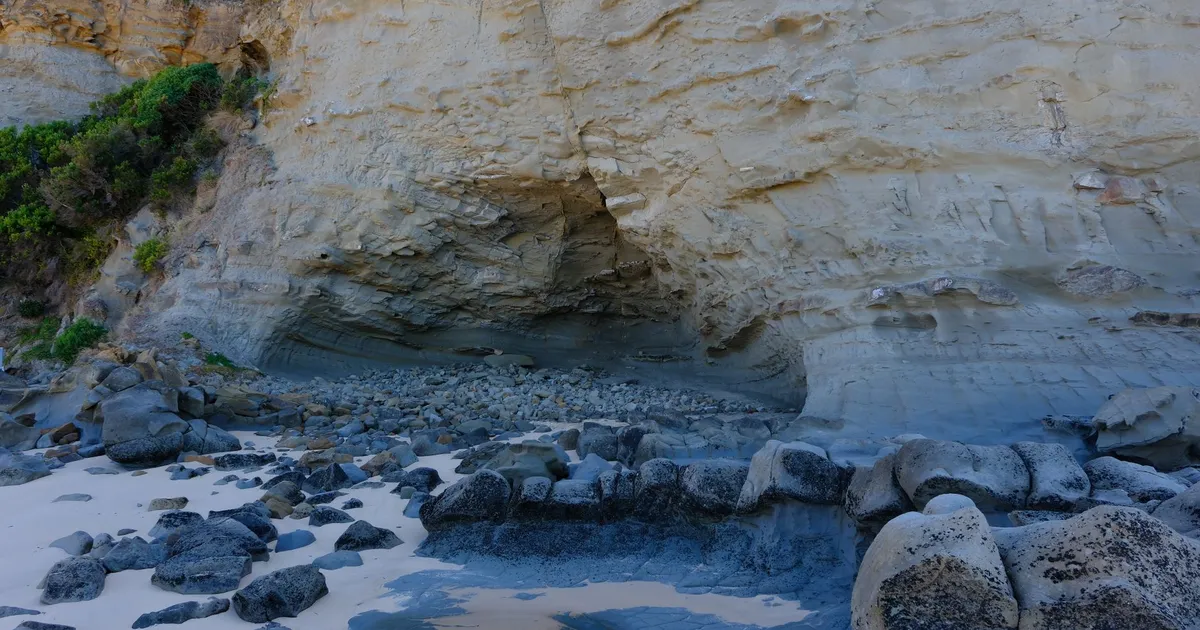
This week Waitaki district councillors heard from the public on coastal erosion threatening livelihoods, cemeteries and communities across the district. That hearing marks the point where climate risk stops being a technical report and becomes a line on a rates bill. For a small, lower-income council, the bill is already large and climbing, and the cheapest answer on the table is the one nobody wants to say out loud. Stop defending some of the coast.
The sea is winning on a measurable timetable
This is not speculative. A 2025 study of the district’s coastline found over 60% of the 105km coast retreating at an average 0.15m a year, with twelve high-risk sites covering cemeteries, a kaik settlement, reserves, rail, state highway and local roads. Beach Road North runs 2.8km directly against cliffs up to 20 metres high, and the researchers’ highest-scoring option there was managed retreat through road closure.
The science underneath that is not new either. A 2019 NIWA report for Otago Regional Council modelled 100-year storms against sea level rise of up to 1.3m for Oamaru. Councils have had the baseline for years. What they have not had is the money.
Old rubbish became a new liability
The sharpest cost has come from the past. Project Reclaim, the clean-up of historic landfills at Hampden and Beach Rd that are at risk of spilling into the sea, has grown every year. The council’s 2025-34 Long Term Plan showed the budget rising from $2.9 million in 2023-24 to a projected $5.96 million in 2026-27.
By February 2025 the cumulative bill had reached $18.3 million, after Waitaki missed out on a $6 million central government contaminated sites fund that went to four other South Island councils. That is a small district paying for a problem the Crown’s own fund was designed to address, because it lost a funding round.
The arithmetic favours retreat
The same 2025 reporting set out the choice on just one stretch of road. Closing Beach Rd between the golf course and Awamoa Road would cost $353,000 upfront plus $3.84 million in rock armouring over 30 years, against $12.65 million to realign the road and armour it. Roughly $4.2 million versus $12.65 million. Any business owner would take that trade in a heartbeat.
At the time, council called closure its preferred option. That is the right instinct. Spending three times as much to hold a road the sea is steadily claiming is not resilience, it is delaying a decision at ratepayers’ expense.
Patching has been the default for years
The pattern is consistent. In its 2023-24 annual plan, the council set aside just $150,000, loan-funded, for coastal erosion planning while it developed a coastal management strategy. Small sums for strategy, large sums for emergencies. Meanwhile every other line keeps creeping, with the 2025 plan lifting a council housing rate from $20 to $37 per ratepayer.
And this is a district that can least absorb it. The 2025 study put Waitaki’s average household income at $95,721 in 2023, against a national average of $125,424. A below-average-income ratepayer base is being asked to carry an above-average share of a national problem.
Wellington diagnosed the gap and left it open
Central government has known the shape of this for years. A 2022 Sapere assessment for the Ministry for the Environment found that councils are obliged to fund adaptation regardless of whether money is available, and that national funding leans towards post-disaster recovery rather than cheaper prevention.
Local government has repeatedly asked who pays when the sea rises, pointing out that earthquake and flood damage has a shared protection scheme while sea level rise has nothing equivalent. Academics such as Victoria University’s Jonathan Boston have argued that relocation decisions are too big to leave to councils alone.
A fiscally conservative reading is not that the taxpayer should write blank cheques. It is that the absence of a clear framework is itself costly. Without agreed rules on compensation, cost-sharing and when retreat kicks in, councils default to the politically easiest option, which is the most expensive one: more rock, more patching, more reactive clean-up.
What happens next
Waitaki’s councillors now have the public’s grievances on the record and the engineering numbers in front of them. For local businesses, farmers and property owners near the coast, the signal matters more than the sentiment. Rates will keep rising if the council keeps defending everything, and insurers and banks will price the risk long before the council does.
The sensible path is to pick what is worth protecting, retreat from what is not, and say so plainly. Waitaki cannot wait for Wellington to legislate a funding mechanism it has been studying for years. But every month the government leaves the question unanswered, it is quietly choosing the ratepayer, one hearing room at a time.
Sources
- ODT: ‘A high price to pay’: Councillors hear from public on coastal erosion threatening livelihoods, cemeteries and communities across Waitaki (2026-10-24)
- NIWA/Otago Regional Council: Waitaki District Coastal Hazards (2019-01)
- Waitaki District Council: FAQs – Fit for the Future, 2025-2034 Long Term Plan (2025)
- ODT: Beach Rd closure ‘preferred’ (2025-02-02)
- Waitaki District Council: Annual Plan 2023-24 – Coastal Erosion (2023-24)
- Sapere/Ministry for the Environment: Assessment of mechanisms of managed retreat (2022-08)
- RNZ: As the sea level rises, who will pay? Councils seek answers
- The Post: Another problem coming to your rates bill – Climate adaptation and managed retreat
Join the discussion
Add useful context, ask a good question, or challenge an idea — keep it specific and respectful.