

Auckland developer Hong (Vivian) Liang did not lose her business gradually. According to Companies Office records reported by the NZ Herald, 16 of her companies were placed into liquidation at 9.30am on 15 September, all at once. The trigger was a single lender, Gemstone Capital, chasing a loan on an unrelated property held by another of her companies.
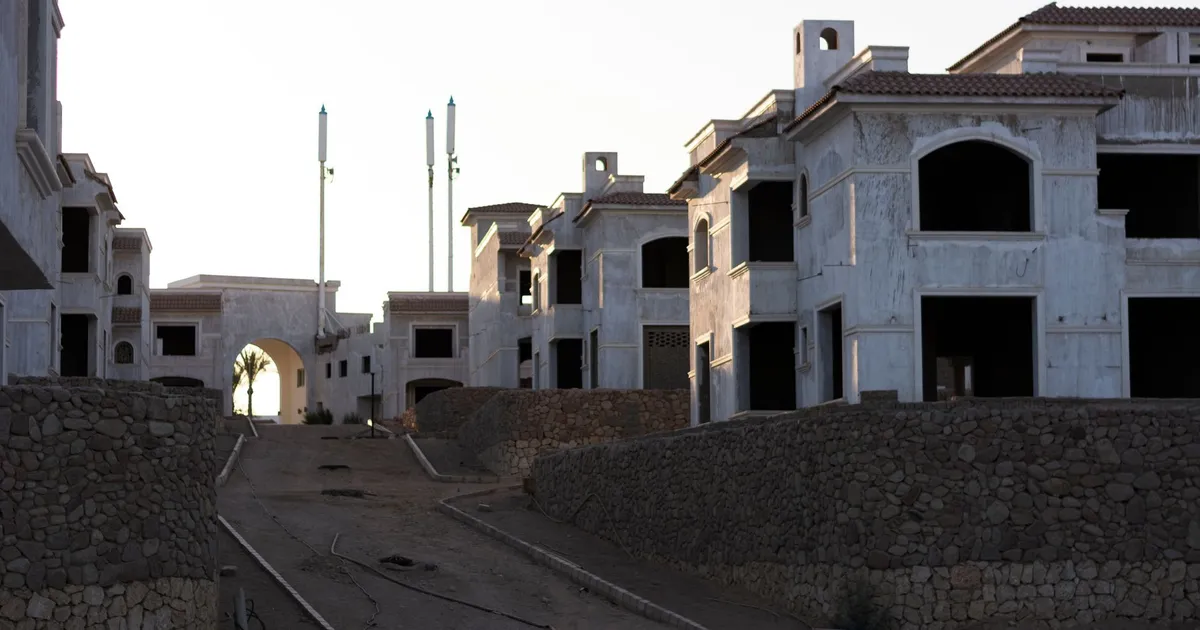
Two projects are now heading to mortgagee sale, with tenders closing in the same minute through the same agency next Tuesday. One is a 26-unit terraced complex on Glendale Road in Glen Eden. It has walls and roofs, a commercial space and a 28-car semi-basement carpark, but no final Auckland Council sign-off. Graffiti and a “Danger Keep Out” sign now mark the temporary fencing. The other is three finished newbuilds in Campbells Bay, marketed on their double school zoning.
For anyone treating 2026 as the year property turned, this is a useful corrective. The downturn has not finished clearing its most leveraged players.
Lender patience decides the timing
Liang says she received no warning. “I am concerned that all 16 companies entered liquidation … without prior notice or communication with me, and that the liquidations continued even after the lender subsequently requested that they be stopped,” she told the Herald. Liquidator Ben Francis of Blacklock Rose said a court is unlikely to reverse the appointments.
Whatever the rights and wrongs of this case, it shows something business owners should take seriously. Developers do not fail when the market bottoms. They fail when a lender decides it has waited long enough. Cross-collateralised group structures mean one default can take down every entity attached to it, and directors may have very little warning.
The numbers are still climbing
The official data does not support the recovery story. The Companies Office recorded 274 companies placed into liquidation in September 2026 alone. In the June quarter there were 800 liquidator appointments, up 14.4% on the 699 a year earlier. Company removals reached 17,791 in the quarter, up 65.7% on the same period in 2024.
Those figures are rising while mortgage rates fall. BWA Insolvency explained why in its Q4 2025 market report, published in February 2026. “Insolvency doesn’t happen overnight; it is rooted in past events: old debt, thin margins, stalled projects, delayed payments,” the firm said. “For companies already in financial distress, the winds of improvement are unfortunately arriving too late.” It also found construction was the largest contributor to insolvencies in 2025, up 9.3% year on year.
In practice, land bought and projects financed at 2021-22 prices are only now reaching the end of the line. Lower rates help the next project. They do not repair the last one.
A pattern, not a one-off
Liang is not an outlier. Earlier this month, a failed Half Moon Bay townhouse development was expected to leave creditors $4.7 million short, with three unfinished homes listed for mortgagee sale. In October 2025, six related northwest Auckland development businesses that had delivered around 200 housing schemes collapsed owing more than $20 million. Hobson Green alone owed $9.5m to Inland Revenue.
The pressure is also visible in how stock is being sold. In Māngere East, a developer who moved from a second-tier to a third-tier lender charging double-digit interest was told to “sell it or we will” and needs five properties sold by the end of November. Harcourts agent Harsh Kathuria says the vendor is “bleeding”. An earlier $1-reserve auction by the same developer sold a Caspar Road property for $570,000, against a $790,000 rating value.
None of this was hard to see coming. In April 2024, economist Tony Alexander warned that many developers depended on second-tier financiers charging more than the banks. He quoted one banker who described the sector as “the rhino is staggering”. Two and a half years later, that is still the case. Reporting on Auckland’s glut of unsold stock points to the same cause: developers kept building after demand slowed, and the overhang is concentrated in Auckland and Wellington.
What this means beyond the developers
The developers are not the only ones exposed. Trade creditors and subcontractors sit behind secured lenders and usually recover little. Inland Revenue keeps appearing among the larger unsecured creditors. Mortgagee sales of half-finished blocks also set lower comparable prices that affect every neighbouring project still trying to sell at full price.
For suppliers, the practical steps are tighter credit terms, closer attention to retentions, and asking who is actually financing a client’s project. For buyers, forced sales create real opportunities, but unconsented stock such as the Glen Eden block carries completion risk that a low tender price may not fully cover.
The Liang tenders close on Tuesday. The prices they achieve will say more about the state of Auckland property than any sentiment survey. With liquidations still rising and non-bank lenders running out of patience, there are likely to be more group collapses like this before the clear-out is done.
Sources
- NZ Herald: Developer Hong Liang loses 16 firms in one minute, 26-townhouse block caught in mortgagee sale (2026-10-24)
- Companies Office: Latest company statistics (2026-10-05)
- BWA Insolvency: Quarterly Market Report Q4 2025 (2026-02)
- NZ Herald: Half Moon Bay development collapse leaves creditors facing $4.7m shortfall (2026-10-06)
- NZ Herald: $20m+ Auckland property failure: Development boss speaks out on what went wrong (2025-10-13)
- OneRoof: ‘Sell it or we will’: Developer’s desperate $1 auction as lender turns the screws (2026-10-12)
- OneRoof: Tony Alexander: Property developers ‘are staggering’ – cash woes raise fears of a collapse (2024-04-03)
- The Post: Auckland glut, IRD crackdown push more builders into liquidation
Join the discussion
Add useful context, ask a good question, or challenge an idea — keep it specific and respectful.