

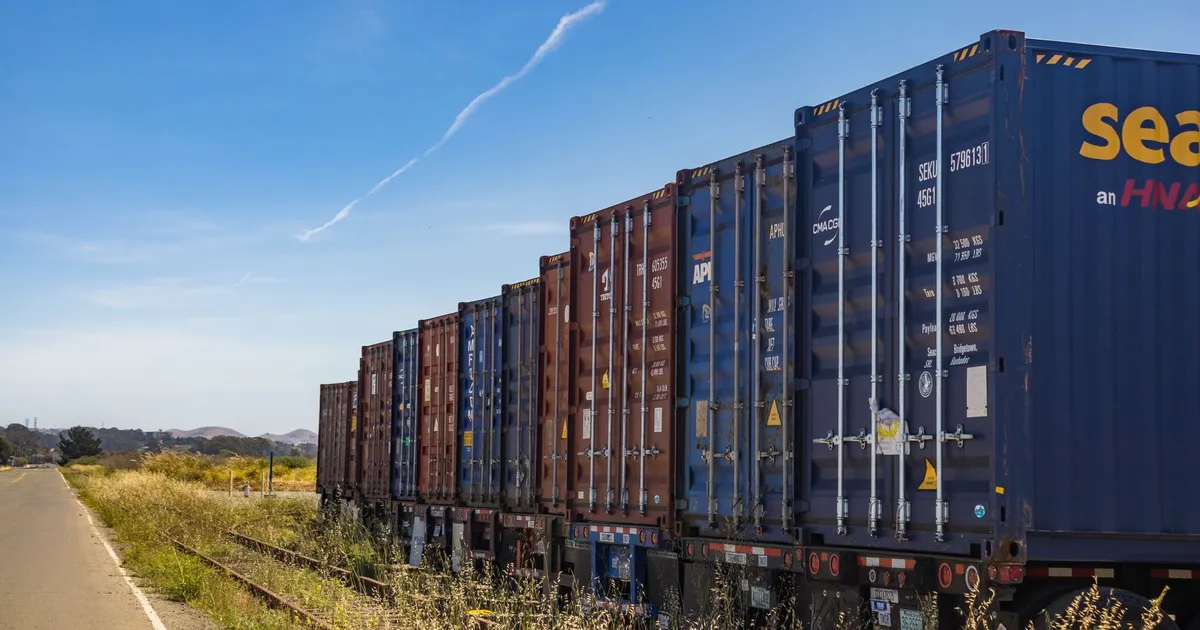
The Fast-track Approvals Expert Panel has granted consent for the Southern Link Inland Port near Mosgiel. It is a decision business can measure. The project is a joint venture between Dynes Transport Group, owner of Icon Logistics, and Port Otago subsidiary Chalmers Properties. It puts a container terminal, depot, warehousing and border compliance facility on a rural block at Dukes Road North, connected by a new rail siding to Port Chalmers.
This is the kind of approval the fast-track regime was sold on. It is productive infrastructure with a quantified freight case, local industry partners and a clear commercial customer base. That makes it a far better advertisement for the regime than the rhetoric surrounding it.
A release valve for a squeezed port
The core logic is simple. Port Otago told the panel it has been capacity-constrained in recent years, affecting exporters. An inland port acts as a buffer. Export containers can be packed, stored and cleared off-site, then railed to Port Chalmers when the terminal is ready to take them.
The Mosgiel site was not chosen at random. Logistics expert Grant Driver’s evidence notes it sits 32km from Port Chalmers, right beside the signalled Taieri Branch line. It is also next to Fonterra’s Mosgiel distribution centre and existing freight operators. Because 65% of Port Otago’s container exports originate locally, aggregating them inland cuts the double-handling of empty boxes that quietly inflates exporters’ costs. Dunedin City Council’s own Future Development Strategy already earmarked the area for a freight hub.
The numbers are big enough to matter
The build carries an estimated $242 million in direct construction spend in 2025 prices, staged over roughly a decade from 2027. Stage 1 delivers the rail siding between 2027 and 2029. Savvy Consulting director Natalie Hampson’s economic assessment puts the construction-phase contribution at up to $191.3 million in GDP and 1,489 FTE jobs over the build. Once operating, the hub is expected to add 104 net new jobs, with about 125 people on-site.
The freight figures are more interesting for business. Moving boxes onto rail is projected to remove 15,000 one-way heavy vehicle movements a year from Dunedin roads, or 30,000 counting return trips. It would also lift Mosgiel to Port Chalmers rail volumes by an initial 15,000 containers, growing to between 25,000 and 40,000. Transport experts recorded an aspirational target of 49,000 TEU a year. For Otago exporters of dairy, meat and forestry products, more reliable slots and less trucking through the city are a direct cost saving.
Watch the industrial land market
The sleeper finding sits in the council transport evidence. Under the inland port scenario, Mosgiel’s projected industrial land demand roughly doubles. It rises from 5.5ha to 13.9ha in the medium term, and from 24.4ha to 40.2ha in the long term. Freight hubs attract cold stores, packhouses, transport yards and distributors. Anyone holding or hunting for industrial land on the Taieri should be paying attention now, not in 2029.
The trade-offs were real, and weighed
This was not a rubber stamp. The Parliamentary Commissioner for the Environment objected that the site is LUC 1 highly productive land, whose loss is permanent and cannot be fixed by consent conditions. That is a legitimate point. Class 1 soils are scarce, and building on them is a one-way bet.
Council transport staff also flagged a noticeable rise in heavy vehicles on Gordon Road/State Highway 87 and Dukes Road North, along with amenity effects on Mosgiel’s town centre at full build-out. Those roads are, however, already designated high-productivity freight corridors.
The panel weighed a permanent land cost against a large construction boost, ongoing jobs and a structural fix for a constrained export gateway, and it backed the economics. That is how a consenting system should work. Scrutiny happened, the objections were heard, and a decision was made on the merits.
Fast, but not that fast
Nor should anyone pretend fast-track means weeks. The application history shows lodgement in 2025, a referral that year, and a withdrawal and resubmission in April 2026 before this week’s approval. That adds up to roughly 17 months. It is almost certainly quicker and more predictable than the standard RMA path for a contested rural rezoning, but it is still a serious process, not a shortcut.
The next test is delivery. The siding depends on continuing talks with KiwiRail, and Stage 1 needs to start on time in 2027. If the containers start moving and the trucks come off Dunedin’s streets, Mosgiel will be the proof point the fast-track regime badly needs: a consent judged by freight shifted, not speeches given.
Join the discussion
Add useful context, ask a good question, or challenge an idea — keep it specific and respectful.