

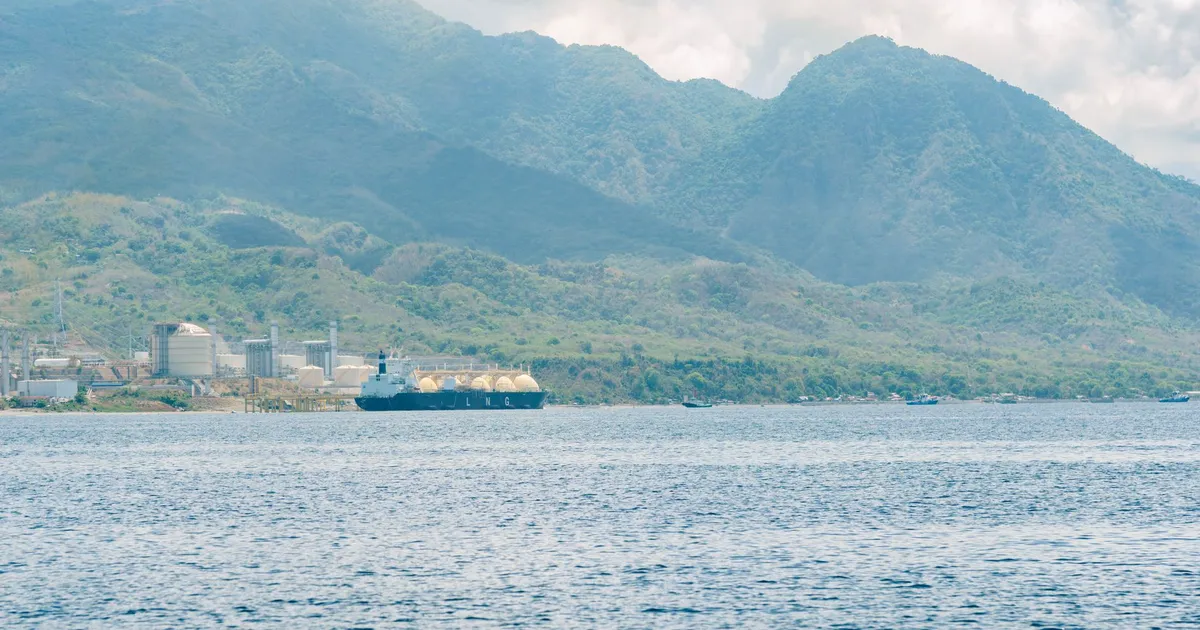
New Zealand is edging closer to treating reliable energy as economic infrastructure rather than a culture-war prop. The Ministry of Business, Innovation and Employment has confirmed it has selected a preferred provider for a liquefied natural gas import facility at Port Taranaki. No contract is signed, the provider is unnamed, and MBIE says a final deal won’t land before the election, though work continues “at pace”.
The substance is sound. The process is not, and that gap matters because electricity users will be paying for this for up to two decades.
The case for buying insurance
The logic is simple. A hydro-heavy grid runs short in dry years, gas-fired generation fills the gap, and domestic gas is running down. Generators price that risk into every megawatt-hour, whether the lakes are full or not.
Treasury puts the current dry-year risk premium at $30-50/MWh. For any manufacturer or processor exposed to wholesale prices, that is a standing tax on uncertainty. In December 2025, an MBIE cabinet paper modelled that an import facility could cut spot prices by around $11/MWh in normal years and up to $58/MWh in dry years, worth a net $220-310 million a year to electricity users. Treasury’s conservative estimate is a $10/MWh fall in forward prices, saving customers roughly $400 million annually.
In March 2026, the Gas Industry Company’s supply study likewise projected LNG imports from 2028, with a minimum 12 petajoules a quarter for dry-year cover.
LNG is not cheap gas. Treasury notes domestic supply trades around $12/GJ against $21/GJ for LNG, and the infrastructure would cost $90-180 million a year for 15-20 years. But that is the point of insurance. You pay a known premium to avoid an unknown, much larger loss. Treasury’s view is that the market is unlikely to build this on its own, which is the honest justification for the Crown stepping in.
A choice made, then disclosed by stealth
Here is where it unravels. On 2 October, Auditor-General Grant Taylor declined to investigate, noting the government was “yet to decide the approach it will take and select a provider”. Less than a fortnight later, a preferred provider appeared in updated text on MBIE’s website.
Laura Mackay, spokesperson for Lawyers for Climate Action, called it “completely out of step” with the watchdog’s letter, asking who will bear the costs and what the implications are for power prices. You don’t need to share her group’s politics to see the problem. A watchdog stood down on one set of facts, and the facts changed within days.
The paper trail before that was hardly tidy. A levy on all electricity users was floated, then scrapped in June. By August, BusinessDesk reported the field had narrowed to Hoegh Evi and Clarus, with costs well under the original $1 billion-plus estimate. Then the gentailers put up an alternative proposal that stalled signing. The government has also flagged bespoke legislation, bypassing even its own Fast-track Approvals Act, to hit a winter 2028 start.
Safety is a bottom line nobody can check
Maritime New Zealand documents released under the OIA show an official describing LNG as “undesirable in a port or near any built up areas” and favouring an offshore arrangement. MBIE says in-port options were the most practical, safe and reliable, and that safety is an absolute bottom line. Perhaps. But the shortlisted providers’ initial safety evaluations have been withheld, while roughly 3,000 houses sit within 2km of the site. WorkSafe must still accept a full safety case, which is a genuine backstop, but New Plymouth deserves more than “trust us”.
There are also credible doubts on the economics. In February 2026, Basil Sharp, emeritus professor of energy economics at the University of Auckland, challenged claimed savings with a blunt “let’s see the numbers” and said past experience made him wary of direct government involvement in commercial enterprise. A redacted Concept Consulting report cited by Ngamotu News found “a low need” for LNG and pointed to cheaper options, including Huntly, geothermal and gas storage at Stratford.
What business should watch
Centre-right instincts should cut both ways here. Backing firm, dispatchable supply over wishful thinking is right, and a terminal could pay for itself many times over in a single dry winter. But a 15-20 year commitment paid for by power users or taxpayers is exactly the sort of deal that needs sunlight, not website footnotes.
After the election, watch three things. Who carries the cost-recovery mechanism, and whether large users get hit hardest. Whether bespoke legislation locks in terms before the business case is published. And whether the gentailers’ alternative gets a fair hearing. Get those right and this becomes the most useful piece of energy infrastructure in a generation. Get them wrong and the dry-year risk premium simply gets swapped for a political one.
Sources
- RNZ: Government quietly selects liquefied natural gas provider (2026-10-15)
- RNZ: Auditor-General won’t investigate LNG yet but ‘remains interested’ in Govt plans (2026-10-02)
- Treasury: OIA Response 20260078 – Impact of LNG imports on electricity prices (2026-04-23)
- Gas Industry Company: 2026 Gas Supply & Demand Study (2026-03)
- BusinessDesk: Meet the two contenders said to be closing in on NZ’s LNG import terminal (2026-08-14)
- BusinessDesk: Alternative to LNG plan put to Govt by gentailers (2026-09-24)
- Ngamotu News: Port Taranaki LNG terminal – Election may decide (2026-09-03)
- University of Auckland: LNG plan needs a closer look (2026-02-17)
Join the discussion
Add useful context, ask a good question, or challenge an idea — keep it specific and respectful.