

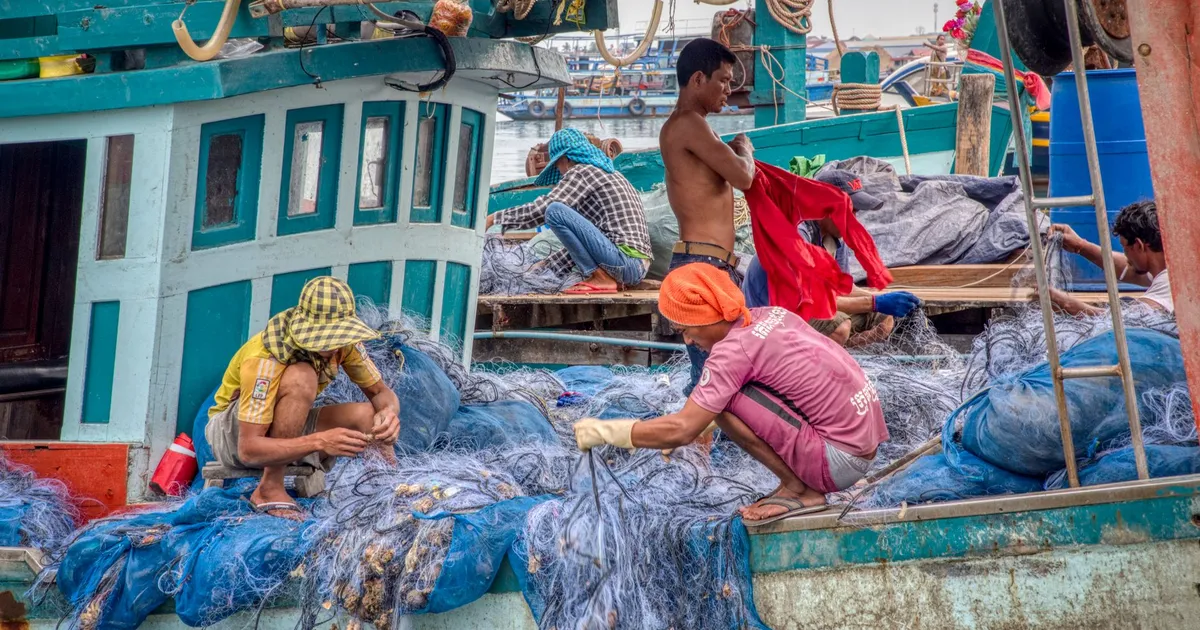
Bottom trawling is not a side activity for New Zealand’s seafood sector. It is the sector. Roughly 70% of the commercial catch comes off or near the seabed, in an industry RNZ puts at $2 billion and 9,000 jobs. That makes it the industry’s business model and its biggest reputational liability at the same time.
The debate is usually framed as ban versus status quo. Both options are bad for business. The more useful question is why a commercially attractive middle path, one New Zealand scientists and fishing companies have already built, is moving slower at home than it is overseas.
A ban would close the industry, not reform it
The arithmetic is blunt. As a recent Newsroom piece noted, a ban on bottom trawling would effectively ban most of the country’s fishing industry. An expert Q&A published in June independently confirmed that about 70% of commercial catch is taken this way, and that Seafood NZ has commissioned economic modelling on alternative catch methods. That modelling will matter, because nobody has yet shown a like-for-like replacement that delivers the same volumes.
The ownership structure raises the stakes further. Iwi are among the largest quota holders in the country, including through their collective stake in Sealord, a legacy of the Treaty fisheries settlement covered in detail by The Press. Any sweeping restriction is not just an environmental decision. It is a hit to a settled property right, and to the Maori economy that grew on top of it.
Public opinion is not on the industry’s side. RNZ has reported polling showing majority support for a ban, and the issue is now shaping up as a coalition negotiating chip after the election. Exporters selling on sustainability credentials into Europe and the US cannot afford to treat that sentiment as noise.
The footprint has shrunk, the image has not
There is a better story than the documentaries suggest. Back in 2016, Stats NZ reported that by 2011, 51% of inshore and shelf seabed had been trawled at least once. That figure describes the position roughly 15 years ago. Since then, the Ministry for Primary Industries has expanded closed areas and footprint reporting, and the industry is increasingly fishing ground it has already worked rather than pushing into untouched seabed.
That progress gets lost when the conversation is reduced to Attenborough footage of discarded bycatch. The industry needs a credible next step, not just a defence of past improvement.
New Zealand built the answer and exported it first
That next step exists. FloMo, a modified trawl developed by Plant and Food Research (now part of the Bioeconomy Science Institute) with three fishing companies, lands fish on deck in water instead of crushing them in the net. About 80% of non-target fish survive, and target fish arrive in better condition and fetch higher prices. The World Wildlife Fund is pushing for its approval in the UK, EU and US.
This is the rare environmental fix that pays for itself. Better fish, better prices, less waste, and a sustainability story exporters can actually sell.
Wellington is the bottleneck
The next leap would come from sensors. Sonar, depth gauges and cameras on the net would let skippers make real-time decisions about what they catch. The problem is a rule allowing only two wires between net and vessel, originally a seabird-safety measure. University of Auckland professor Rochelle Constantine says reform has been put to government but stalled because “it’s not been important enough”, with the industry waiting years for a decision.
That is regulatory inertia at its most costly. A sector worth billions is being held back from a commercially beneficial environmental upgrade by a wiring rule no one has bothered to revisit.
Blue carbon could flip the ledger
There is also upside nobody is pricing. Researchers note that “the seafloor is the planet’s biggest carbon store”, and that undisturbed seabed could become a nature-based carbon asset. For context, Stats NZ found the marine economy contributed $5.2 billion directly to GDP in the year to March 2024. Protecting seabed does not have to be pure cost if it can be monetised.
What happens next
The incoming government will face pressure to do something dramatic on bottom trawling. The smarter move is less theatrical. Fix the two-wire rule, fast-track gear like FloMo, and let Seafood NZ’s modelling inform any phase-down. Quota holders and exporters should be lobbying for exactly that, because the alternative is a ban written by people who never had to fill an export order.
Sources
- Newsroom: How do we solve a problem like bottom trawling? (2026-10-11)
- RNZ: Why bottom trawling could be a top issue in forming the next government (2026-10-11)
- Newsroom: Opportunity reaches deep with new bottom-line to phase out bottom-trawling (2026-09-29)
- Scoop: Should We Worry About Bottom Trawling? Expert Q&A (2026-06-26)
- The Press: ‘Misinformation’ or ‘uncomfortable truths’? What both sides say about bottom trawling
- RNZ: Minister defends bottom trawling, despite poll showing majority of NZers want it banned
- Stats NZ: Commercial seabed trawling and dredging (2016-10-27)
- MPI: Bottom trawling
- Stats NZ: Environmental-economic accounts, data to 2024 (2024)
Join the discussion
Add useful context, ask a good question, or challenge an idea — keep it specific and respectful.