

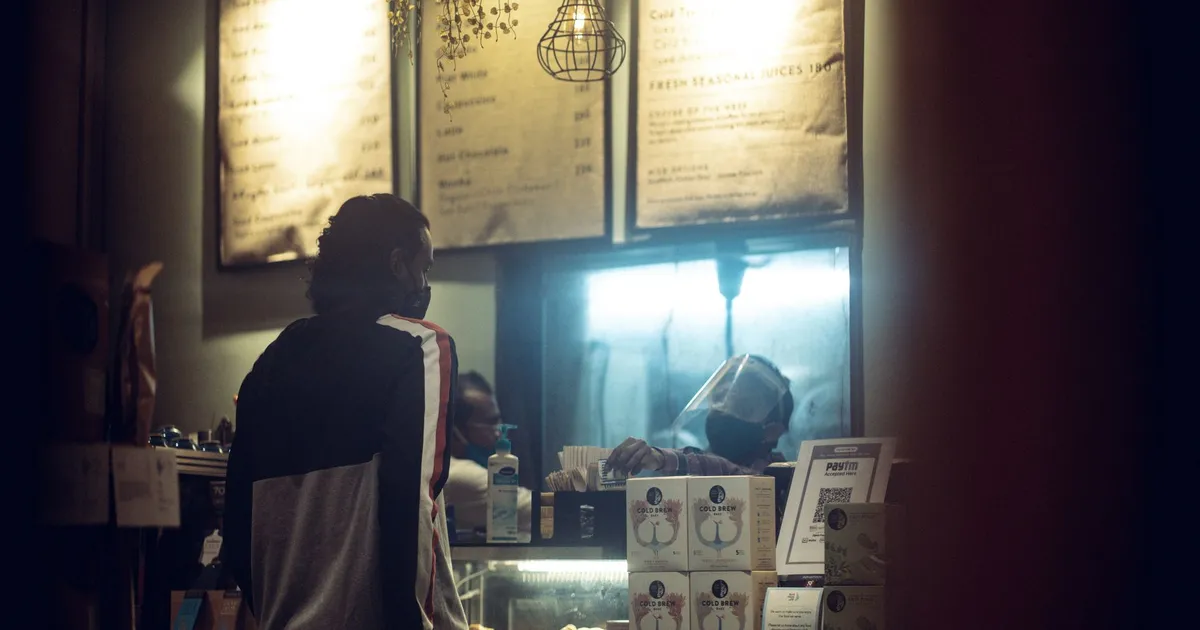
Claire Park, owner of Café Ditto in Mt Eden, pays herself for a 45-hour week. She actually spends 70 to 80 hours a week at the café before and after hours. Across New Zealand’s hospitality sector, that gap between paid and real hours is what keeps the doors open. It gets called resilience. It is better described as a subsidy, paid by exhausted owners to customers who still expect yesterday’s prices.
What absorbing the cost actually costs
Park opened nearly three years ago after running a café in Seoul during Covid. She employs one regular staff member and one casual, has cut the food offering back to in-house biscuits and vendor pastries, and still describes a daily triage over which costs to swallow. “Pretty much everything has gone up. Starting from dairy, coffee beans, matcha, chocolate, yeah everything,” she says, adding the café is still not making too much of a profit.
Put a price on that. Stats NZ puts average ordinary time hourly earnings at $44.12. On B2B News calculations, 25 to 35 unpaid hours a week at that rate is roughly $1,100 to $1,550 of foregone wages, or $57,000 to $80,000 a year. That is the true wage bill of one small café, and it never appears in the accounts.
Menu prices have hit the ceiling
The obvious fix, charging more, has run out of road. NZ Herald analysis shows a $50 restaurant main leaves about $27 once GST and food costs are stripped out, before wages, rent or power. Some operators have seen beef rise 70% in 18 months.
Supplier surcharges stack on top. In April, Wellington’s Smith the Grocer found three of its eight suppliers had added fuel surcharges, including a 4% increase from one meat supplier and a temporary 5% from another.
The Restaurant Association’s Q2 survey found 43% of operators had lower revenue than a year earlier and two-thirds were less profitable. Its verdict is unusually candid: “There is only so much operators feel they can add to menu prices before it begins to affect demand. That leaves many absorbing at least some of the increase themselves.” Its dashboard shows June sales just 1.2% higher than a year earlier while menu prices rose 3.1%. Real volumes are shrinking.
The unpaid hours show up anyway
You can hide unpaid labour from a profit and loss statement, but not from productivity data. Xero’s latest figures put small business labour productivity at $74.00 per hour worked, below the long-term average of $76.30, with hospitality the least productive industry by a considerable margin. More hours, same takings. That is what owner-funded survival looks like in the numbers.
The human cost is measurable too. The Restaurant Association reports 40% of owners say their health and wellbeing is being affected.
The rest of the economy is not playing by these rules
This is not generic hard times. In the December 2025 quarter, operating profit across all industries rose 13% to $31 billion while salaries and wages grew just 1.8%. Wage growth of 2.0% against inflation of 3.1% has handed most employers breathing room. Hospitality, with thin margins, high fixed costs and little ability to swap labour for capital, has gone the other way.
The failures follow. There were 414 hospitality liquidations in the year to May 2026, up 49%. The trend has been building for two years: back in 2024, Centrix data showed hospitality firms were 2.3 times more likely to fail than the typical business, and that August a Wellington owner described her worst sales day in 10 years of trading.
Resilience is the wrong word
In 2025, BusinessNZ told the Ministry for Regulation the sector had demonstrated considerable resilience “but it needs help”, and argued that help should come through regulatory reform rather than demand stimulus. That diagnosis holds up. Beef, dairy and diesel prices are set by global markets. Council charges, licensing fees and regulatory levies are set in New Zealand, and can be cut.
For lenders and landlords, the lesson is to stop reading headline revenue growth as health. A café that only breaks even because its owner works 30 hours a week for nothing is not a going concern, it is a countdown. When those owners burn out or walk, the liquidation figures will finally catch up with what the hours already show. The Ministry for Regulation review is the chance to take some weight off before they do. Until then, every reasonably priced flat white comes with an invoice nobody sends.
Sources
- Stuff: Inside Small Business – The 70-hour week behind a cosy Mt Eden café (2026-10-11)
- NZ Herald: Why your restaurant main now costs $50 (2026-06-27)
- RNZ: Wellington cafe considers fuel surcharge as costs keep rising (2026-04-13)
- RNZ: Wellington cafe suffers ‘worst sales day ever’ as public sector job cuts bite (2024-08-31)
- Restaurant Association: 2nd quarter 2026 Quarterly Hospitality Dashboard (2026-08)
- Restaurant Association: Q2 Dashboard (2026-07-20)
- Stats NZ: Business financial data December 2025 quarter (2026-03-12)
- Stats NZ: Labour market statistics March 2026 quarter (2026-05-06)
- Xero: Small Business Insights Labour Productivity New Zealand March 2026 (2026-06-18)
- BusinessNZ: Hospitality Sector Regulatory Review Submission (2025-11-12)
- Hospitality NZ: Centrix Hospitality Update (2024-09)
Join the discussion
Add useful context, ask a good question, or challenge an idea — keep it specific and respectful.